
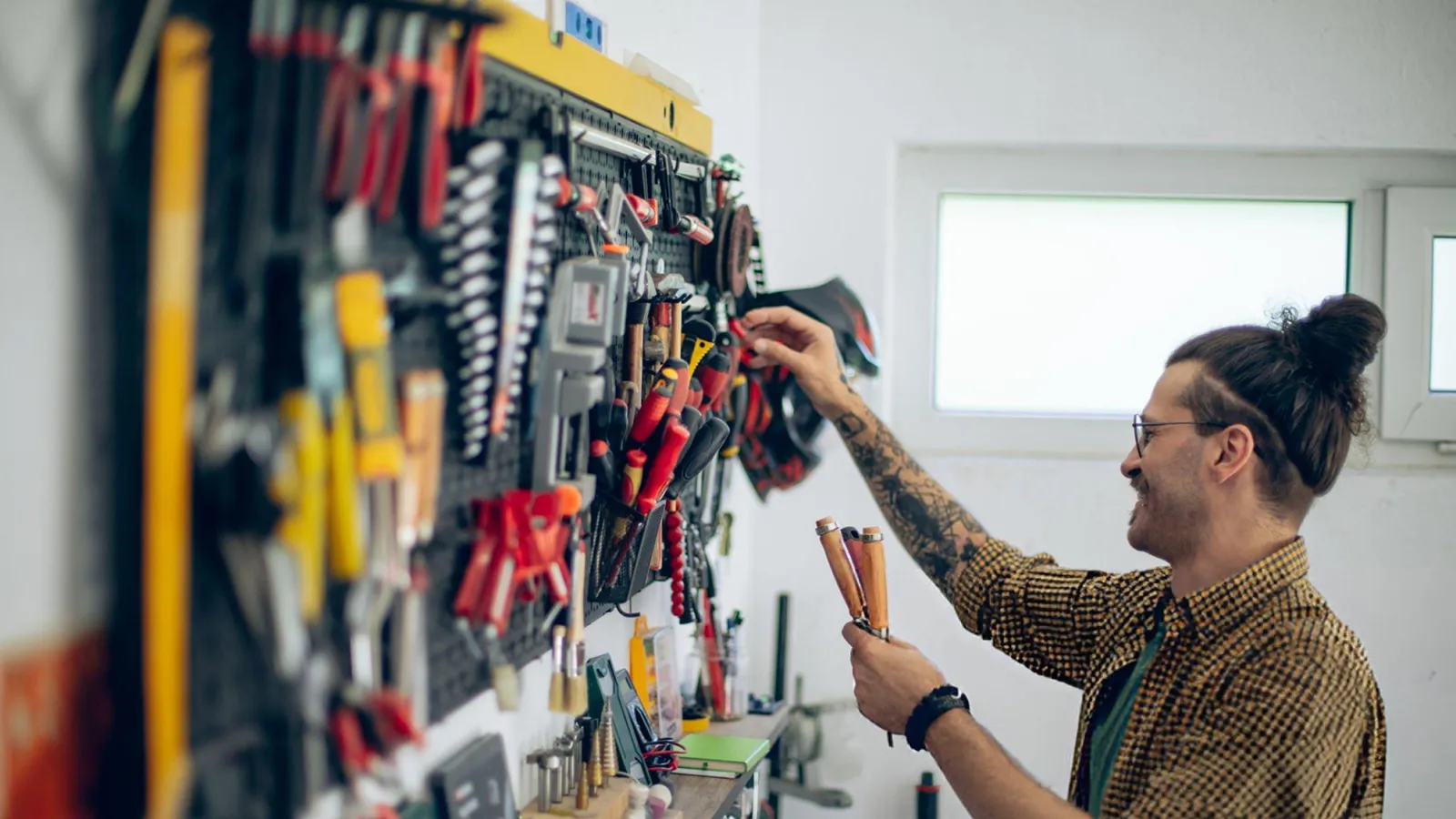
If you are a DIY enthusiast or a professional contractor, you probably have an impressive collection of power tools. But do you know exactly what you have? It can be downright disheartening to start an exciting new project when you can’t find the specific power tools that you know you have somewhere in that pile in the corner of your workshop.
You can avoid this familiar scenario and save precious time and a load of frustration by implementing our power tool storage ideas for a well-organized workshop with tools neatly arranged and easily accessible.
For a ship-shape workshop, start by taking stock of your power tools.
Take Stock of Your Tools
Take an Inventory
Take an inventory of what you have by gathering all your drills, saws, sanders, grinders, and other miscellaneous tools and laying them out somewhere so you can clearly see each tool. Arrange them according to type, accessories, chargers, and batteries. Doing this will highlight any duplicates and redundant items you can discard.
Assess Each Tool
The next step is to evaluate each item. Do you use it frequently? Is it a specialty tool you only use for special projects? Have you completely forgotten that you have it? Is it broken?
Put tools you use frequently to one side, including multi-purpose tools like drills and drivers. Inspect each tool, replace worn parts, and fix broken ones. Consider donating or selling tools you have not used for a long time. Set seasonal tools aside for separate storage.
Sort into Categories
One of the best ways to store power tools is to organize them according to their typical use. So, put your tools for general repairs to one side. Also, separate the tools you have for carpentry, plumbing, electrical, and automotive projects. You will thank yourself later when you won’t be wasting time looking for equipment.
Choose the Right Storage Solutions
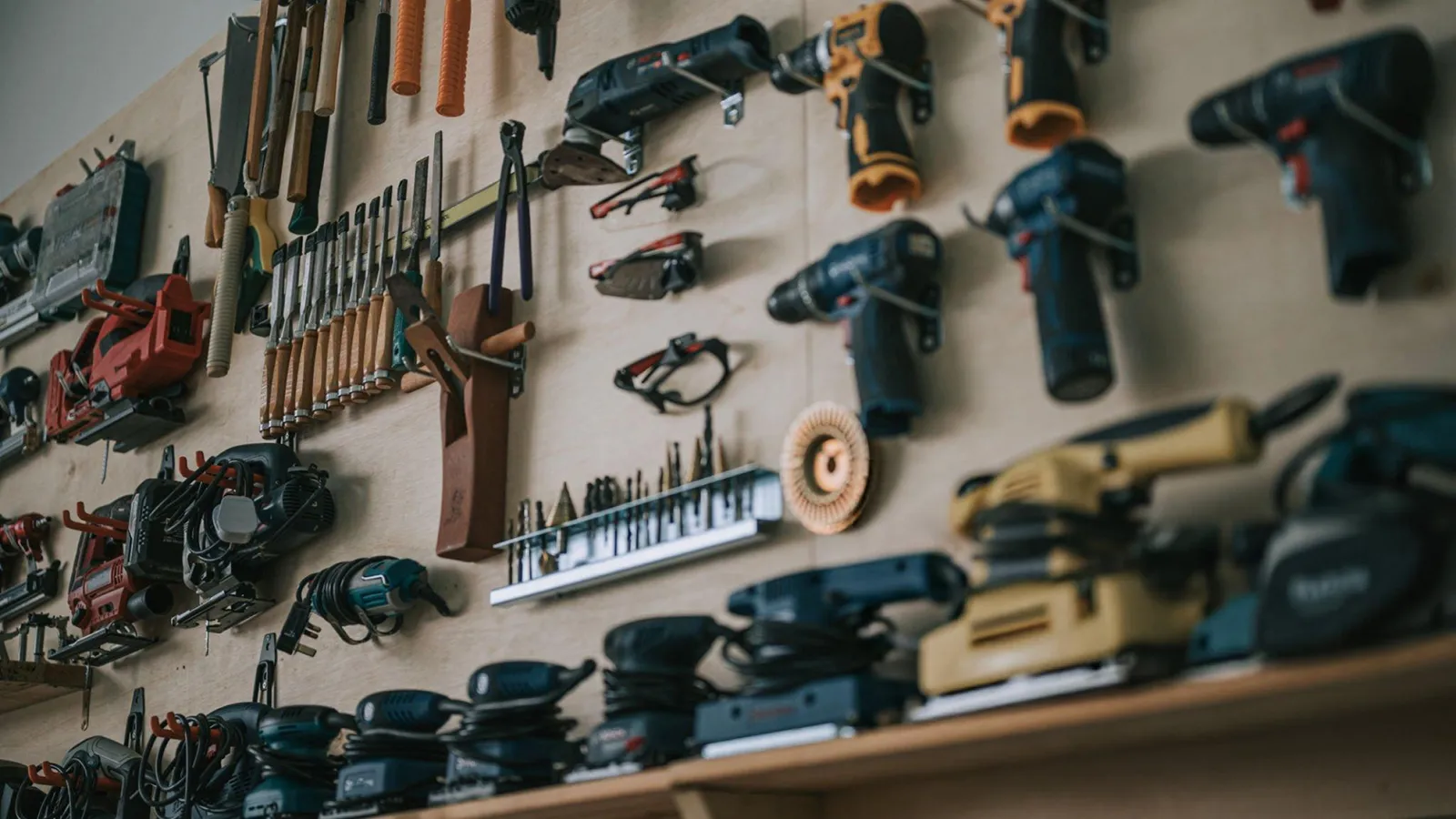
Bulky power tools with cords and batteries have special storage needs. Consider the weight of each tool and store heavier items on sturdy shelves at the bottom of cabinets, medium-weight tools on eye-level shelves, light items on pegboards, and small bits in drawers.
Having a dedicated storage spot for all your power tools and accessories:
- Keeps your workspace neat and tidy
- Creates a pleasant working environment
- Gives a professional impression
- Saves time on locating equipment
- Facilitates easy cleaning of working space
1. Wall-mounted storage
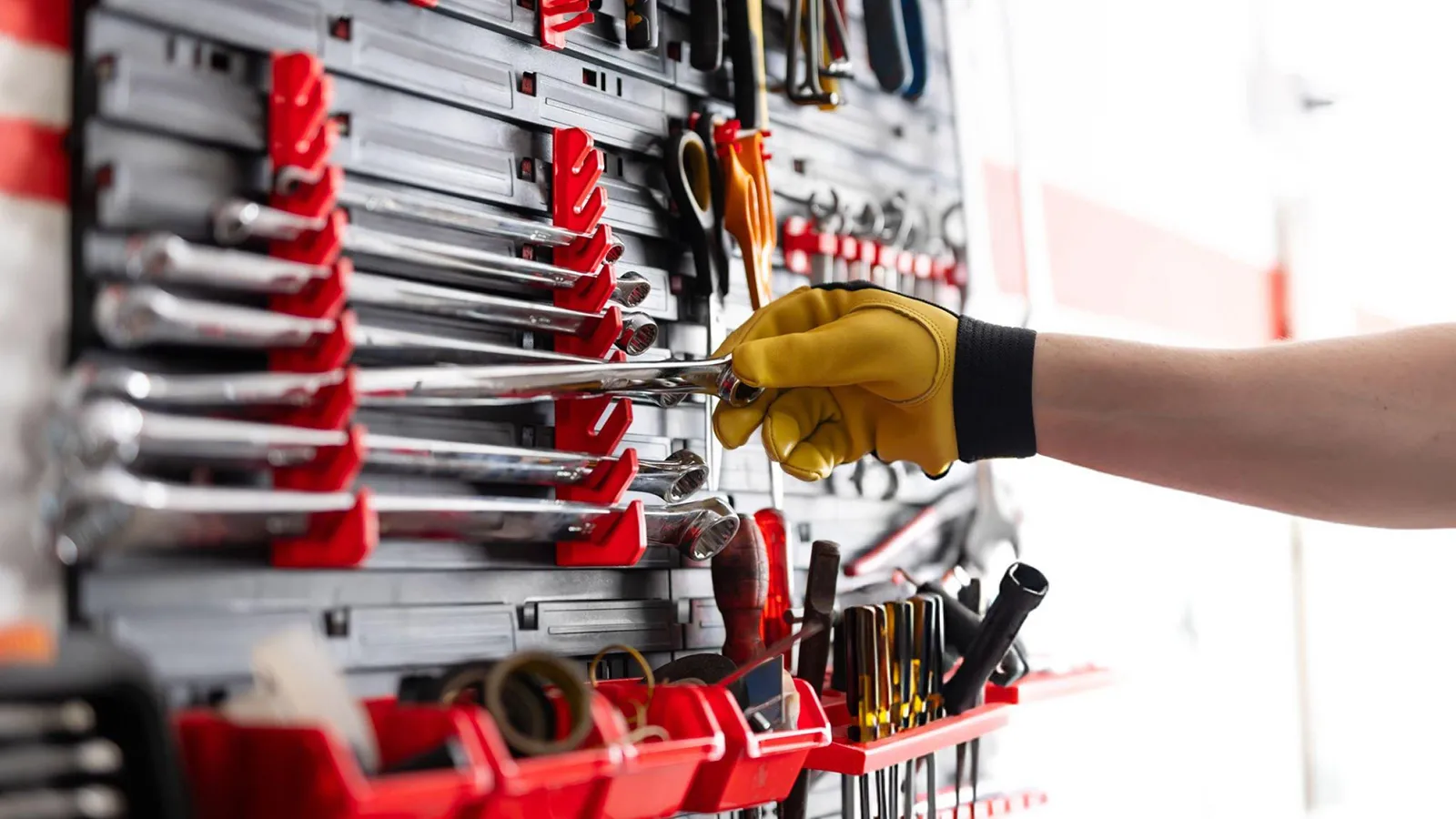
To maximize floor space, make use of wall-mounted power tool storage solutions such as pegboards, shelves, or wall racks. Pegboards have evenly spaced pre-drilled holes ideal for hooks that you can hang all manner of tools from. They make the ideal storage space for small, light power tools and accessories hung at eye level for quick identification.
Wall-mounted French cleats are especially versatile, allowing you to hang cabinets, shelves, and all manner of custom holders at variable intervals. If you are unfamiliar with this nifty wall-mounting system, take the time to learn more about it.
A French cleat is created by cutting a sheet of wood in half at a 45-degree angle. The one side is attached to the wall with the sharp point showing upwards. The other side is attached to the item you plan to hang, attached in such a way that it hooks onto the piece attached to the wall.
French cleats are popular storage solution because you can safely hang items, including cabinets, shelves, and tools along the length of the wood attached to the wall. When you need to change things, you can simply lift the cabinet off and replace it with another one or move it along the wall to make space for more shelves or tools you want to store.
Suggestion: Include a sketch for users; a picture is easier to understand than a description.
2. Stackable Bins
Organize power tools in stackable plastic bins. The enclosed environment protects tools from dust and moisture. Choose clear plastic bins so you can easily see what’s inside. If you have bins that are not clear plastic, you can still use them to store tools by labeling them clearly.
Except for bins that will contain large, single-power tools, consider using medium-sized bins that can hold no more than two or three tools. This strategy prevents multiple tools from sitting on top of each other in a small space where they can get damaged.
3. Tool chests and drawers
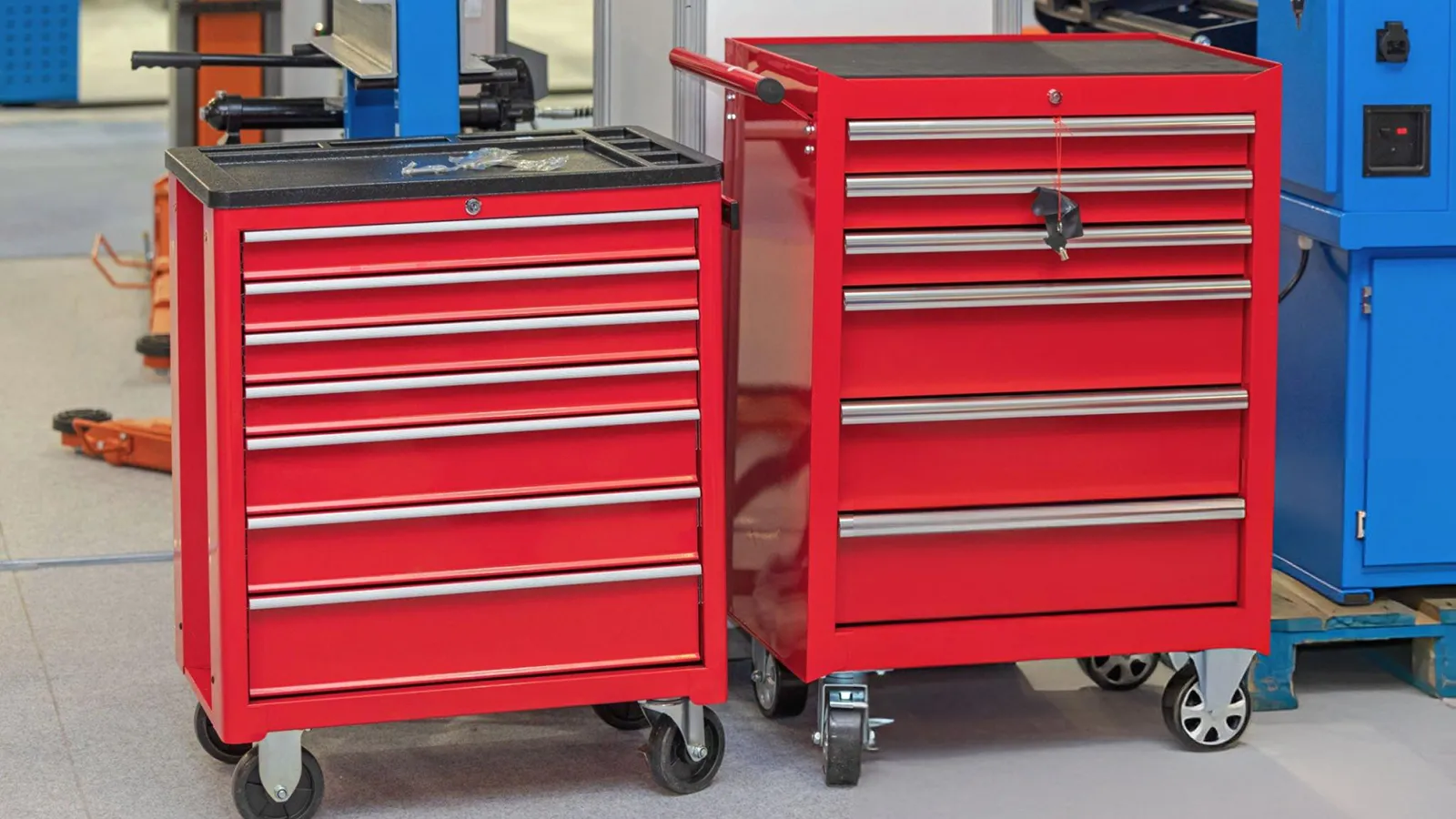
Tool chests and drawers are excellent storage ideas for power tools. These storage units have deep drawers, and adjustable shelves, providing storage for small- and medium-sized tools plus accessories.
Choose a cabinet with both deep sliding drawers for bulky power tools, and drawers suitable for smaller tools and accessories, and shallow trays for small bits like nails and screws. Look for padded drawers or drawers with liners – they protect tools and prevent them from sliding around.
If you are getting a heavy-duty cabinet, buy one with casters or wheels. This way, you will be able to move it without unpacking everything first. For safety, make sure the wheels can lock.
A well-chosen cabinet can keep all your power tools and accessories safe while keeping your work area uncluttered.
4. Portable storage solutions
For professional contractors, moving between sites, custom toolboxes or rolling tool chests help keep tools safe during transport. With one of the following solutions, you can take your mini portable workshop with you wherever the job is.
Rolling Toolboxes
Some power tool manufacturers sell rolling toolboxes. They are designed to keep tools safe while being transported. Some come with three tool bins stacked on top of each other: an extra-large deep bin for safe storage of large power tools, a medium-sized toolbox for hand tools, and a shallow toolbox for small parts and accessories.
Portable Toolboxes
Portable toolboxes are an old standby of tradespeople and hobbyists. There is a world of different hand-carry toolboxes available on the market, from heavy-duty plastic, and metal boxes to aluminum, and steel boxes.
These hand-carry toolboxes come with cantilever trays that move outward when open, so tools are easy to see and retrieve. Sliding drawers may have metal or padded dividers and compartments in modular designs that allow for customized storage.
All toolboxes can be locked.
Tool Bags
Modern tool bags have such sleek designs you might mistake a tradesman for a medical doctor. Tool bags made from durable and water-resistant heavy-duty fabric. They come with different-sized internal and external pockets and zips for power tools, plus compartments for chargers and batteries. Tool bags have padded handles and shoulder straps, with some designed like a backpack, complete with padded shoulder straps to make carrying heavy tools easier.
Build Your Own Custom Organizer
The best way to store power tools is to build your own custom organizer. Here’s how to build one that fits your space and your tools.
- Start by measuring the available wall space.
- Draw a layout based on your most-used tools.
- Design it in such a way that your organizer can serve as a workbench and an all-in-one storage unit.
- Include open shelves for storing larger tools such as circular saws, sanders, or routers.
- Allow for drawers or pull-out bins to keep smaller tools, bits, and accessories organized.
- Include a pegboard backing for hanging small power tools and accessories.
- If you have cordless tools, build in a section with space for chargers and batteries with holes for the cords.
- Consider mounting the unit using a French cleat system, which allows you to rearrange or expand your storage setup at a later stage.
- Choose sturdy materials to build your storage unit. Plywood and MDF are good choices, but you can also use solid wood, metal, or high-quality plastic, depending on your tools.
Special Solutions for Small Spaces
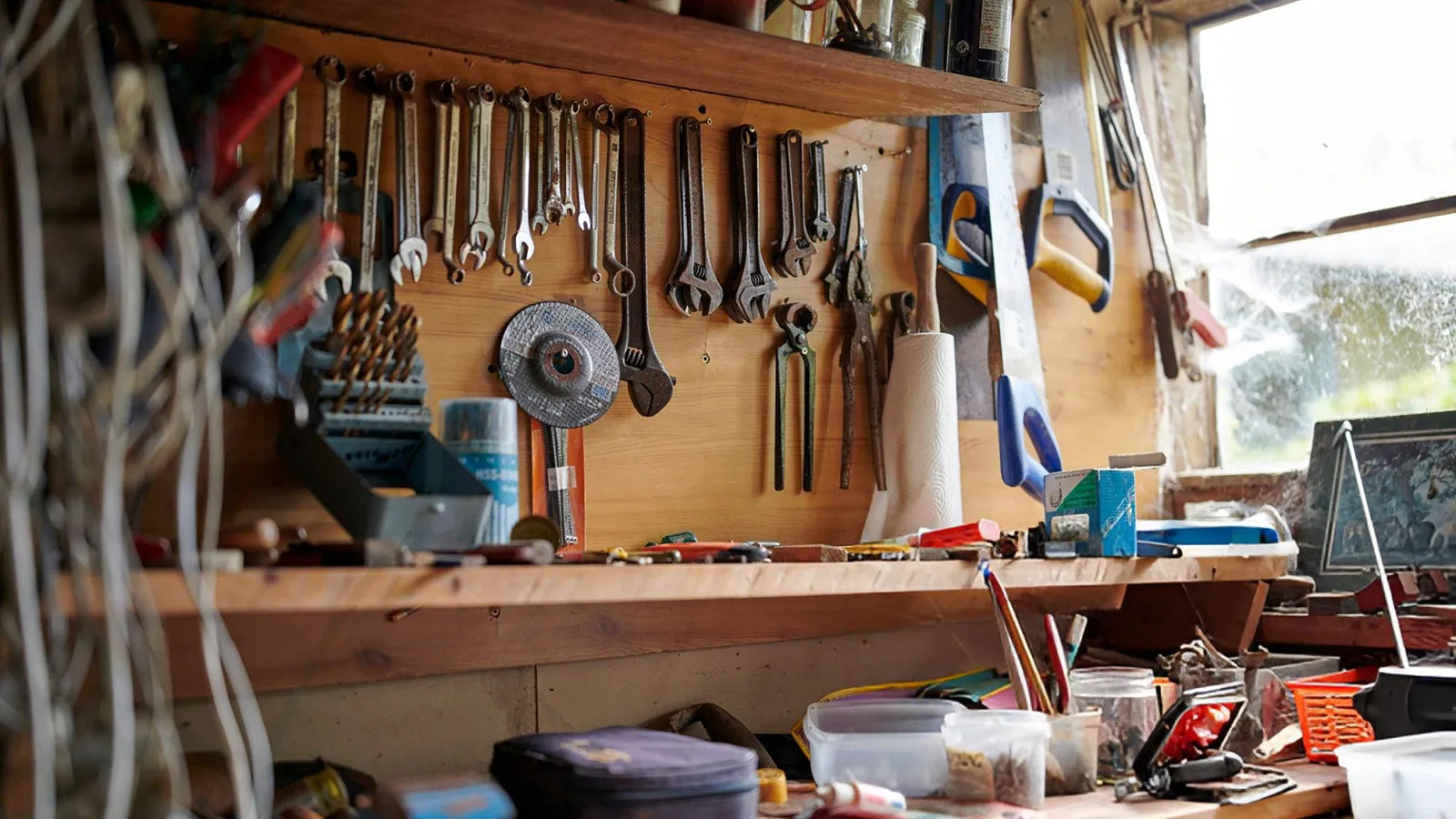
Pegboards, shelves, and stackable storage are excellent space-saving solutions. If your space is too small for a permanent workbench, consider buying or building a rollaway workbench or a rolling cart that can be moved out of the way when you’re not working on a project.
Build or Buy Rolling Carts
Rolling carts are basically a shelf system on wheels. They feature several shelves of different depths for storing different-sized tools and accessories. You can buy a drawer unit for small bits and accessories and fit it on one of the shelves. The shelves can also hold different-sized stackable bins.
Rolling carts are a simple storage solution that you can build in one morning, customized to fit your tools, accessories, batteries, and chargers. It’s a great solution that turns a garage into a workshop when a project comes up, but it can be taken away at night to make space for your vehicle.
Obtain a Rolling Workbench
Buy a rolling workbench. The most popular ones have a reinforced frame with a work surface and built-in compartments or trays for storing tools. Look for a model that has deep drawers or shelves, as well as shallow ones to accommodate different sized tools.
Some have integrated power strips for charging batteries or operating tools directly from the workbench. You also get rollaway workstations with multi-port tool holders, hooks for cord management, shelves for battery chargers, and slots for storing slim tools like screwdrivers or pry bars.
Rollaway workstations typically have large handles and durable casters so you can easily move it where you need it. Rollaway workstations and carts are smart garage storage solutions.
Create a Charging Station
A docking station provides a dedicated space to store and recharge power tools in one convenient location. Ready-made docking stations are available, complete with slots, shelves, or holders for tools, and integrated power outlets for batteries and chargers. This is the ideal storage solution for power tools, keeping them organized and charged, ready for the next task. Many power tool owners mount their docking stations on a wall, but you can also consider a freestanding, or portable unit. As long as you can position it near a power outlet.
Maintain the Organization
- Clean, lubricate, and inspect your tools regularly. Keeping your tools in good condition makes them safer to use and lasting longer.
- Every few months, review your tool inventory. Discard, recycle, or fix broken tools. Ensure each piece has a proper cord, or battery and charger in good condition.
- As your tool collection grows or changes, your storage setup may need reconfiguring. Critically evaluate your setup and make the necessary changes, like adding more bins, upgrading cabinets, or buying additional ones.
Conclusion
As you can see, there are countless power tool storage ideas to help you organize your tools for easy accessibility and safekeeping. Storage systems like pegboards, stackable bins, tool chests, rolling carts, and rollaway workbenches allow you to spend less time searching and more time building.
Next time your inventory inspection indicates a power tool gap, head to MaxXT. We manufacture and sell top-quality cordless and battery-operated wall and auto tools, which are sold wholesale to distributors.
Contact us today for professional help to expand your product range with high-quality power tools.
FAQs
What’s the best storage solution for a limited space?
Wall-mounted pegboards and stackable bins are affordable, space-saving options perfect for small tool collections.
Where is the best place to store power tools?
Garages, workshops, or basements that are dry, cool, and well-ventilated.
Should I prepare power tools for storage?
Yes, clean your tools, inspect them for damage, and replace or fix broken tools.
How can I keep my power tools organized and easy to find?
Use some of the power tool storage ideas mentioned above like grouping tools by task, using stackable bins, pegboards, shelves or custom racks, and rolling carts. Returning tools to their assigned place after every use is the best for power tool organization.
How should power tool batteries be stored?
Proper battery storage is essential to extend the life of power tools. Don’t store lithium-ion batteries fully discharged – leave them with a charge level of 40% to 60%.
 English
  Arabic
  French
  German
  Portuguese
  Russian
  Spanish
  Turkish