
Key Takeaways
- Air sanders deliver consistent power and stay cool during extended use, making them ideal for professional daily auto body work.
- Electric sanders are easy to use and work well for small jobs and mobile repairs.
- The best sander depends on your shop setup and how often you sand.
- Pneumatic sanders are better for long sanding sessions.
- Electric sanders are better for short or occasional use.
- Brushless electric sanders outperform brushed models due to lower heat and longer lifespan.
This article explains the difference between air sanders and electric sanders for car repair and painting. It is written for auto body shops, technicians, and buyers who need to choose the right sanding tool. You will learn how each type works, where it performs best, and how to select the right option for real world use.
What Is the Difference Between an Air Sander and an Electric Sander?
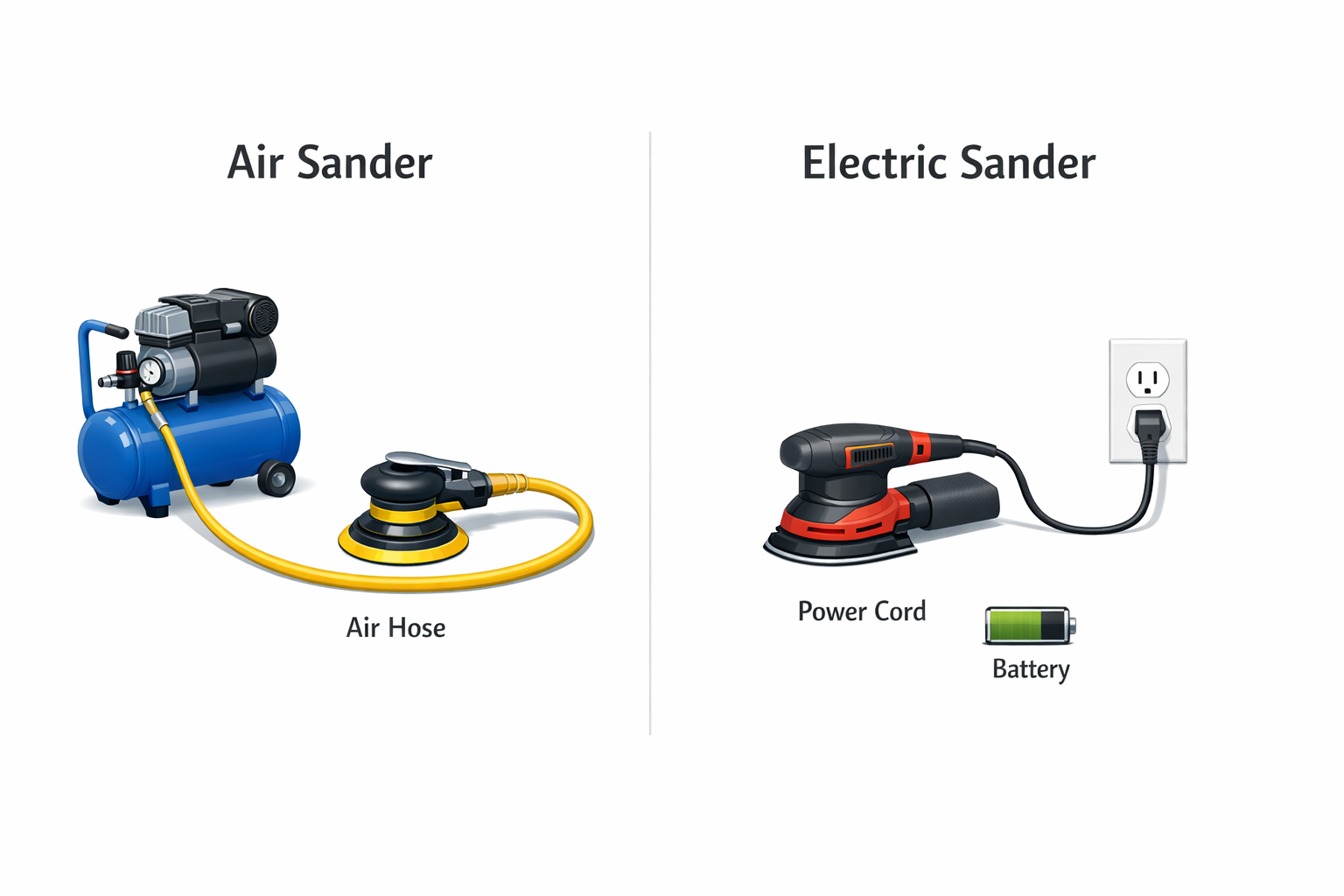
An air sander uses compressed air from a c ompressor to run, while an electric sander uses electricity from a power cord or a battery.
An air sander connects to a hose that brings air from a compressor. When you press the trigger, air flows into the tool and makes the sanding pad spin. An electric sander uses a motor that runs on power from a wall outlet or a battery pack.
Shops with existing compressed air systems will find air sanders easier to integrate. Shops without this infrastructure will find electric sanders more practical and cost-effective to start.
What Is a Pneumatic (Air) Sander and How Does It Work
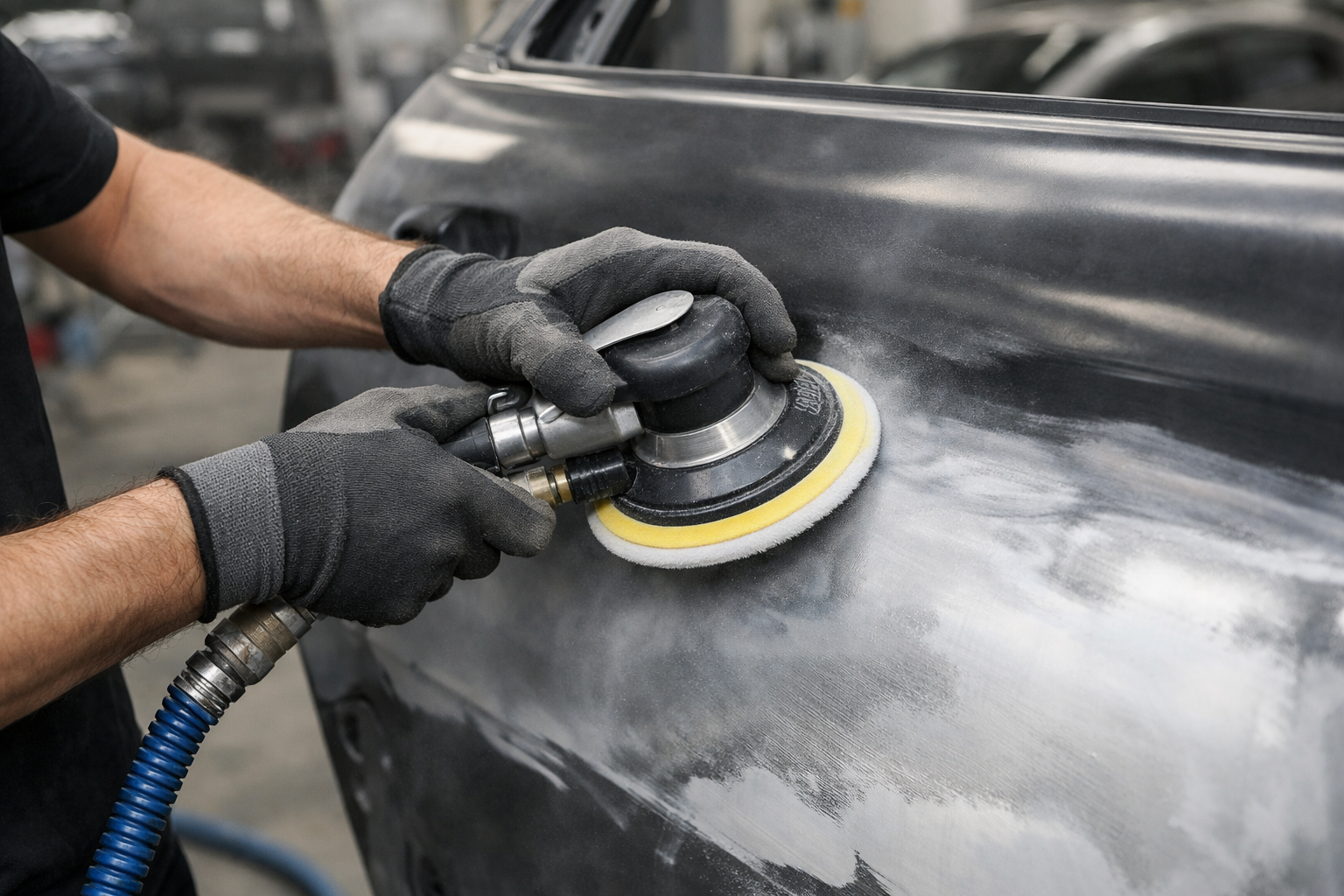
A pneumatic sander is a tool that runs on compressed air. It has no electric motor inside. Air pressure spins the sanding pad and keeps it moving at a steady speed.
Air sanders are common in auto body shops. They are used for sanding paint, smoothing filler, and preparing surfaces before spraying. Because air tools stay cool, they work well for long sanding sessions.
What Are Electric Sanders and How Do They Work?
Electric sanders use a built-in motor to spin the sanding pad. They can be powered by a cable that plugs into a wall outlet or by a rechargeable battery.
Corded electric sanders give steady power as long as they are plugged in. Battery sanders are easier to move around but have limited run time. Many modern electric sanders use brushless motors, which are more efficient and last longer than older motor types.
Air Sander vs Electric Sander:Which Is Better for Cars?
For professional auto body repair, air sanders usually work better. Electric sanders are better for light work, small shops, and mobile repair jobs.
Air sanders are built for long and steady sanding. They do not overheat easily, even when used for many hours. This makes them a good choice for body shops that work on many cars every day. Electric sanders are easier to carry and set up. They are good for quick repairs and jobs done outside a workshop.
If sanding work is long and repeated, then air sanders reduce heat buildup and tool wear. If sanding is only done from time to time, then electric sanders are more convenient.
| Feature | Air Sander | Electric Sander |
|---|---|---|
| Power source | Air compressor | Electricity or battery |
| Performance | Very steady and strong | Can drop during heavy use |
| Weight | Usually lighter | Usually heavier |
| Heat | Stays cool | Can get hot |
| Best use | Daily shop work | Small or mobile jobs |
DA Sanders. Electric vs Pneumatic
DA stands for dual action. These sanders move in a spinning and random pattern. This helps create a smooth surface and reduces swirl marks.
Pneumatic DA sanders are popular in paint shops. They give smooth results and can run all day without slowing down. Electric DA sanders are easier to move and do not need an air hose. They work well for spot repairs, detail work, and small panels.
Air DA sanders are better for sanding large panels like doors and hoods. Electric DA sanders are better for trim, edges, and quick touch ups.
What Kind of Sander Is Best for Cars and Auto Body Work?
The best sander for cars depends on the type of repair, the surface being sanded, and the working environment.
Auto body work includes many different sanding jobs. Some jobs need heavy sanding to remove paint or filler. Other jobs need fine sanding to prepare for paint. No single sander works best for every task.
If you are sanding large panels like doors, roofs, or hoods, then a DA sander is the best choice. If you are doing detailed work on small areas, then a compact electric sander is better.
Large flat surfaces need smooth and even sanding. Smaller areas, such as edges and tight spaces, need more control.
Most professional shops use both types. They use air sanders for heavy work and electric sanders for small and detailed jobs.
Cost Comparison. Air Sanders vs Electric Sanders
Air sanders usually cost less to buy, but they need a compressor. Electric sanders cost more at first, but they do not need extra equipment and tools.
An air sander by itself is often cheaper than an electric one. However, it cannot work without an air compressor. A good compressor can be expensive and also needs space, power, and maintenance.
Electric sanders only need electricity or a battery. This makes them easier to start using. There is no need to buy hoses, filters, or air systems.
Air sanders usually cost less to repair. They have fewer parts inside. Electric sanders have motors and electronics, which can be more costly to fix.
Over time, air sanders are often cheaper for busy shops. Electric sanders are usually cheaper for small shops or people who sand only sometimes.
Pros and Cons of Air Sanders for Auto Body Repair
Air sanders give strong and steady power, but they need a good air compressor to work well.
Air sanders are built for hard and long use. They are very common in professional body shops because they can run for many hours without slowing down.
If the air supply is weak or unstable, then the sander will lose power and the sanding quality will drop.
Advantages of Using an Air Tool Sander
Air sanders are usually lighter than electric ones. This makes them easier to hold for long periods. They do not get hot during use, so they can run all day without damage.
They are also very durable. Since they do not have an electric motor inside, they have fewer parts that can break. This makes them last longer in busy shops.
Limitations of Pneumatic Sanders
Air sanders need a compressor to work. If the compressor is small or weak, the tool will not perform well. Setting up a full air system also costs more money at the start.
Air tools are also louder. The noise comes from both the tool and the compressor. This can make the work area noisy.
Pros and Cons of Electric Sanders for Car Sanding
Electric sanders are easy to use and easy to move, but they can get hot when used for a long time.
Electric sanders are popular because they do not need an air hose or compressor. You only need power or a charged battery. This makes them great for small shops, home garages, and mobile repair work.
If easy movement and quick setup matter more than long run time, then electric sanders are a good choice.
Corded Sanders vs Battery Operated Sanders
Corded electric sanders deliver consistent power for extended shop work where outlets are available. Battery sanders offer greater mobility for field repairs, though they require periodic recharging or battery swaps during longer sessions.
Are Brushless Sanders Better for Auto Body Work?
Brushless sanders use a newer type of motor. These motors are more efficient and create less heat. They also last longer than brushed motors.
Because of this, brushless electric sanders are better for auto body work. They run smoother and do not wear out as fast. They are also better for longer sanding sessions.
How to Choose Between an Air Sander and an Electric Sander
The right choice depends on the size of your shop, how often you sand, and what power systems you have.
Some shops work on many cars every day. Other shops only do a few repairs. Some people sand cars in a garage or at customer locations. All of these situations need different tools.
If you run a busy repair shop, then air sanders give better long term value. If you work in different places or sand only sometimes, then electric sanders are easier to use.
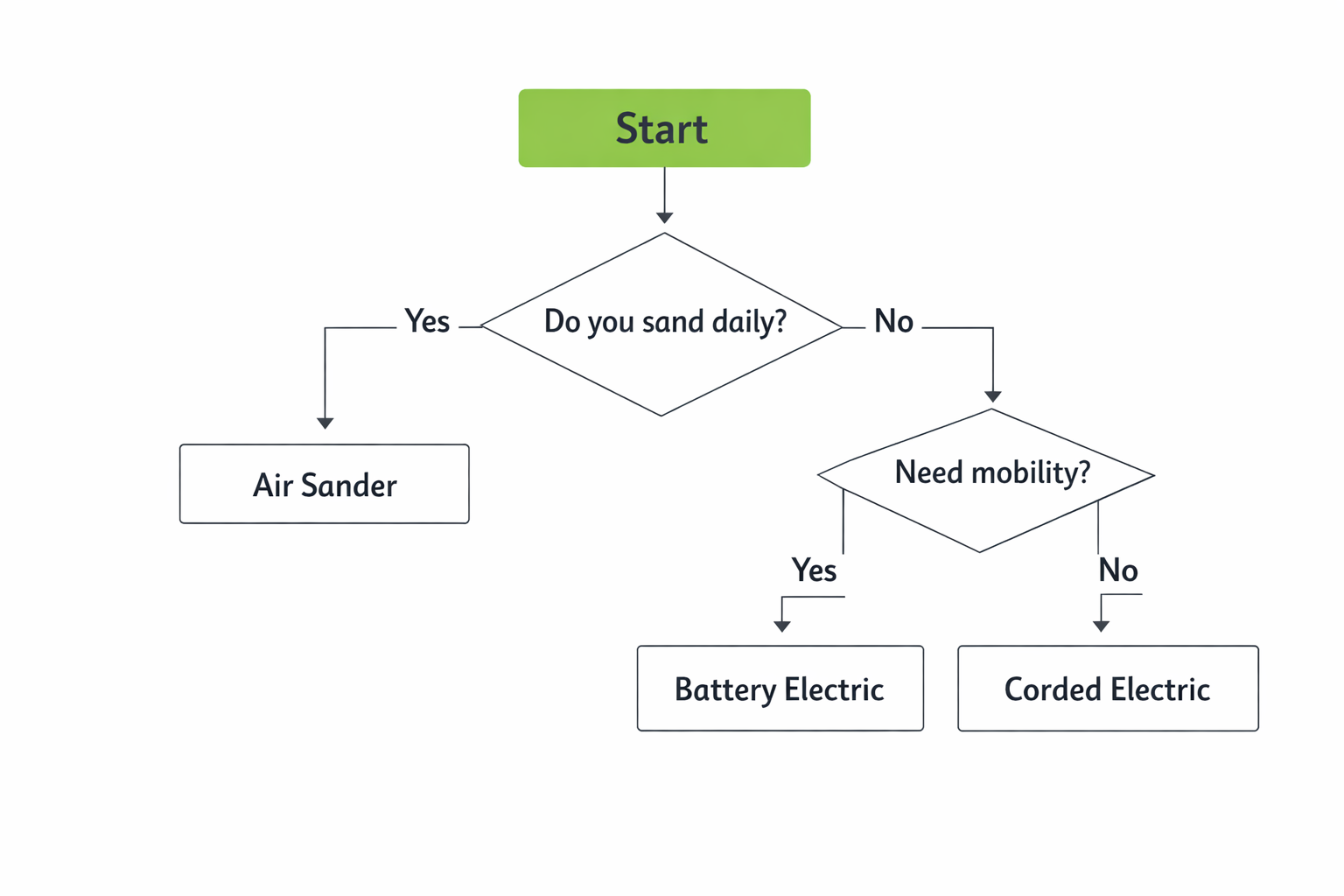
Decision Making Guide
| Work Type | Best Choice |
|---|---|
| Small shop | Electric sander |
| High volume shop | Air sander |
| Mobile repair | Battery electric sander |
| Fixed workshop | Air or corded electric |
| Daily sanding | Air sander |
| Occasional sanding | Electric sander |
Choosing the right tool helps save time and money. It also helps protect the surface of the car and improves paint results.
When Shouldn’t You Use an Air or Electric Sander?
Some sanding tools are not safe or effective in certain working conditions. Using the wrong sander can damage the surface or waste time.
Not every job is right for every type of sander. Choosing the wrong one can lead to uneven sanding or poor paint results.
If you are sanding thin metal or plastic parts, then a high speed air sander can remove too much material. A controlled electric DA sander is safer.If you are working in a tight space, heavy corded sanders can be hard to move. Smaller electric tools are easier to handle.If you need to sand for many hours without stopping, battery sanders are not ideal. They will need frequent recharging.
Safety Standards, Performance Guidelines, and Professional References
Proper tool maintenance and usage directly impact sanding quality and operator safety.
For air sanders, ensure clean, dry air supply and regularly inspect hoses and fittings for leaks. For electric sanders, use undamaged cords and follow manufacturer charging guidelines. Regardless of type, always match sanding discs and speeds to the task—incorrect grit or excessive pressure can damage surfaces and compromise paint adhesion.
Conclusion
Air and electric sanders serve different purposes in auto body work. Air sanders excel in high-volume professional environments due to their consistent power, lighter weight, and durability. Electric sanders offer convenience, portability, and easier setup for smaller shops and mobile repairs. Evaluate your shop’s air supply capacity, daily workload, and mobility needs before investing.
MAXXT-TECH is a Chinese manufacturer and supplier of air and electric sanders. The company focuses on tools for auto body repair and surface finishing. It offers both standard products and custom designs through OEM and ODM services. MAXXT-TECH supplies sanding tools to many markets around the world.
If you are looking for air sanders or electric sanders for auto body work, MAXXT-TECH offers reliable sanding solutions for professional use worldwide.
Frequently Asked Questions About Air and Electric Sanders
What kind of sander is best for cars?
The best sander for cars depends on the type of work you are doing. For large flat panels and full paint jobs, a DA sander works best because it sands evenly and leaves a smooth surface. For small areas and detail work, a compact electric sander is easier to control.
Is pneumatic better than electric for sanding?
Pneumatic sanders are better for long and heavy sanding jobs. They stay cool and give steady power all day. Electric sanders are better for light work, small shops, and mobile repairs. Both types work well when used for the right tasks.
Are brushless sanders better?
Yes, brushless sanders are usually better. They use less energy, create less heat, and last longer than brushed motors. This makes them a good choice for auto body work, especially when sanding for longer periods of time.
Should beginners start with electric or air sanders?
Beginners should usually start with electric sanders. They are easier to set up and easier to control. There is no need to use an air compressor. This makes electric sanders safer and simpler for people who are new to car sanding.
Do I need different sanders for primer and topcoat?
Yes, different sanding stages need different tools. Primer sanding often needs stronger sanding to level the surface. Topcoat sanding needs fine and smooth sanding to prepare for paint. Using the right sander and sanding discs helps create a clean and professional finish.
Can I use an electric sander for wet sanding?
No, electric sanders should not be used for wet sanding due to electrical safety risks. Air sanders are the only safe option for wet sanding applications in auto body work.
 English
  Arabic
  French
  German
  Portuguese
  Russian
  Spanish
  Turkish