
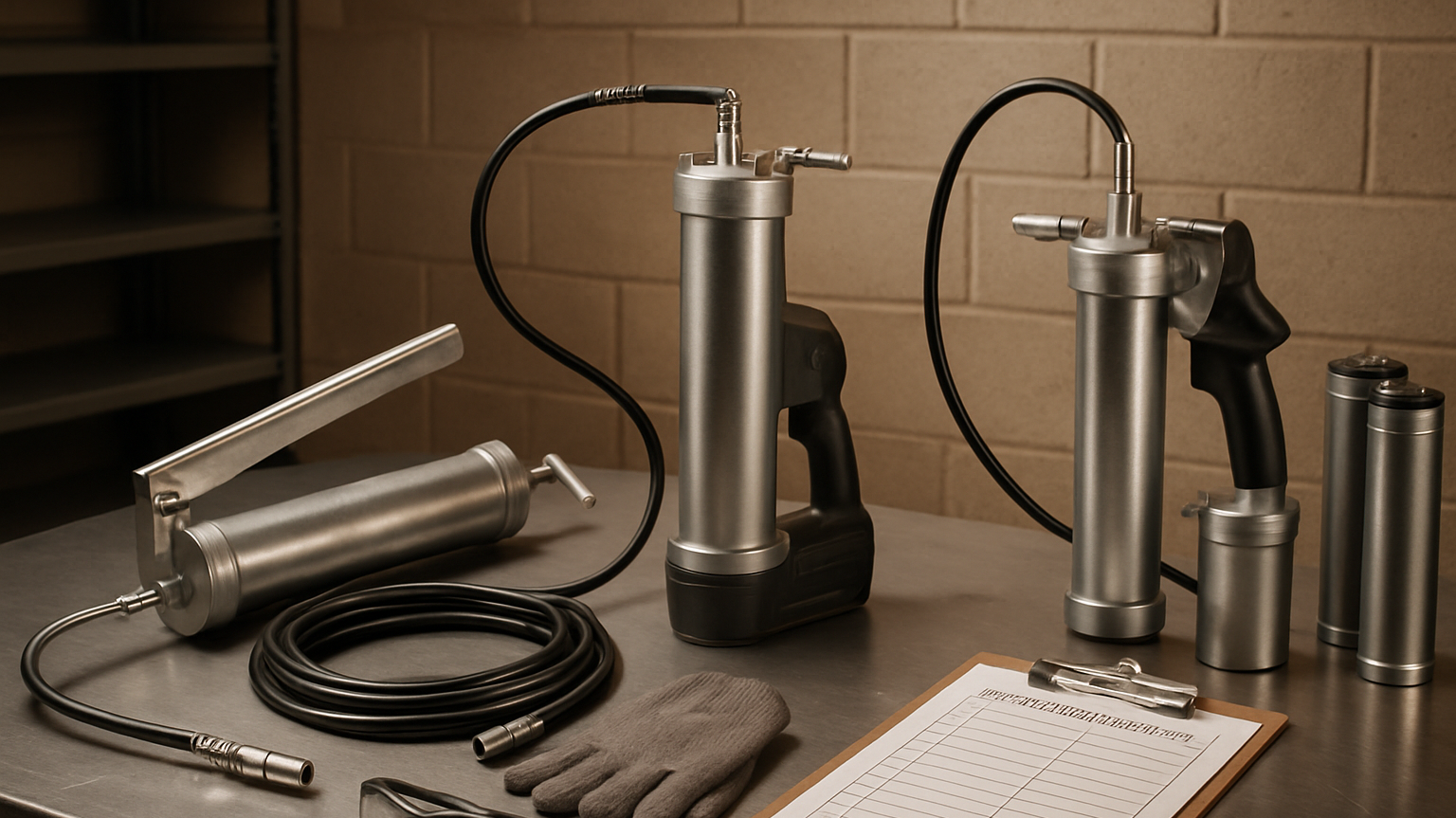
Lubrication of machinery and equipment is not a nice-to-have; it’s essential. At best, poor lubrication can lead to sudden downtimes and increased maintenance costs; at worst, lubrication failure can result in catastrophic equipment failure, with disastrous consequences, even loss of life.
This blog covers everything you need to know about grease guns: the different types, the industries that use them, and how to operate them safely. A handy troubleshooting guide is also included to help you spot common grease gun issues at a glance and how to resolve them.
What is a grease gun?
A grease gun is a lubrication tool used by mechanics, engineers, professional contractors, and DIY enthusiasts to lubricate moving parts of machinery and equipment. The gun dispenses grease under pressure to ensure the grease penetrates to inaccessible areas as well, eliminating the need to take the equipment or machinery apart.
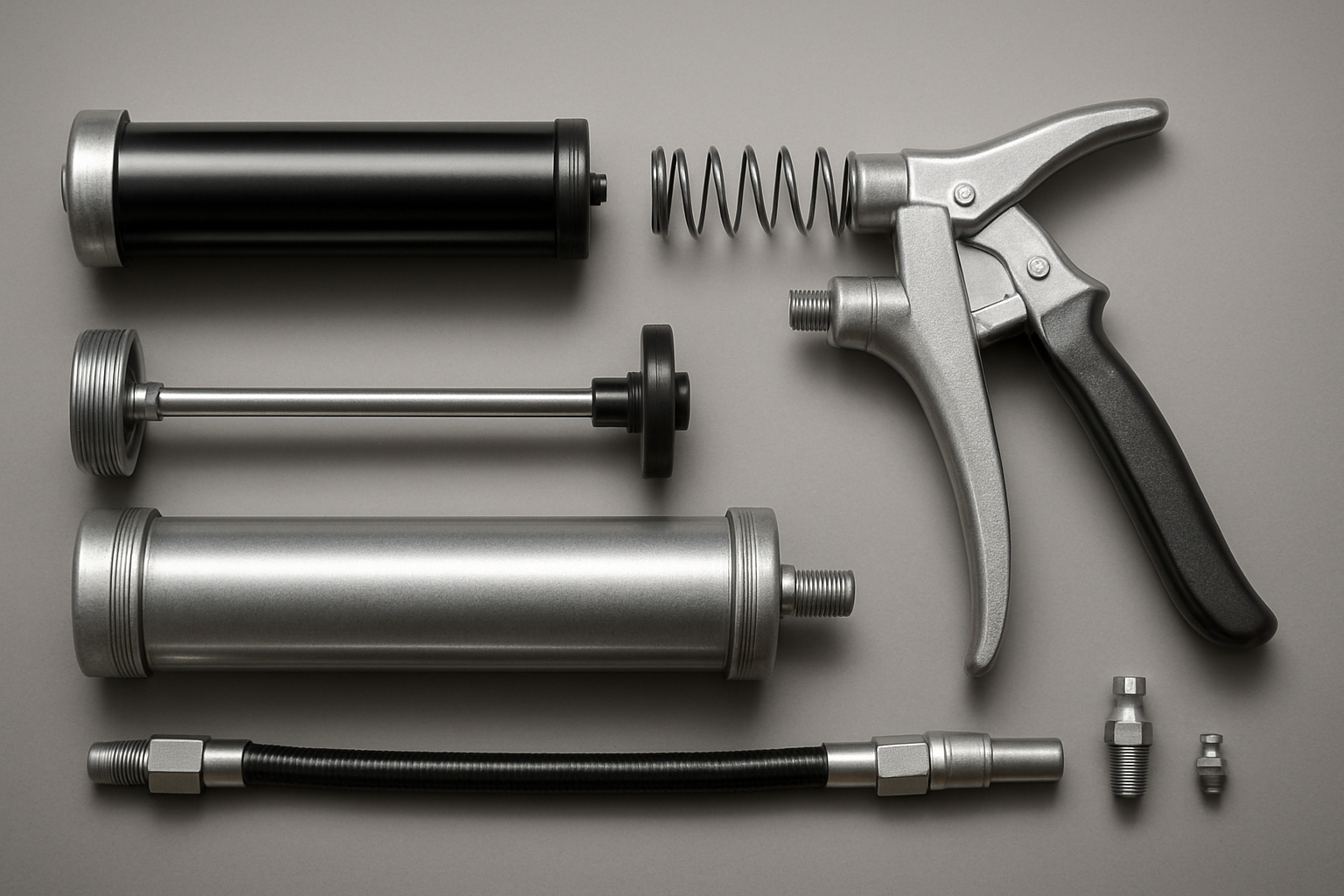
Understanding the basic parts of a grease gun and their functions makes it easier to learn how to work a grease gun. The basic components of a grease gun are:
Barrel: The barrel is the grease container. It has a cylindrical shape and can also house the grease cartridge. Inside is the follower plate and spring, which propel the grease out.
Trigger: This is the lever that lets you control the flow of grease. When you want to release the grease, you squeeze the lever.
Nozzle: The grease leaves the grease gun through the nozzle. It is supposed to match grease fittings exactly so you can apply the grease precisely.
Grease Gun Tube: Also referred to as the hose, this flexible tube connects the nozzle to the barrel. This gives you more leeway to reach all spots that need greasing.
Grease Fitting (Nipple): This is the point on the equipment or machinery to which the nozzle connects. It is the point where the grease is applied and the nozzle is supposed to lock securely onto it so no grease is spilled.
Industry Applications
Grease gun use is prevalent in various industries, including manufacturing, agriculture, construction, transportation, as well as the DIY sector. They are used for precision lubrication, to reduce friction in machinery, prevent mechanical failures, and extend the lifespans of vehicles, industrial machinery, construction tools, and gardening gear.
Types of grease guns
Pneumatic Grease Guns
Pneumatic grease guns are air-powered tools designed to make lubrication quicker and easier for people working in workshops or industrial settings. This power tool connects to an external air compressor that produces the pressure needed to push grease into bearings, joints, and other tight spots. The gun delivers grease at a steady, high-pressure rate for thorough coverage in far less time than hand-operated models.
Pneumatic grease guns are a popular tool in the construction and mining sectors where they are used to lubricate massive bearings, gears, and hydraulic components.
There are two main types of pneumatic grease guns: single-shot and continuous flow. Single-shot guns deliver a single shot at a time, making them ideal for precision work. Continuous flow guns deliver a constant stream of grease when you press the trigger. They are used in large-volume applications.
Battery-Powered Grease Guns
These high-performance cordless grease guns operate on battery power. They are widely used in the automotive, industrial, and heavy equipment maintenance sectors, where they are priced for their simplicity of operation and efficacy in large volume applications. Being battery-powered, they have the added benefit that they can be used in locations with no power source.
Manual Grease Guns
Manual grease guns are the most common type, valued for their simplicity and reliability. Operating without external power, these tools use hand pressure to push grease into bearings and fittings. Businesses, individuals in agriculture, automotive servicing, construction, and other industries use them for low-volume lubrication.
Lever-Type
Lever grease guns generate a high volume per stroke. It is operated with both hands: one hand holding the gun and the other one pumping the lever. Each stroke generates high pressure, but you also need more room to operate it than working with a pistol-grip gun needs. These grease guns are often used in situations that require precise lubrication. They are not ideal for high-volume repetitive tasks.
Pistol Grip
Pistol-grip grease guns are operated with one hand to pull the trigger. Since the trigger provides less pressure than a lever, you can’t generate a high volume of grease per stroke. Pistol grip grease guns are ideal for use in small, awkward spaces that require controlled grease flow.
Safety Precautions When Using a Grease Gun
Like any tool, grease guns can pose safety risks. The biggest risk stems from the high pressure generated, especially by pneumatic and battery-powered grease guns. If not used correctly, high-pressure grease gun injuries can result when grease is accidentally injected into the skin. This is a serious injury that requires immediate medical attention. Grease contamination of tissue can lead to dire medical consequences.
Mishaps can also result from slipping on grease, losing your grip on a tool, or grease drops in your eyes.
Safety Tips for Grease Gun Use
An important part of learning how to use a grease gun, is learning how to use it safely.
Study the Manual
Familiarize yourself with the tool, how it works and its specific safety features, so you know how to use it properly. An excellent option is to attend an official training program by Multi-skill Training Services, an organization that offers industrial training on site and online.
Wear Protective Clothing
It is essential to protect yourself against accidental injury by wearing personal protective equipment (PPE), including:
- Safety glasses to protect your eyes from grease splatters.
- Gloves to ensure a proper grip – greasy hands can let a tool slip and cause injury.
- Protective clothing to protect your skin from exposure to grease.
Maintain Your Tool
Keep it clean and inspect it regularly for signs of wear, damage, or leaks. Replace damaged parts immediately and ensure that the tool itself is always properly lubricated. Keep the tool in good working condition.
Adhere to Pressure Recommendations
Never exceed the manufacturer’s pressure recommendations. Doing this can damage the tool, possibly leading to accidents and injuries.
Use the Recommended Grease
Always use the grease specified by the manufacturer. Using the wrong type of grease or mixing different types of grease can cause problems with the tool.
Apply the Correct Amount of Grease
Refer to the manufacturer’s guidelines for the grease volumes to apply. Over-greasing can damage your tool and cause a safety hazard, while too little grease can bring the tool to a standstill.
Release Built-Up Pressure
Once you’ve finished greasing, relieve any pressure inside the gun before taking it off the grease gun fitting, so you’re not surprised by a sudden discharge.
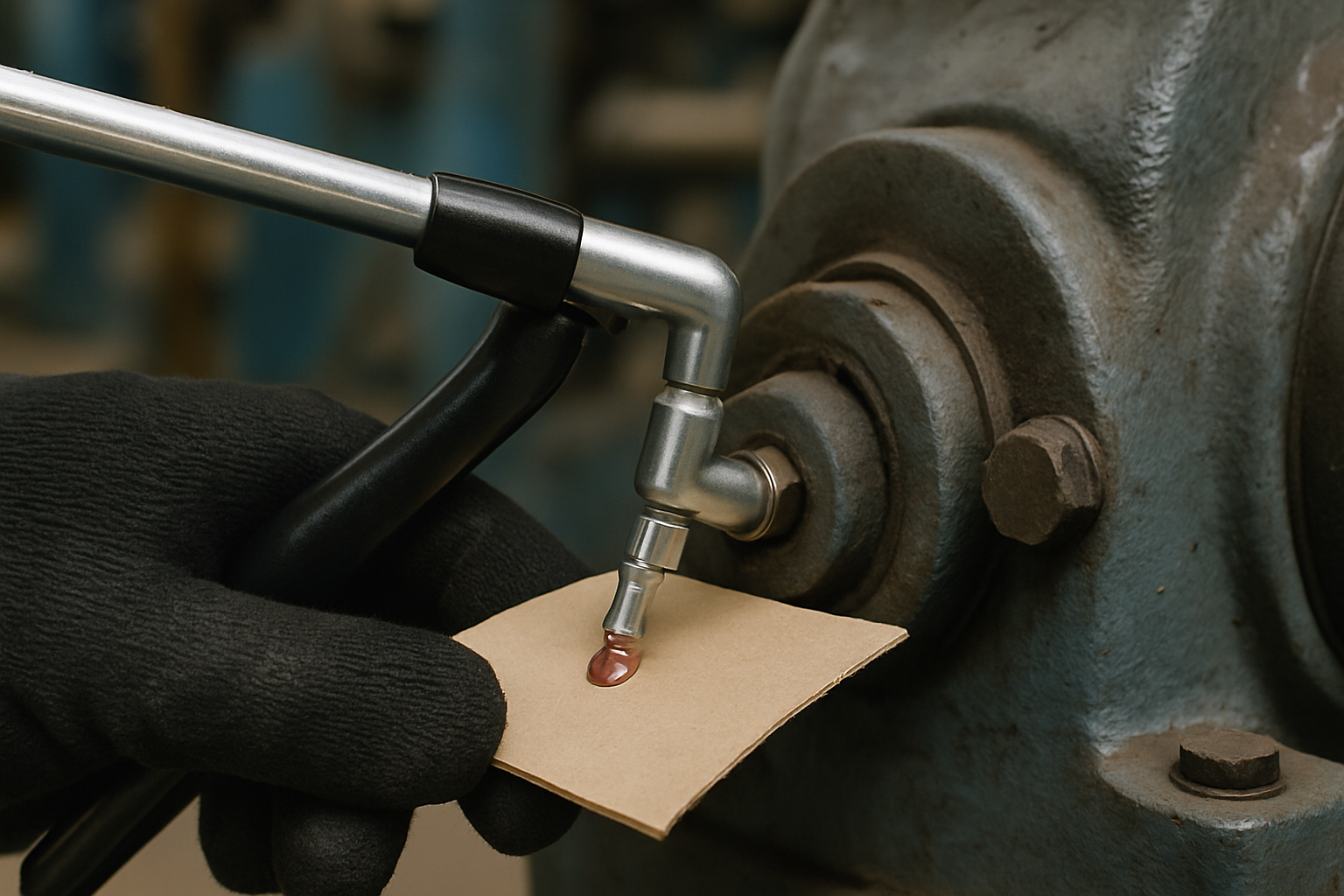
Use Paper or Cardboard to Check for Leaks
Never use your hands to detect leaks or blockages. Accidentally released grease under high pressure can penetrate the skin and cause serious harm.
Store Carefully
Store your grease gun in a clean, dry area, disconnected from its power source. Cover it to protect it from dust and other contaminants.
Complete Step by Step Guide: From Loading to Using Your Grease Gun
Phase 1: Preparing and Loading your Grease Gun
Step 1: Remove the old cartridge
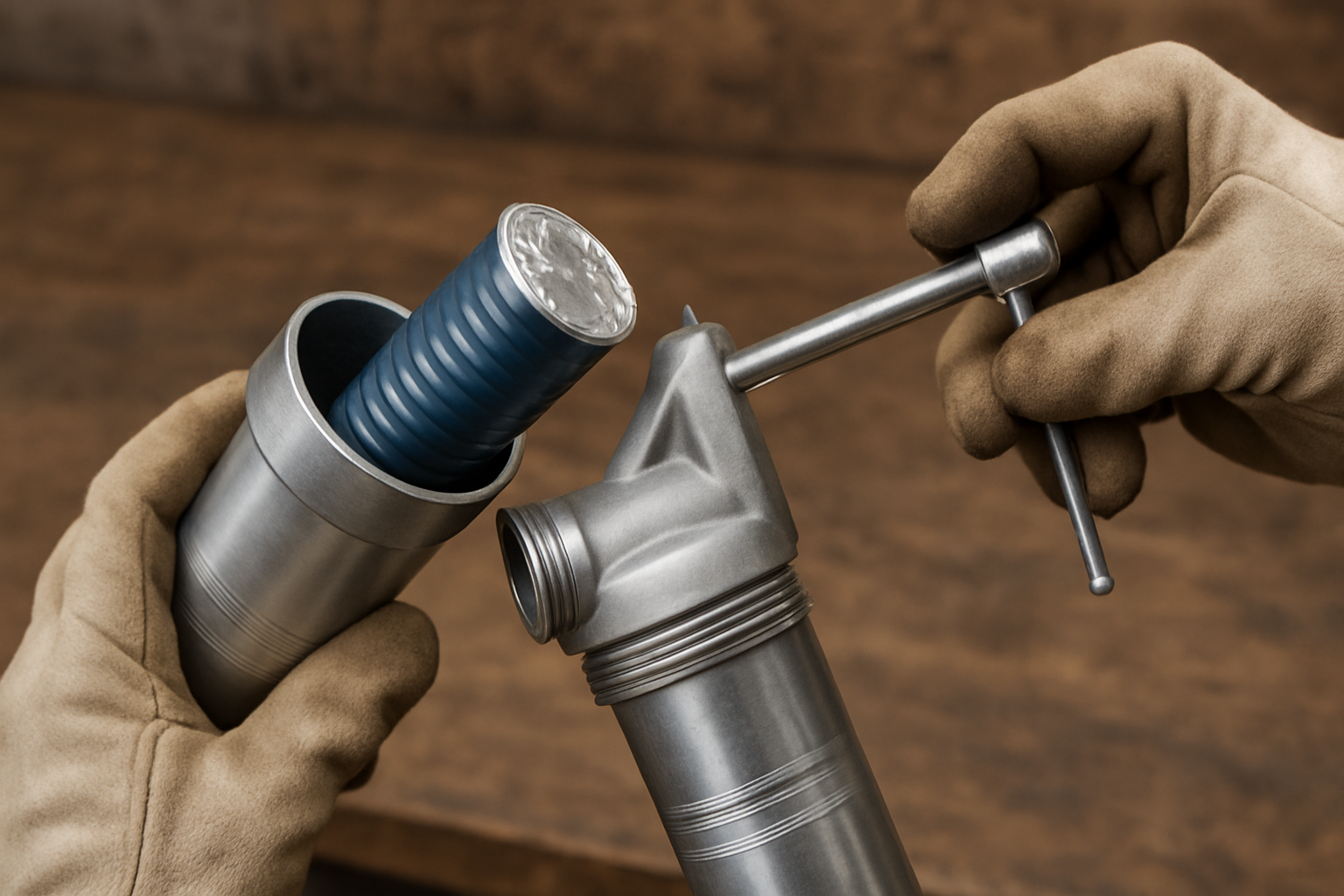
Unscrew the cylinder from the body of the grease gun to remove the old grease cartridge. Unscrew the end cap from the grease gun and pull back the plunger rod, twist it to lock it in place, and keep the spring retracted.
Step 2: Insert the new cartridge
Open one end of the cartridge by peeling off the cap and insert the cartridge into the cylinder with the open end facing down, and then open the other end. Screw the refilled cylinder back onto the grease gun head until it is tight, then turn it back one turn to release some pressure.
Step 3: Prime the grease gun
Release the plunger rod and screw the cylinder back onto the body of the grease gun. Pump the handle to prime the grease gun until grease begins to flow. You may have to pump several times before the grease begins to flow steadily.
Phase 2: Applying Grease to Fittings
Step 5: Identify the Grease Gun Fittings
Use the tool manual to locate all the grease points and clean each one before starting the lubrication process.
Step 6: Attach the Coupler Accurately
The coupler must fit exactly and firmly onto the grease gun fitting at a 90-degree angle so only grease can enter the fitting.
Step 7: Use a Steady Pump Action
Use moderate pressure on the lever or trigger to ensure a manageable grease flow once it appears.
Step 8: Stop Pumping When Grease Appears
Once you notice grease appearing at the grease point, stop pumping. If grease doesn’t start flowing, check for blockages or debris.
Step 9: Refrain from Over-Greasing
If you are inexperienced, consult the manufacturer’s guide for pump and volume recommendations. You don’t want to over-grease any machine parts, which might easily get damaged by the force. Damaged seals of moving parts can cause metal-on-metal action, which is what lubrication is meant to prevent in the first place.
Step 10: Disconnect Coupler Carefully
Once done, carefully remove the coupler. Just pull it straight off; you don’t need to twist it.
Choosing the Right Lubrication
Selecting the right grease type is critical – a grease gun is only fit for purpose if it dispenses the correct grease for your purpose. Grease consists of three basic ingredients: base oil, thickener, and grease additives. Different types of grease, composed of these and other components in varied proportions, are created for applications in automotive, industrial, and manufacturing sectors.
Components such as calcium, lithium, and polyuria act as thickeners, while additives are incorporated to accommodate factors like corrosion risks, extreme pressure, or high-temperature environments. Temperature conditions play a vital role in the viscosity of lubricants – in low temperature the viscosity increases, meaning the gets thicker and more resistant to flow. On the other hand, higher temperatures can lead to oil becoming thinner and flowing more easily.
Troubleshooting Guide for Common Grease Gun Problems
Truth be told, grease guns are sticky contraptions, and they always seem to squirt grease where you don’t want it. Are you wondering what the secret is to getting the grease to go into the zerk instead of oozing along the side? Here are our grease gun tips on common grease gun problems and what to do about them.
| Problem | Mögliche Ursache | Lösung |
| Grease not coming out | Air pockets in the cartridge | Bleed the gun with the air release valve or slightly unscrew the head to let air escape. |
| Grease leaking around the coupler | Worn or loose coupler seal, damaged fittings | Tighten or replace the coupler; replace damaged fittings. |
| Lever or trigger seems stuck. | Blocked nozzle, dried grease, or hardened grease in the gun. | Clean the nozzle, replace blocked hose, or flush the grease gun. |
| Weak or no pressure. | Plunger or spring issue. | Re-seat the plunger and check spring tension. Replace worn parts if necessary. |
| Excess grease around the plunger rod. | Damaged plunger seal. | Inspect plunger; replace seal or cartridge if necessary. |
| Grease not reaching the bearing. | Blocked zerk fitting or hardened grease inside. | Clean or replace the zerk fitting; use a solvent to break down any hardened grease. |
| Inconsistent grease flow. | Wrong type of grease (too thick/thin) or mixed greases. | Use recommended grease; avoid mixing greases. |
| Grease gun not pumping. | Trapped air. | Use the bleeder valve or loosen the head slightly to purge air. |
Grease Gun Maintenance and Care
Manual grease guns and Elektrowerkzeuge like pneumatic and battery-operated grease guns, are precision lubrication tools that should be treated with care to ensure safety and reliable operation. Follow these steps to prevent common issues like airlocks, leakages, or hardened grease build-up that can damage the tool.
Regelmäßige Reinigung
Grease guns need regular cleaning – dirt and debris play havoc with their ability to function properly. Unfortunately, grease easily traps dirt and dust, so regular thorough cleaning is imperative. Wipe your grease gun with a dry cloth after each use.
Lubricate Moving Parts
While grease guns are lubricating tools, they need lubrication themselves. It’s good practice to check that all the moving parts function smoothly before and after every use to avoid wear and tear and possible malfunction. Lubricate them when needed.
Use the Right Grease
Always use the manufacturer’s recommendation for grease type and don’t mix different greases, as this can cause separation of components and render the grease ineffective. To avoid this problem, clearly label each fitting with the specific grease it requires.
Release Trapped Air
Always bleed air from the gun when loading a new cartridge to prevent airlocks, which reduce pressure and can lead to inconsistent flow.
Replace Old Zerks and Fittings
Grease fittings get clogged over time and won’t accept any lubrication. Replace clogged or corroded zerks immediately—forcing grease through a blocked fitting can damage the gun or the equipment you are lubricating. Keep spare zerks on hand.
Protect the Coupler
Use dust caps to protect couplers when not in use to keep out dirt.
Store Carefully
It is recommended to store grease guns horizontally, in a clean, sealed container, to prevent airlocks and grease separation if it is being stored long-term. For daily or weekly use, they can be stored upright and covered with a dust cap on the coupler. Always store grease guns unpressurized to avoid continuous stress on the seals, spring, and plunger.
FAQs
Can I use any grease in my grease gun?
No, the wrong grease can clog the gun or damage the machinery you are lubricating. Use the recommended grease type for your tool.
Why doesn’t the grease work?
This is not always due to the grease itself. There can be another problem, such as an airlock, a clogged nozzle, or internal parts, like the spring or seals that may be worn. Bleeding the air, cleaning the nozzle, or inspecting the internal components might be useful.
How do I fix a grease gun that doesn’t pump?
Loosen the barrel a couple of turns and pump to clear any air trapped inside. Manually push the grease toward the head if that doesn’t work.
Why does a grease gun need to be calibrated?
Calibration helps to prevent over- or under-lubrication. It ensures that the gun continues to deliver the correct amount of grease per stroke. Neglecting to calibrate the gun regularly can damage it. Have it done least once or twice a year.
Why have battery-operated and pneumatic style grease guns gained so much popularity?
They are work well for projects that require large volumes of grease, yet they are not so tiring for operators to use.
Abschluss
Grease guns, especially pneumatic and electric models, are high-precision tools that require skill to operate safely and proper maintenance to ensure long-term functionality. Knowing how to use and load a grease gun correctly is the key to avoiding common issues and assuring extended tool life.
To discover reliable, high-quality solutions for your workshop or business, explore MaxXT’s range of power tools, including grease guns, and find the right fit for your maintenance needs.
Call the MaxXT sales team today to explore our line of top-quality power tools available wholesale to distributors and industry partners.
 German
  English
  Arabic
  French
  Portuguese
  Russian
  Spanish
  Turkish