
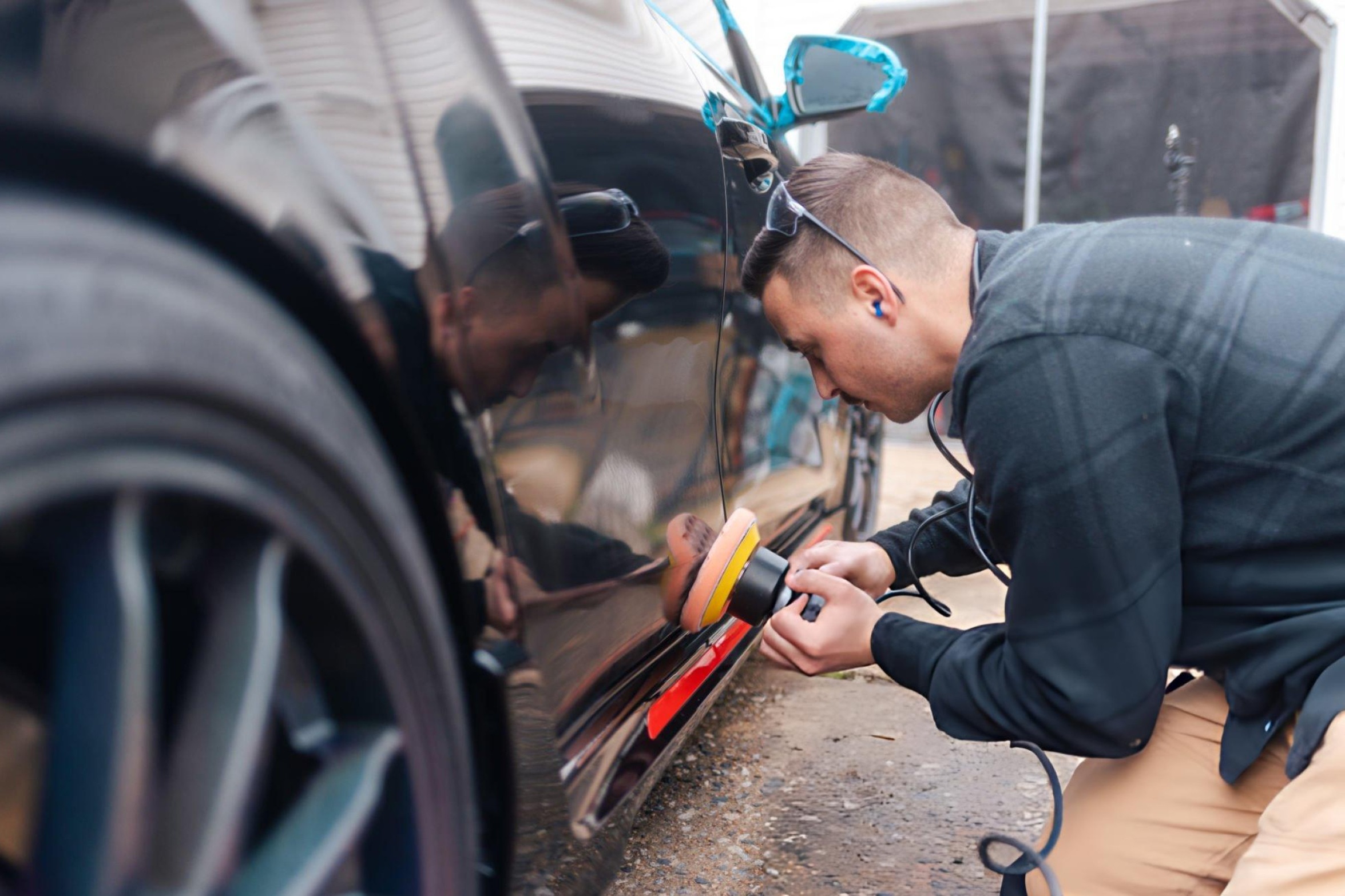
Your car’s paint can tell a story; every swirl, every faint scratch or dull patch adds a unique chapter. When it’s time to rewrite that story, two polishing machines dominate every detailer’s toolkit: the dual-action polisher and the rotary polisher. At first, they might look similar, but they work very differently.
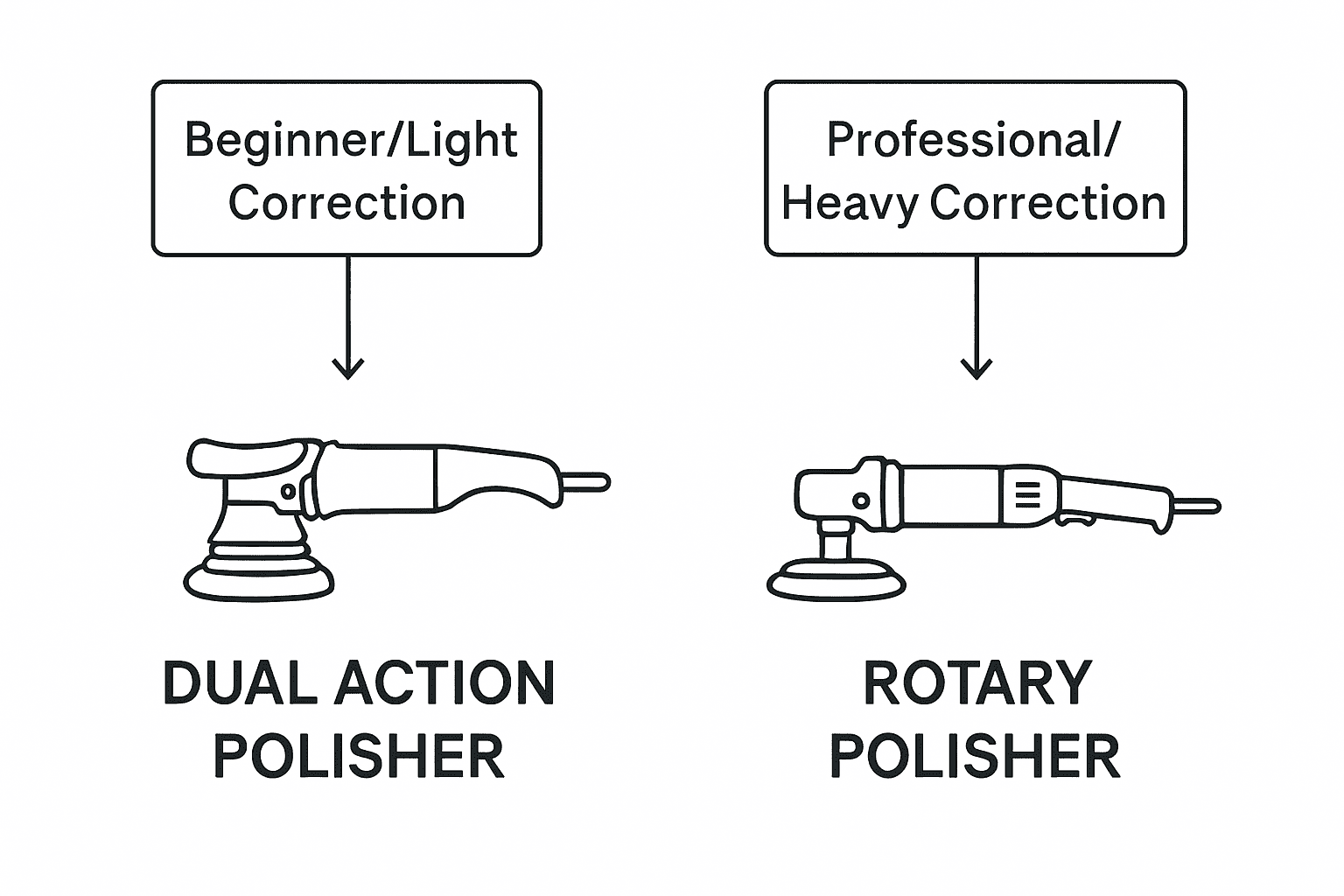
In simple words, a dual action polisher swings in a rotating and oscillating pattern. It is gentler and more forgiving, ideal for beginners or routine maintenance. A rotary polisher, by contrast, spins in a single, powerful circle, cutting through defects faster but needs more skill and control. In short, if you are new to detailing, go for a DA polisher, and if you are a pro who is chasing deep correction, rotary is the way to go.
What Is a Rotary Polisher?
A rotary polisher is a single-action polishing machine, unlike the DA, which usually rotates and oscillates; the rotary spins in a fixed circular motion, almost like a drill. Because of this fixed movement, the machine produces more power, friction, and even heat, making it optimal for removing defects that lighter tools can’t touch.
Typical uses: Rotary polishers are the go-to tools for jobs that need heavy paint correction. Most professionals use them to remove scratches, restore faded paint, terminate oxidation, and prepare vehicles for respraying. They’re commonly found in detailing and workshop environments where it’s all about speed and power.
Pros of a Rotary Car Polisher:
- Cuts through defects faster than any other polishing tool.
- Delivers professional-level results when handled correctly.
- Works well with cutting compounds and wool pads.
Cons of a Rotary Car Polisher:
- Beginners can easily burn paint.
- Generates significant heat, increasing risk of damage.
- Less forgiving around edges and curves.
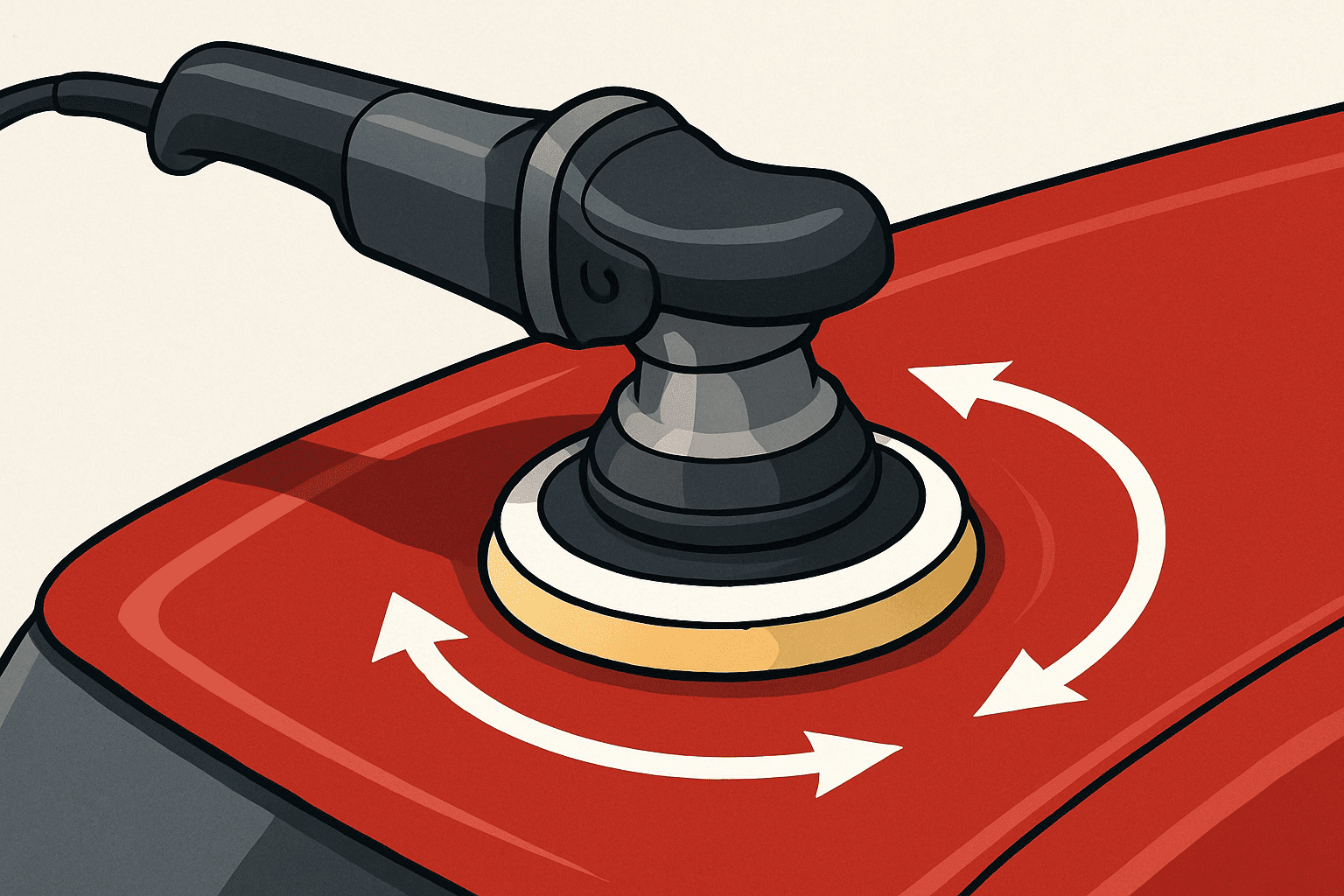
What Is an RO Polisher?
There’s often confusion around the term “RO polisher.” In many detailing communities, RO stands for rotary orbital, which refers to the same circular motion as a rotary machine. This should not be confused with the random orbital polishers, which are a type of dual-action tool.
In other words, whether you call it a rotary polisher, a rotary car polisher, or an ‘RO polisher,’ they all refer to the same machine: a single-action, high-power tool designed for correction.
What Is a Dual-Action Polisher?
A dual-action polisher (DA polisher) is made specifically for beginners. Instead of spinning in one fixed motion, the pad rotates while oscillating, much like the Earth spinning on its axis while orbiting the sun. This dual nature of motion reduces the chance of creating swirls, buffer trails, or heat spots on the paint.
Optimal for: DIY enthusiasts and first-time users who want a safe way to maintain their vehicle’s shine. It’s also widely used by detailers, body shops, and professionals during the finishing stages.
Ventajas:
- Beginner-friendly and safe on all types of automotive paint.
- Great for regular car care and light to moderate correction.
- Low risk of burning or thinning the paint surface.
Cons:
- Slower correction compared to rotary polishers.
- May struggle with deep scratches or heavy oxidation.
- Requires patience for large correction projects.
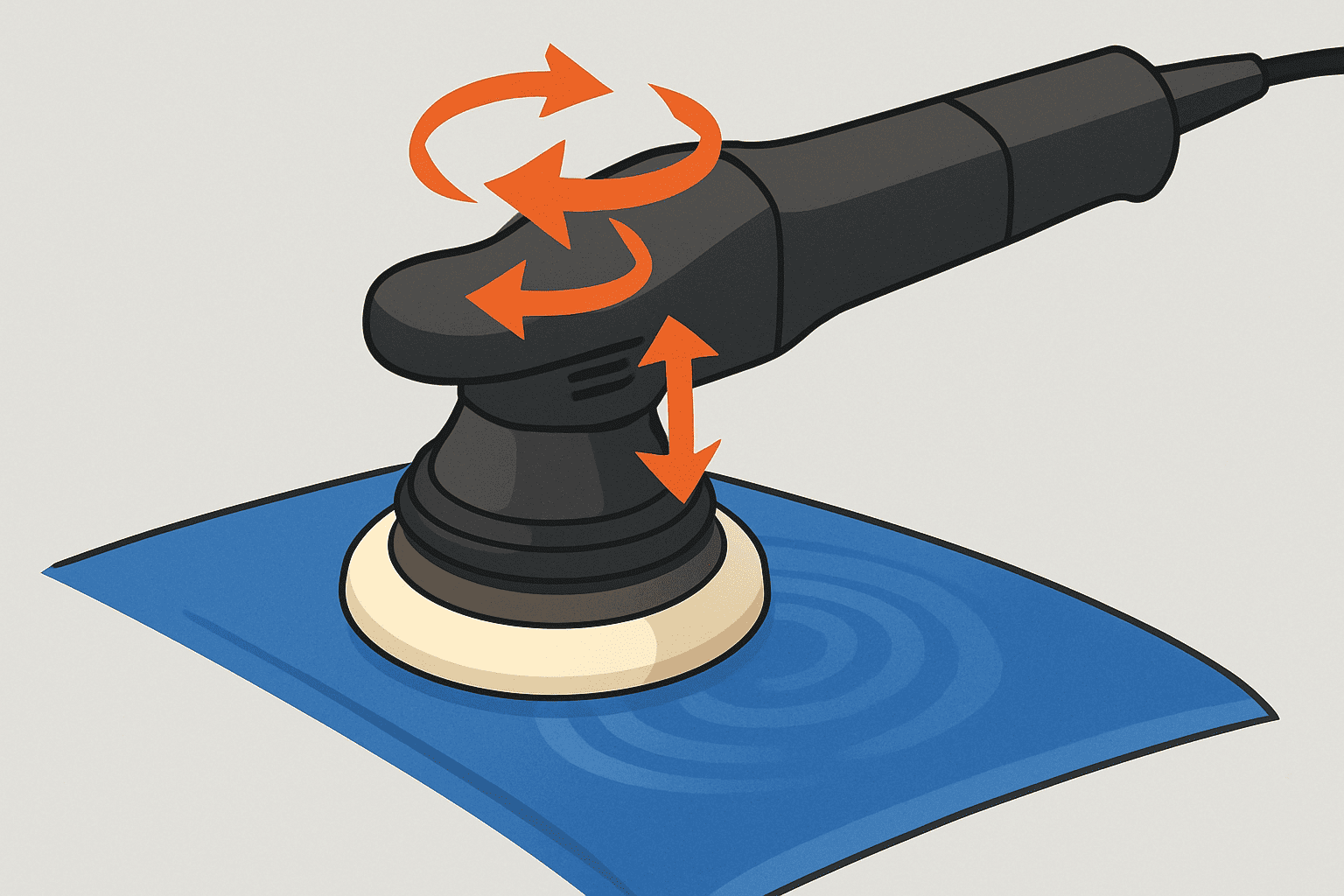
Dual Action Car Polisher Pads
One factor that makes a huge difference is the selection of dual-action polisher pads. Cutting pads paired with a strong compound can remove minor scratches, while finishing pads with light polish bring out a showroom-quality gloss. Choosing the right pad not only improves efficiency but also ensures a fine and safe finish.
Other common search terms, such as dual action buffer, DA polisher, or dual action polisher pads, all refer to the same tool. The DA polisher is known for its versatility and is perfect for maintaining a sharp, glossy finish without risking costly mistakes.
Rotary Polisher vs. Dual Action – The Core Differences
While both of the machines are made for polishing, the way they move, perform, and the user suitability differ significantly. Let’s break it down:
| Característica | Pulidora rotativa | Pulidora de doble acción |
| Motion | Single fixed circular spin | Rotation + oscillation (dual action) |
| Correction Level | Heavy correction, cuts deep scratches fast | Light to moderate correction, better for maintenance |
| Seguridad | High risk of burns, requires skill | Very safe for beginners |
| Heat Generation | High heat buildup | Minimal heat buildup |
| Learning Curve | Steep | Easy |
| Cost | Generally, higher-end professional tools | Affordable options available |
Speed, Torque, and Heat Generation
Rotary polishers require higher torque, producing high levels of friction and heat. This is optimal when you need quick correction. However, it comes with a risk as it also increases the chance of damaging paint. Dual-action polishers distribute the pressure more evenly, generating less heat and making them gentler on thinner clear coats. For reference on required RPM ranges and power specifications, check our guide on how to use a dual action car polisher: Time saving tips.
Dual Action vs. Random Orbital vs. Forced Rotation
- Dual Action (DA): Combines spin and oscillation, safe and user-friendly.
- Random Orbital: A subcategory of DA with a free-spinning motion.
- Forced Rotation Polisher: A gear-driven hybrid tool, offering more correction than a DA while still safer than a rotary.
Choosing the Right Polisher for Your Needs
Having so many terms like auto polishers, polisher tools, and professional polishers, it’s easier to feel lost. But your decision comes down to a few simple guidelines,
- Select a dual-action polisher if you are new to detailing and maintaining your own vehicle. Alternatively, if you are looking for regular upkeep.
- Go for a pulidora rotativa if you are experienced, working on heavy defects, or even operating in a professional paint-correction environment.
Picture these three common scenarios:
- DIY beginner car care: You need a safe, affordable machine to wax, polish and lightly correct your car on weekends.
- Professional detailing: You need a fast-cutting tool for deep scratch removal, oxidation or prepping vehicles for ceramic coatings.
- B2B / workshop environments: If you’re running a shop or handling fleets. A mix of both machines might be necessary.
And right before you make a decision, it’s important to go through this quick checklist:
- What is the current paint condition? (Light swirls vs. deep scratches)
- What is your skill level? (First timer or experienced?)
- How often will you use the polisher? (Occasional vs. daily)
- Do you need portability or continuous power? (See next section on cordless vs. corded)
Safety Tips and Best Practices
Rotary or DA? Regardless, it’s the technique that matters more than having a badge on the machine. All you need is to follow this atomic safety checklist:
- Inspect pads before use: Torn or dirty pads can mar the paint.
- Keep the machine moving: Never hold it in one place; constant motion prevents heat build-up and paint burns.
- Match pads and polish to the machine type: A cutting compound on a rotary behaves very differently than on a DA.
Pro tip: Practice first on a scrap panel or on a modest area of your car before going full-on on panels. This simple step gives you the muscle memory without having the risk of damage.
FAQs About Dual Action and Rotary Polishers
What is a dual-action polisher best used for?
Light to moderate paint correction, applying wax or sealant, and regular maintenance where safety matters more than speed.
Can beginners use a rotary polisher?
Yes, but it’s risky. Rotary polishers can cut aggressively and generate heat quickly. Beginners should start with a DA or forced-rotation polisher to build skill.
Can you damage paint with a DA polisher?
It’s challenging but not impossible. With excessive pressure, the wrong pad, or staying on one spot too long, you could still mar paint, but compared to a rotary, the risk is minimal.
Do professionals still use rotary polishers?
Absolutely. For heavy correction jobs, they’re still the benchmark. Many pros use a rotary for the first cutting stage and finish with a DA.
How long does it take to polish a car with a DA vs. a rotary?
A rotary can cut the time in half on heavy corrections because of its power. However, a DA may be quicker overall for light work because there’s less risk of mistakes and less need for rework.
Why Choose MAXXT-Tech for Polisher Tools?
MAXXT-Tech poses more than a retailer; it’s a full-house B2B solution provider for professional detailers and workshops. The company offers a complete range of auto polishers, rotary polishing tools, and dual-action car polishers, alongside pads and accessories matched to each machine.
Explore our Herramientas para automoviles catalogue or read the MAXXT-Tech Blog to learn more about the detailing tips and machine maintenance. For bulk orders, do consult us; our team will guide you to go with the right mix of polisher tools as per your requirements.
Conclusion – Rotary vs. Dual Action Polishers
We can conclude this by saying that both of them have their own purpose. A dual-action polisher, also called a random orbital or DA, offers a more forgiving learning curve and is optimal for routine maintenance. A rotary polisher provides the purest form of correction but needs a proficient hand. If you’re starting out or maintaining your own vehicle, choose a DA. If you’re a seasoned detailer chasing deep correction, rotary still reigns. Whichever you choose, pair it with the right pads, polish, and technique, and you’ll bring any paintwork back to life without risking costly damage.
 Spanish
  English
  Arabic
  French
  German
  Portuguese
  Russian
  Turkish