
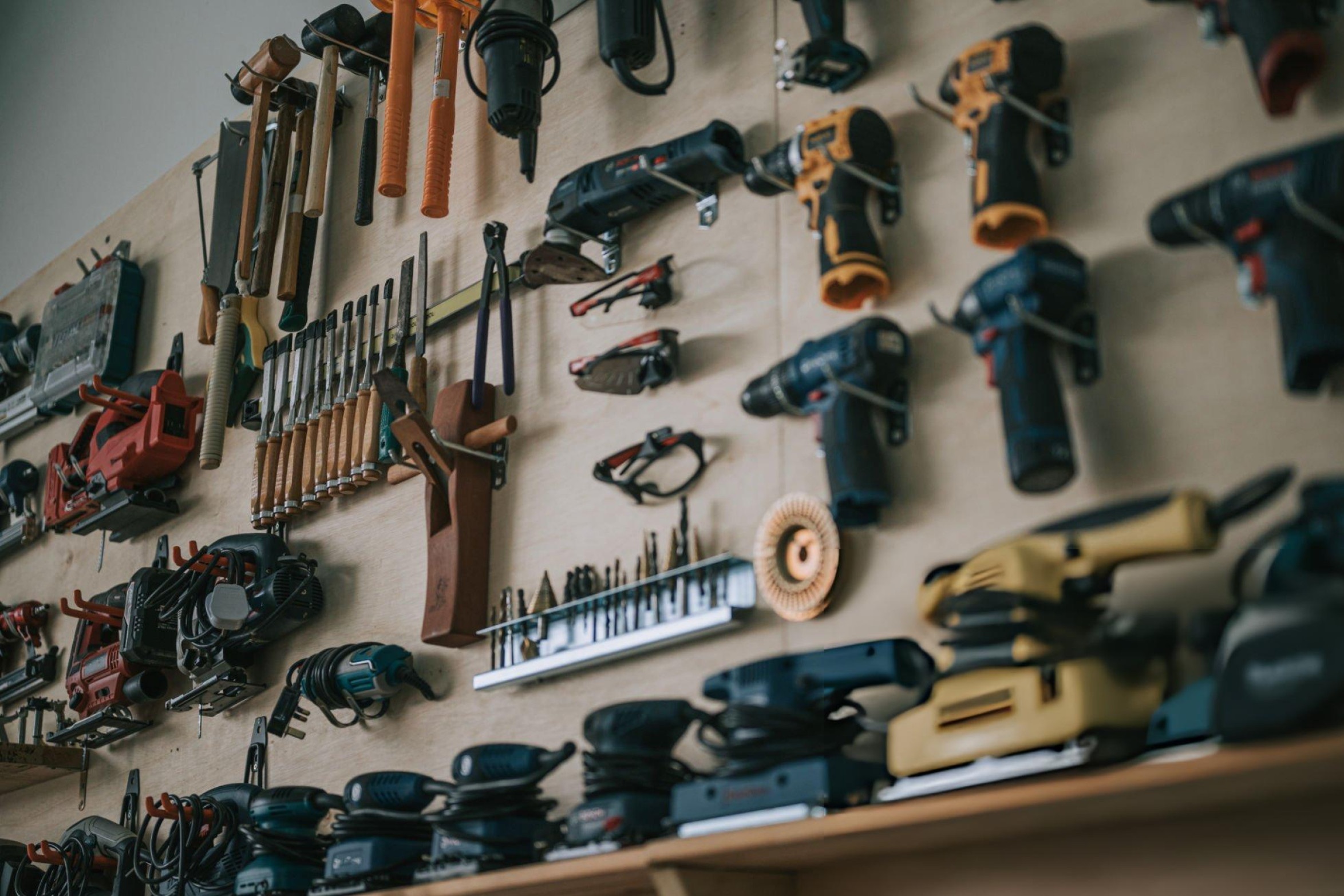
Woodworking power tools are machines that utilize either electricity or batteries that are designed to quickly, precisely cut, shape, finish, and join wood. Power tools have largely replaced labor-intensive processes, allowing woodworkers to efficiently work on complex or large-scale projects.
Basic woodworking power tools are serras, drills, sanders, planers, and routers, and are essential for an effective job of cutting, shaping, or finishing woodworking. Power tools help increase efficiency while providing precision, just like using hand tools, while reducing the amount of physical labor, so these tools are crucial for any woodworker, let alone professional woodworkers.
Why Power Tools Are Essential in Woodworking
Power tools nowadays have completely changed the way the woodworking industry works by introducing unmatched speed, precision, and consistency. Usual hand tools, while still being valuable, demand significant physical effort and time. In contrast, power tools allow craftsmen to finish more intricate tasks in minutes than hours. Most of the modern woodworking relies on technology-driven tools to ensure accuracy in cutting, drilling, shaping, and sanding.
For example, a modern workshop that uses powered tools typically enjoys up to 40% faster project completion times, especially when cutting and finishing are required repeatedly. This speed advantage doesn’t just help professionals meet deadlines; it also gives hobbyists the ability to finish projects quickly, which boosts skill progression and creativity. A big benefit of power tools in woodworking is the consistency.
Machines like table saws, routers, and drill presses deliver repeatable accuracy that is almost impossible to get with manual tools. This is highly important when doing cabinetry, furniture building, and professional carpentry, where alignment matters. Safety has also improved dramatically. Features like blade guards, safety switches, dust extraction ports, and kickback prevention reduce the risk of accidents. When paired with proper PPE, modern carpentry power tools create a safer, more efficient workspace.
The 10 Essential Woodworking Power Tools (With Functions & Uses)
To know which woodworking tool fits the best, each tool includes a unique definition, function, pros/cons, and recommended specs.
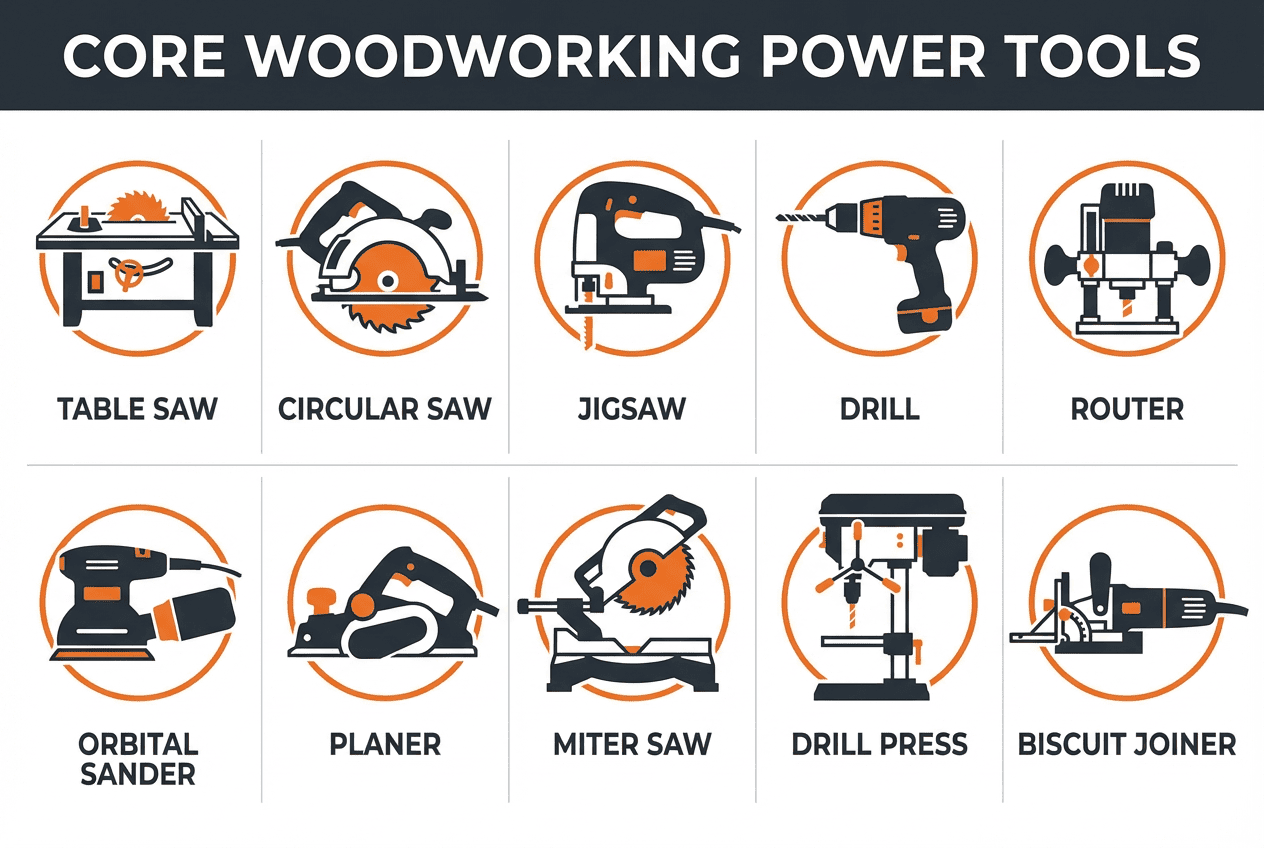
1. Table Saw
The table saw is one of the core tools in every woodworking workshop, primarily designed for rip cuts and crosscuts. It features a powerful motorized blade rising from a flat worktable. Key features include an adjustable fence and safety guard, which ensure accuracy and operator protection.
- Function: Cutting large boards and making straight, repeatable cuts.
- Prós: Extremely accurate, great for volume cutting.
- Cons: Not portable and requires ample space.
- Recommended Specs: 10-inch blade, 15-amp motor, cast-iron table for stability.
2. Circular Saw
A circular saw is a portable cutting tool ideal for straight cuts in plywood, lumber, and sheet materials. It’s widely used on job sites because it delivers fast, clean cuts with different blade options for wood, plastic, and composites.
- Function: Straight cuts, ripping sheet goods, quick framing
- Prós: Highly versatile, portable, fast cutting
- Cons: Less precise than a table saw
- Recommended Specs: 6.5–7.25″ blade, brushless motor (cordless), adjustable bevel, sturdy base plate.
3. Jigsaw
A jigsaw is designed for curved, irregular, and intricate cuts. It’s the best tool for templates, cutouts, interior curves, and detailed woodworking projects.
- Function: Curves, shapes, templates, plunge cut
- Prós: Great for detail work, beginner-friendly, very safe
- Cons: Not suitable for long straight cuts
- Recommended Specs: Orbital settings, variable speed, tool-free blade change, splinter guard
4. Power Drill / Driver
When it comes to woodworking, a list without mentioning a power drill is incomplete, a tool that is the most essential woodworking electric hand tool for boring holes and driving screws.
Types include:
- Corded drills for continuous power.
- Cordless drills for mobility and convenience.
- Hammer drills for masonry and heavy-duty tasks.
- Function: Drilling, screwdriving, countersinking.
- Prós: Compact, multipurpose.
- Cons: Battery maintenance for cordless models.
- Recommended Specs: 18V or 20V system, 400–1700 RPM range, adjustable clutch.
5. Router
Commonly used for shaping edges, having a smooth finish, cutting grooves, and creating a smooth joinery. Highly ideal for edge profile and precise cutting.
- Fixed-base: Optimal for edge profiles and precise cuts.
- Plunge: Great for grooves, mortises, and depth-variable cuts.
- Usability: Decorative edges, joinery, inlay, and mortising.
- Advantages: High precision, versatile.
- Disadvantages: Requires some skill to control.
- Recommended Specs: 1.5–2.25 Horsepower, variable speed, dust extraction.
6. Random Orbital Sander
Um lixadeira orbital is primarily made for surface finishing, smoothing wood, and prepping the surface for painting or staining. Highly efficient, removing more than 30% of the surface material compared to hard sanding.
- Its practical application: Smooth surfaces, remove swirl marks.
- What makes it distinguished: Quick material removal, great finish.
- Where it lags: Replacement sanding pairs required.
- Ideal Specs: 5-inch pad, variable speed, hook-and-loop attachment.
7. Planer (Electric Hand Planer or Bench Planer)
Widely used for flattening boards, reducing thickness, and ensuring uniformity, making it one of the most essential electric woodworking tools.
- Function: Thickness adjustment, smoothing rough lumber.
- Prós: Saves money by allowing rough lumber use.
- Cons: Bench planers can be loud.
- Recommended Specs: 12–13-inch bench planer, 15-amp motor, 2–3 blade system.
8. Miter Saw
A miter saw gets you those precise cuts, making it much easier for trims, frames, moldings, and framing jobs. Its unique features, such as laser guides and assistance, have adjustable bevel settings that improve accuracy drastically.
- Function: Crosscuts, bevel cuts, compound cuts.
- Prós: Highly accurate, time-saving.
- Cons: Bulky and less versatile for sheet materials.
- Recommended Specs: 10–12-inch blade, sliding function, dual bevel.
9. Drill Press
The drill press gives more accurate vertical drilling with adjustable depth, ideal for joining tasks. It excels in repetitive drilling where precision matters the most.
- Function: Vertical holes, mortising, repetitive drilling.
- Prós: Consistent, powerful, safe.
- Cons: Not portable.
- Recommended Specs: 8–13-inch swing, 5-speed or variable-speed motor.
10. Power Jointer or Biscuit Joiner
Mainly used for making smooth edges on boards or making strong biscuit-reinforced joints in furniture.
- Function: Joint preparation, panel making, furniture joinery.
- Prós: Strengthens joints, ensures flat edges.
- Cons: Limited to joinery tasks
Beginner’s Checklist: Tools You Need to Start Woodworking
Going with the right starter tools can be too confusing at first, and for beginners, they can run into confusion way too quickly, but with the help of an effective setup and guide, beginners can easily set up their essentials.
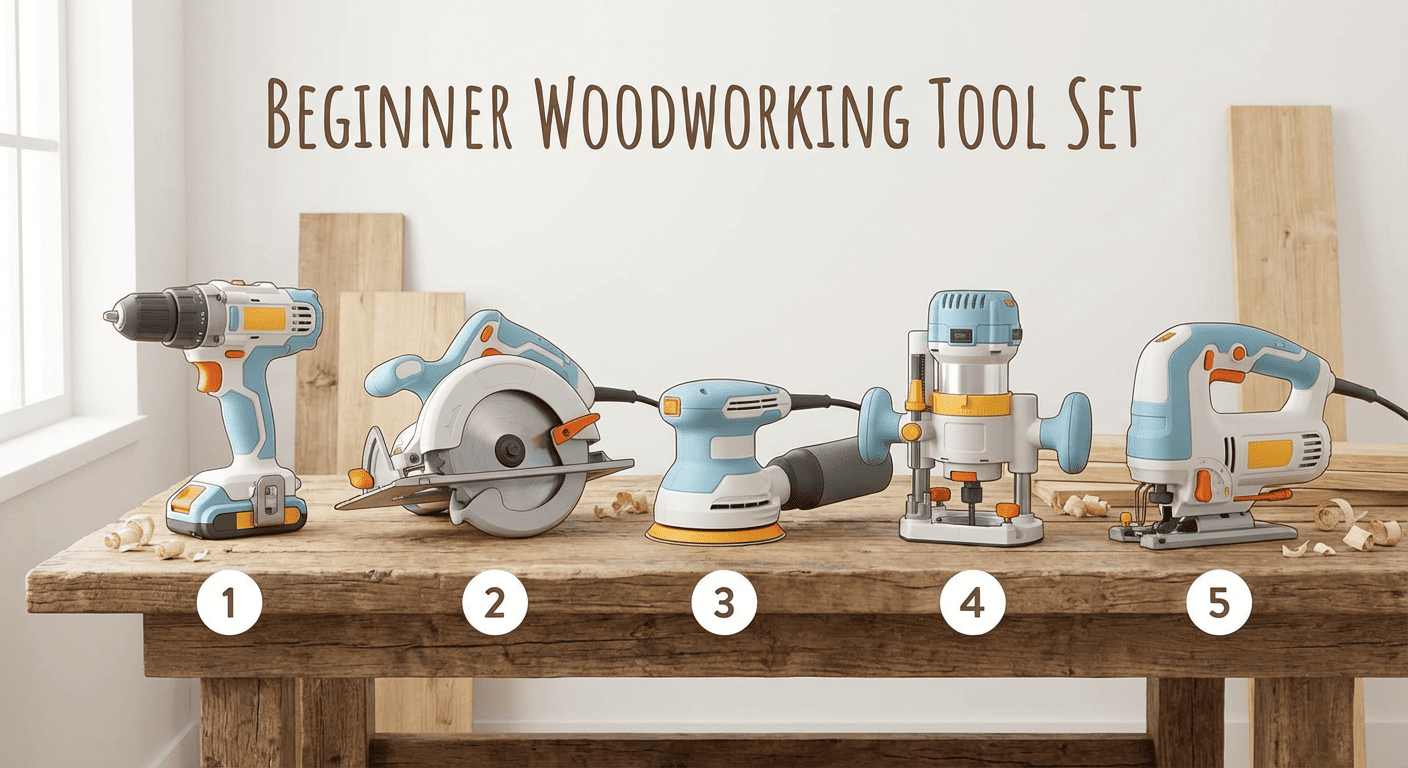
Here is a step-by-step buying checklist:
Start with these 5 must-have tools:
- Drill, universal must-have
- Circular saw, versatile cutting
- Random orbital sander, surface finishing
- Router, shaping, and joinery
- Jigsaw, curved and detailed cuts
What’s best? Corded vs cordless?
- Corded is for more power for continuous use.
- Cordless brings convenience and mobility.
Maintenance & Safety for Woodworking Power Tools
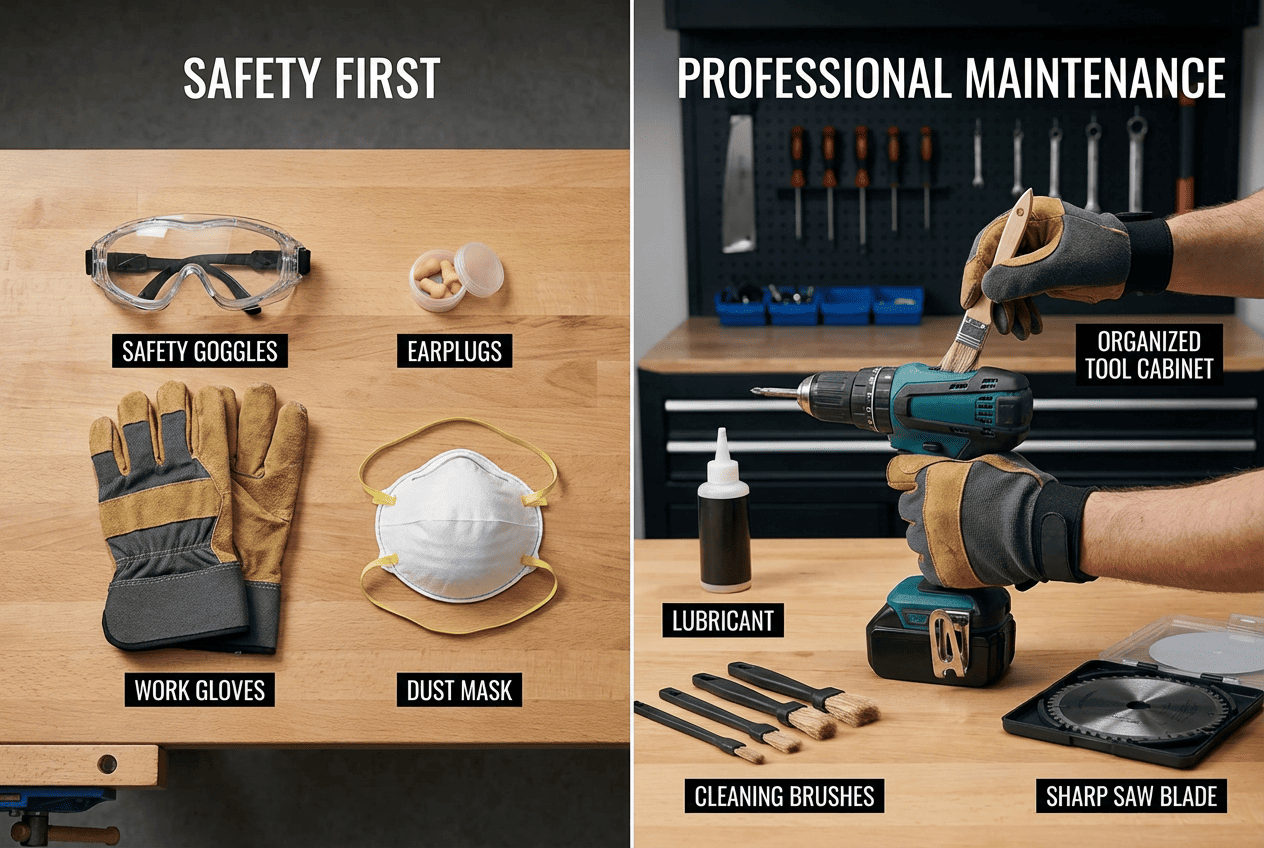
An extensive maintenance and care of your tool always extends the lifespan of your tool and ensures safe and secure operations. Key maintenance tasks include the following:
- Thoroughly clean dust ports after every use.
- Sharpen up blades and bits to sustain efficiency.
- Lubricating bearings, gears, and moving components
- Checking cords, switches, and batteries for wear
Safety Checklist:
- Make sure to have PPE (gloves, goggles, or ear protection)
- Ensure proper storage in dry, organized cabinets.
- Use switch locks and blade guards.
- Keep work areas dust-free with proper extraction
Glossary and FAQs
Glossary
- RPM: Rotations per minute; measures tool speed.
- Torque: Rotational force used in drills and drivers.
- Fence: Adjustable guide on table saws for straight cuts.
- Plunge Depth: Maximum vertical movement of a plunge router.
- Dust Collection: System to capture sawdust.
- Grit: Roughness of sanding paper.
Perguntas frequentes
What’s the best power tool setup for a small workshop?
Choose compact models such as benchtop planers, portable saws, and cordless drills. Combine them with an efficient dust-collection setup to maximize limited space.
How often should woodworking power tools be maintained?
Light cleaning after every use, blade and bit sharpening every few weeks, and a full inspection of cords, bearings, and switches every 2–3 months.
Are power tools safe for beginners?
Yes, especially newer models with blade guards, auto-stop features, and anti-kickback protection. Proper PPE and guidance are still essential.
Which power tools offer the best long-term value?
Invest in long-lasting essentials such as table saws, routers, and brushless-motor drills — these offer durability, versatility, and consistent performance.
About Maxxt-Tech: Premium Power Tools for Woodworkers
Maxxt-Tech is a leading manufacturer of high-performance power tools engineered specifically for woodworking professionals and hobbyists. The product catalog has saws, sanders, routers, drills, planers, and industrial-grade woodworking machines that are known for their reliability, torque, consistency, and long service life.
As a B2B supplier, Maxxt-Tech also assists with OEM customization, assisting with solutions for businesses that need branding or private-label power tools, precision manufacturing, strong quality assurance, and advanced motor technology that makes Maxxt-Tech the first and foremost choice for workshops that are looking for durability and accuracy.
Building the Perfect Woodworking Toolkit
From cutting and shaping to sanding and finishing, going with the right tools turns ideas into a finely detailed project, so if you’re a beginner who’s building your first workspace or a professional who is looking to update your equipment, durable and high-performance tools will massively enhance your accuracy, workflow, and overall woodworking enjoyment.
It’s better to make your investment worthwhile with high-performance tools for elevating precision and productivity. Time to explore Maxxt-Tech’s range of complete power tools to make your ideal workshop setup.
 Portuguese
  English
  Arabic
  French
  German
  Russian
  Spanish
  Turkish