
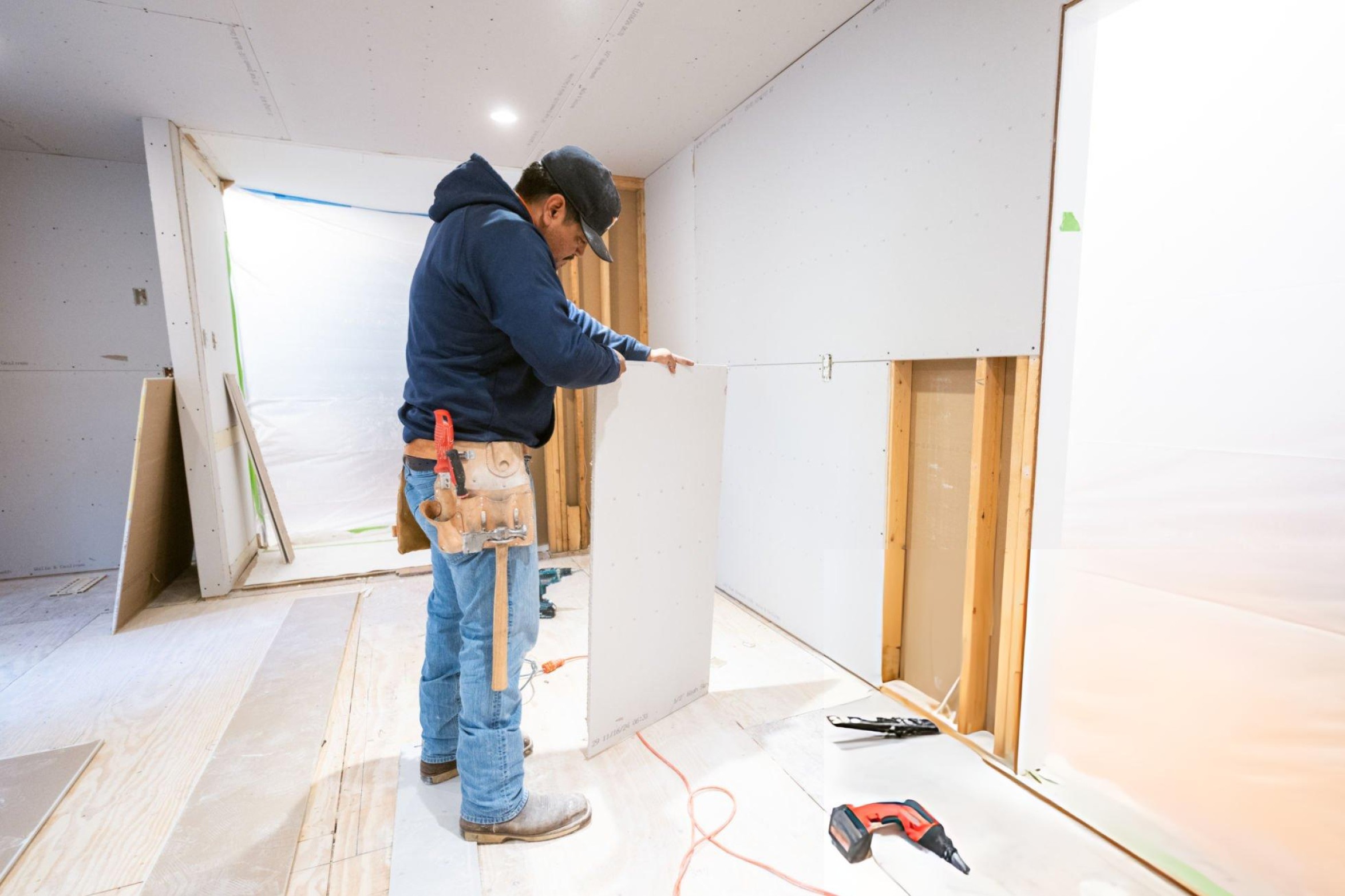
The best tools for cutting drywall include utility knives, jab saws, rotary tools, and oscillating multi-tools. These tools offer different levels of control and speed, enabling trimming sheets, cutting openings, and shaping detailed edges. Other tools, like circular saw are more robust and used to break down existing drywall quickly.
In many parts of the world, drywall (gypsum board) is the preferred choice for building projects because it’s more cost-effective and faster than building with bricks. The current surge in residential and commercial building projects due to increased urbanization is boosting the demand for professional-grade cutting tools.
For professional teams, as well as private contractors and homeowners, the right drywall cutters ensure control, efficiency, clean edges, and a professional-looking finish. Our comprehensive list of the best tools for cutting drywall distinguishes between tools for clean, precision cuts and tools for fast or demolition cuts, which will help you choose the best drywall cutter for your purpose.
Tools for Clean, Precision Cuts
Utility Knife / Sheetrock Cutter
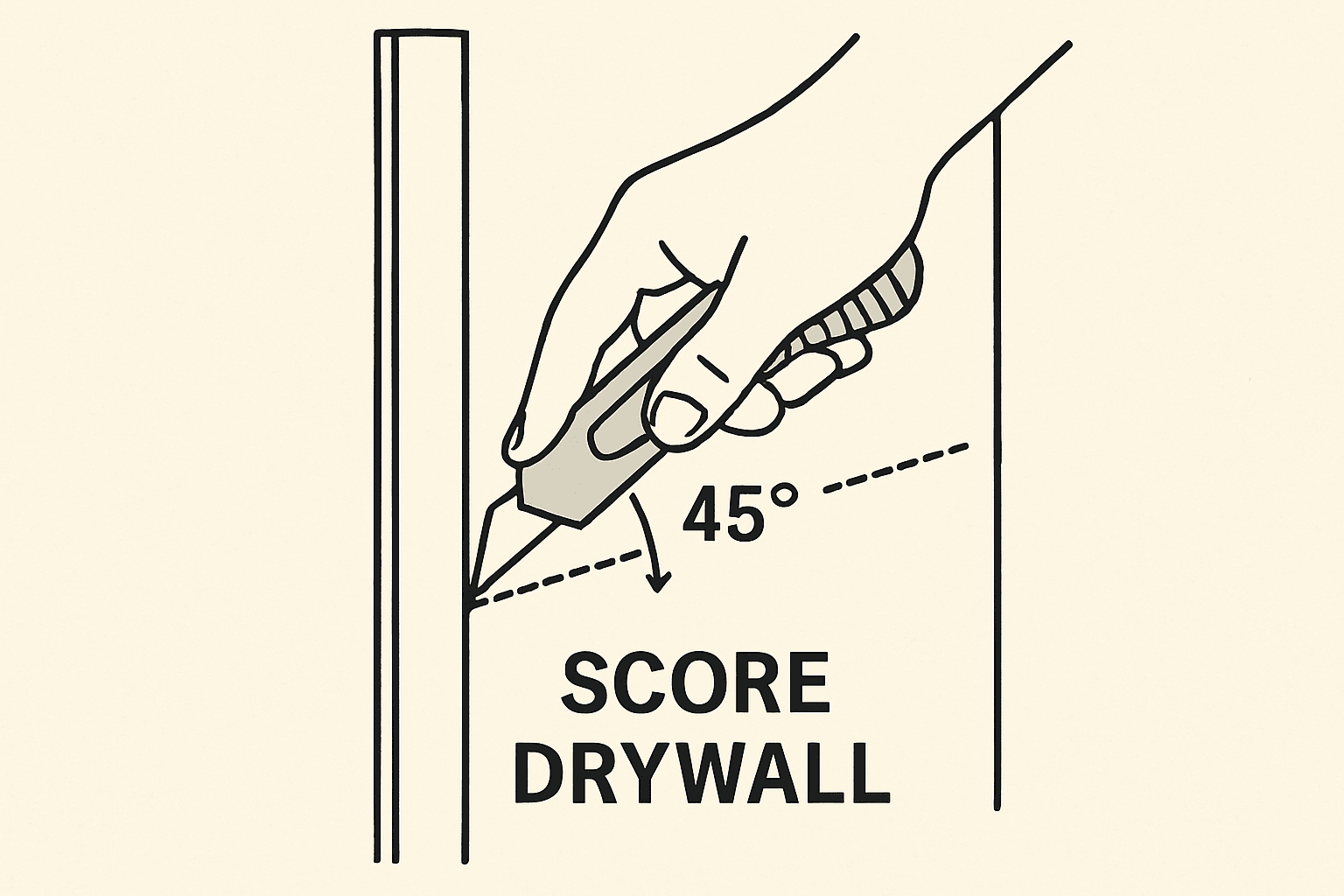
Utility knives are versatile tools used for many purposes, including cutting drywall. In fact, it’s the most commonly used tool for cutting drywall and for scoring it in order to snap it. This low-cost tool is easy to use, provides control, and produces long, straight cuts with clean edges. It is widely regarded as the best tool for cutting drywall.
The best drywall utility knives have the following features:
- Tempered blades that withstand chipping and stay sharp for many cuts
- Ergonomic design that enables handling by hand for hours
- A fast blade-change mechanism to boost efficiency
- Replaceable SK5 blades
Rotary Drywall Cutter
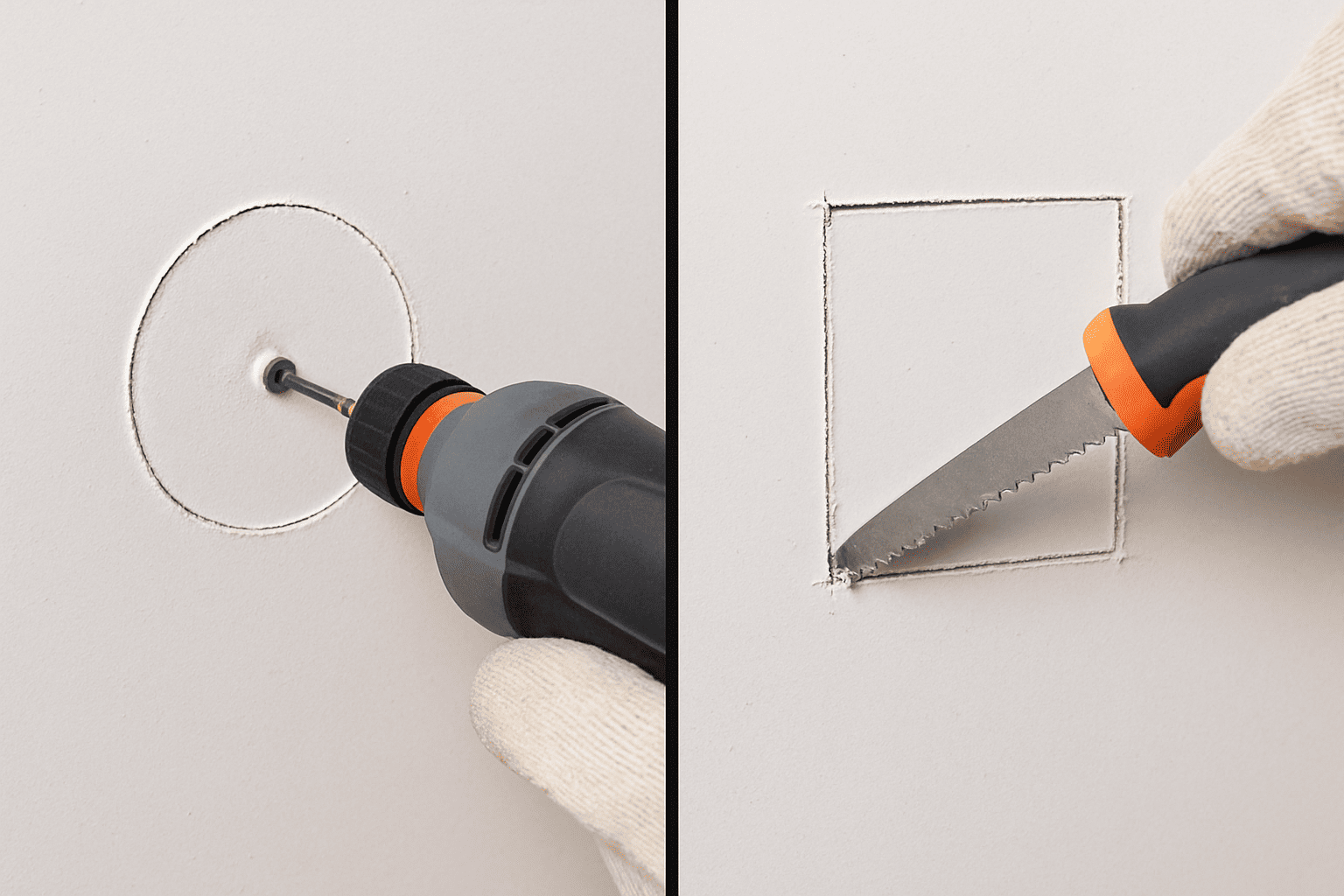
Also called a drywall cut-out tool, a rotary drywall cutter is a power tool used to cut precise openings for power outlets and HVAC vents. The clean cuts are produced by rotating bits spinning at 25,000–30,000 RPM. Electricians, plumbers, and drywall installers use rotary cutters to create holes without damaging the surrounding drywall. More advanced models feature depth guides to prevent cutting too deep.
Rotary cutters are compact and lightweight, making them easy to work with for extended periods.
Rotary tools can be used as either precision or rough tools. The bit selection and speed of operation are the determining factors when using a rotary drywall cutter. Low speeds allow for precision cutting while high speeds enable fast material removal.
Keyhole or Jab Saw
A keyhole saw, also known as a jab saw or drywall saw, is a manual drywall cutting tool that features a long blade that penetrates drywall effortlessly, producing precise straight or curved holes. It is a popular saw for drywall openings to accommodate power outlets, HVAC vents, light fixtures, etc. It is especially useful for creating openings for circular light fixtures. In addition to cutting small holes, the tool is used to smooth drywall after rotary cutting.
Keyhole saws have a long, narrow, pointed blade with coarse teeth, which makes it easy to cut through drywall, and the ergonomic design and comfortable grip ensure controlled cuts.
Not: A jab saw only operates as a precision tool when used with care. Jabbing the saw too hard into the drywall or using a too steep angle can tear the paper face. Also, using too much force because the blade is blunt can cause it to slip and damage drywall.
Oscillating Multi-Tool
Bir oscillating multi-tool is a versatile power tool that accommodates numerous attachments for different functions, such as cutting, sanding, and grinding.
It works by oscillating or vibrating in a tight arc at 18,000–22,000 OPM (oscillations per minute), facilitating precise control and minimizing overcutting. The tool offers variable speed control and a compact head for working in tight spots.
Operators use it to make a variety of cuts for installing electrical boxes or vents, to trim drywall around fixtures and to smooth edges. It is ideal for making adjustments for precise fittings.
Oscillating multi tools offer a range of blades and speed settings, which allow for detailed work on the one hand, or demolition work on the other hand. Fine blades enable flush cuts around fixtures and precision openings for outlet boxes. Coarse blades facilitate fast demolition, cutting fast through drywall, nails, and studs.
Heavy-Duty Drywall Cutters
Heavy-duty drywall cutters, such as circular and reciprocating saws, are meant to remove old or damaged drywall panels quickly. Contractors and DIYers use these tools for renovations and repairs.
Reciprocating Saw with Drywall Cutting Blade
A reciprocating saw for drywall is a handheld power tool that can cut through drywall, studs, and fasteners, making it ideal for quickly demolishing drywall. It is not a precision tool – it’s meant for removing drywall.
Its demolition efficiency comes from the reciprocating movement (a repetitive up-and-down or back-and-forth motion) of the blade. Blades with carbide-tipped teeth and fewer teeth per inch (TPI) are best for fast, rough cuts that quickly break down existing drywall.
Circular Saw
Depending on the blade used, circular saws can cut wood, plastic, metal, and masonry. In terms of using a circular saw to cut drywall, the consensus is that this is a rough cutting tool, not a precision instrument. It can cut drywall in seconds, but with the quick work comes clouds of dust.
Spinning at high RPMs, a circular saw produces an aggressive cutting action, making deep cuts fast. This is ideal for hard materials like wood, but it’s too aggressive for a softer material like gypsum board. A circular saw is not the best saw for drywall; it’s better for renovation projects where speed is of prime concern and clean-up isn’t an issue.
Even with a fine-tooth blade, it’s still hard to control the cutting depth and avoid damaging studs, wires, and drywall surfaces.
Best Blade to Cut Drywall
When cutting drywall, it’s important to pay attention to the blades you will be using. The best blade will depend on the tool and your purpose.
- Utility Knife: When using a utility knife, many users opt for snap-off trapezoidal blades that stay sharp through repeated scoring. These special blades have a bevel angle tailored for light scoring to facilitate clean breaks. The blades are made from SK5 or equivalent steel tempered to increase toughness. The high polish ensures that the blade slides through drywall like a knife through butter.
- Oscillating multi-tools: High-speed steel (HSS) blades, bi-metal or carbide-grit blades are top choices—they offer a balance of precision and longevity, especially when making plunge or flush cuts around outlets and fixtures. HSS blades are reliable and retain their sharpness, but carbide-tipped blades are more effective and durable for professionals who frequently work with drywall. Bi-metal blades combine the benefits of HSS and carbide blades and are popular with professionals.
- Rotary tools: Rotary tools use bits rather than blades for drywall cutting. The most commonly used type is the spiral cutting bit that makes fast, clean plunge cuts. It is especially useful for cutting out electrical boxes, vents, and other openings. Workers can plunge the bits directly into the drywall and start cutting freehand or around templates.
Manual vs. Power Tools for Cutting Drywall
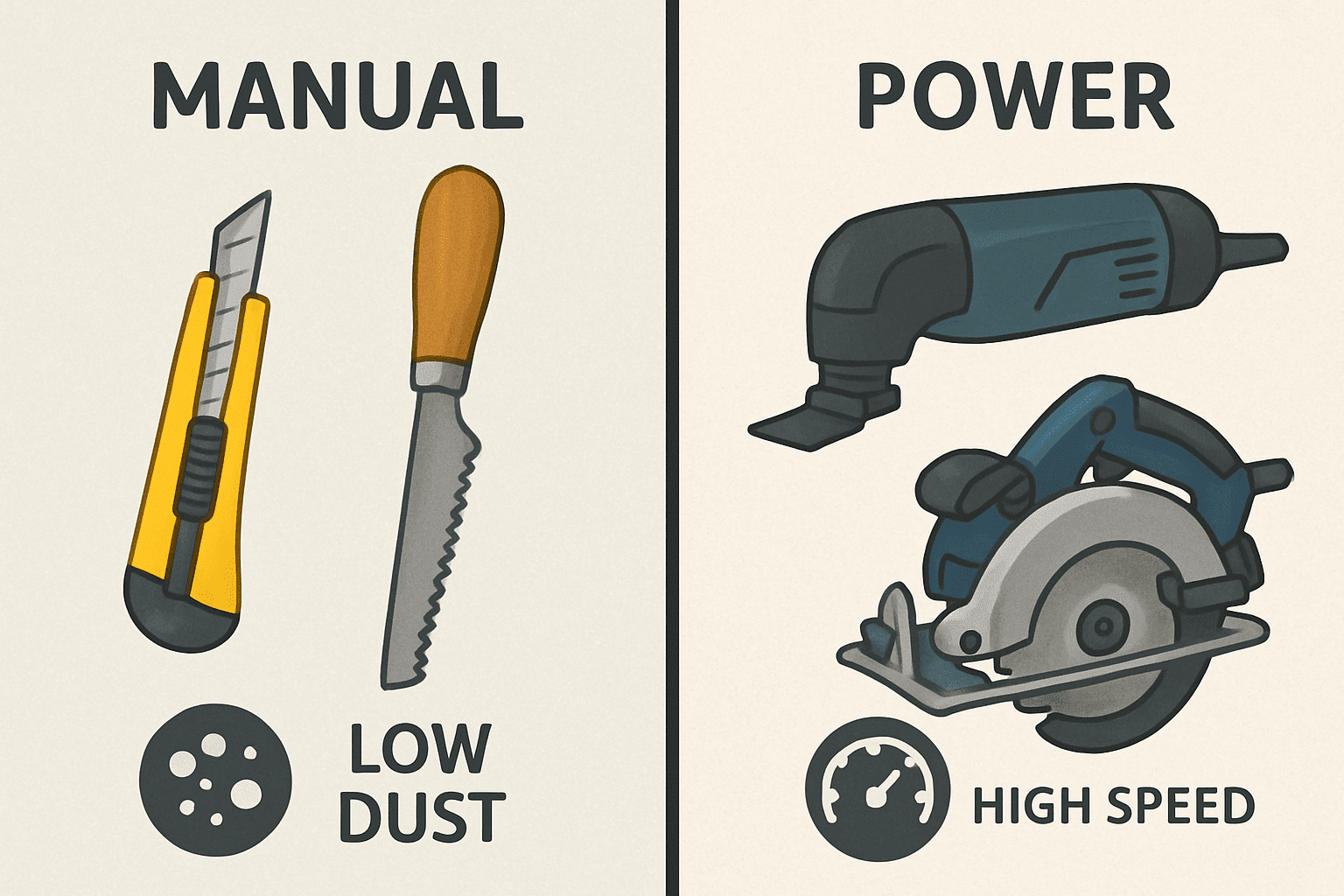
Whether you’re dismantling existing drywall or need to cut newly hung drywall, you’ll be faced with a choice between manual and power tools. For most DIY projects, manual tools are sufficient. Manual tools, such as utility knives and hand saws, require physical effort, but they compensate for that by being easy to operate and control. They also generate less dust than power tools.
While manual tools are a popular choice among DIY enthusiasts and small contractors, power tools are increasingly being used in the construction industry. Large construction projects require efficient and reliable cutting tools, leading to increasing adoption of electric drywall cutters.
Power tools come in corded and cordless varieties, powered by electricity via a cord attached to a power outlet or a battery. An electric drywall saw works fast and requires little manual effort to operate. The more advanced models have depth guides that ensure cuts are accurate. Cordless, battery-operated drywall cutters are increasingly popular because they don’t need to be connected to a power outlet. They are more expensive, though.
Buying tip: If you already own other cordless tools, you’ll be able to use the batteries you already have, as top brands have universal battery systems.
Common Drywall Cutting Mistakes
Cutting drywall is not straightforward, but you can benefit from the mistakes many others made before you and save yourself precious time, money, and frustration. Common mistakes include:
- Using the wrong blades – the wrong blades can damage both the drywall and your tool.
- Overextending the utility knife blade. Extending it too far will cause it to bend or snap – don’t extend it more than ¼ inch (6 mm).
- Applying excessive force. In addition to inaccurate cuts, excessive force can damage the tool and drywall.
- Not supporting drywall sheets properly, causing them to shift or snap suddenly.
- Scoring too deeply beyond the paper into the gypsum.
- Holding the blade at the wrong angle – must be roughly a 45° angle.
- Not using a guide – the results are wobbly lines and uneven seams.
- Not replacing blades frequently – dull blades damage paper.
- Not following safety practices – increases the risk of hand and eye injuries.
- Ignoring dust control measures – drywall dust is unhealthy to inhale.
Safety Practices
Cutting drywall poses a dust hazard and the risk of inhaling silica. Personal protective equipment (PPE) necessary for drywall cutting and approved by the Occupational Safety and Health Administration (OSHA) includes:
- Sealed safety goggles or ANSI-rated wraparound glasses
- Cut-resistant gloves
- Respirators and dust masks – use N95 or P100 respirators for large or enclosed jobs
- Protective clothing and footwear: Long sleeves, safety boots reduce the risk of slipping on dust
In addition to wearing protective clothing, make sure you secure drywall properly and use the appropriate tools for the job. When using a utility knife, cut away from your body for safety. Ensure your workspace is well ventilated or use a dust extraction system.
SSS
How deep should I score drywall?
You only need to cut through the face paper when scoring drywall – that means one to two passes with the knife. Making shallow cuts will help your blades last longer.
What is the best utility knife for drywall?
Choose a fixed-blade knife with SK5 steel trapezoid blades. These blades provide maximum control and durability and retain their sharpness over time.
Can I simply use an oscillating tool for all drywall cutting?
No, while an oscillating tool is a multi-purpose tool, excelling at small to medium cuts, corners, and trimming, it’s not the best saw for drywall sheets that are large. A utility knife or a track saw is more efficient.
What is the best tool for making round holes for outlets or lights?
You can use a rotary drywall cutter, hole saw, or jab saw. A rotary drywall cutter is fast and precise for most tasks, like electrical boxes and fixtures. A hole saw will give you clean, round holes of a precise diameter, and you can use a jab saw for quick manual fixes or odd shapes.
Can you cut drywall with a circular saw?
Yes and no. It is great at breaking down existing drywall quickly. However, it creates significant dust and rough edges. A circular saw is not suited for precision work.
Çözüm
When choosing a saw for drywall, it’s important to distinguish between tools for precision work and tools that enable speedy demolition of existing drywall. The best tool to cut drywall depends on your purpose.
Choose precision tools like utility knives, rotary drywall cutters, and keyhole saws for accurate cuts needed for installing drywall professionally. Leverage the power of tools such as reciprocating saws, circular saws, or oscillating tools when the task involves large-scale or demolition work.
Whether you’re a DIY enthusiast planning to install or renovate drywall or a distributor hunting for the best tools for cutting drywall, MaxXT has the right mix of precision and heavy-duty tools for you.
Grab the opportunity! MaxXT offers power tools for both DIY users and professionals. Call our offices today for expert advice on choosing the best tools for cutting drywall.
 Turkish
  English
  Arabic
  French
  German
  Portuguese
  Russian
  Spanish