
Key Takeaways
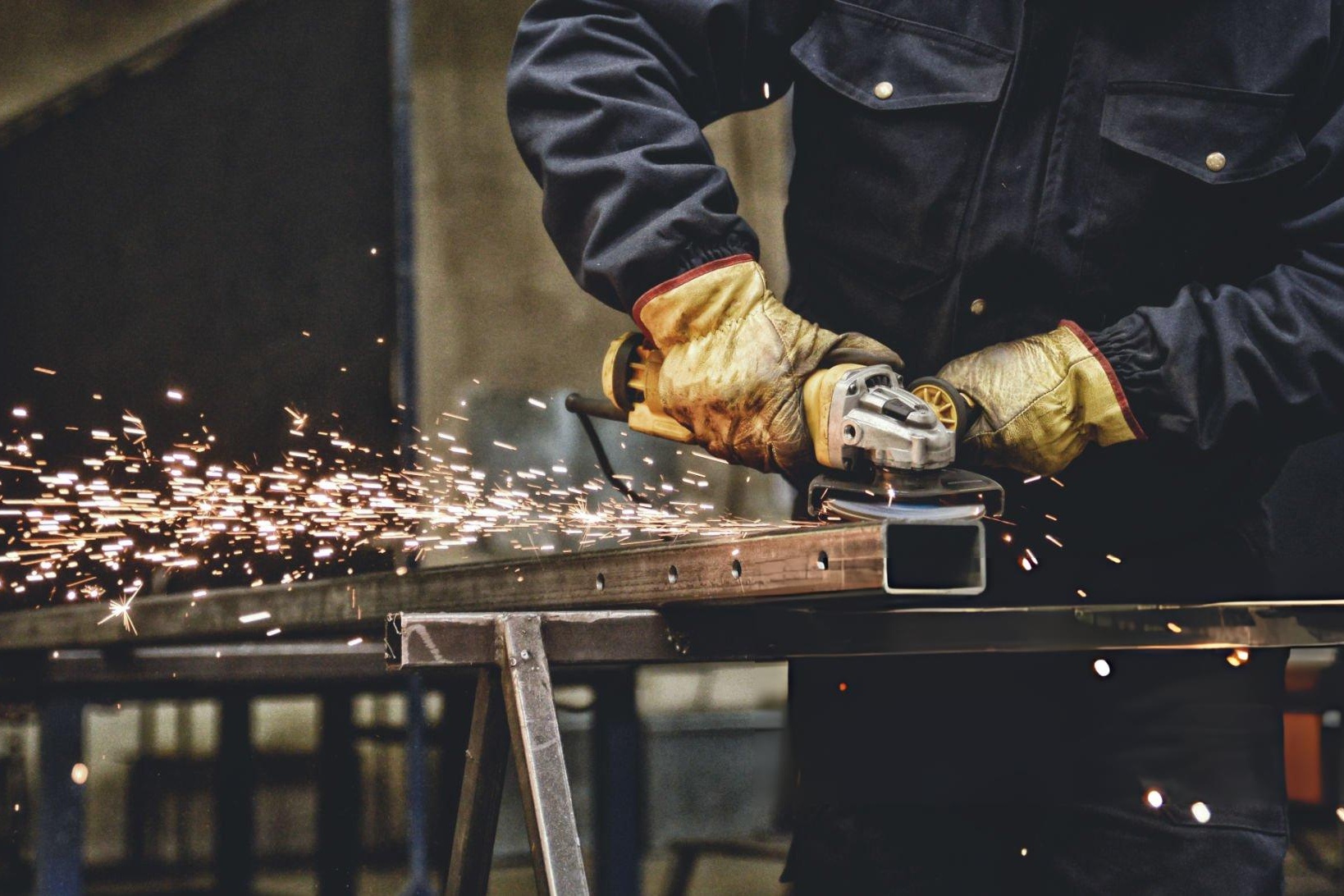
- Always operate an angle grinder with the safety guard properly installed—it protects against flying debris and disc shattering.
- Use both hands at all times: one on the main handle, one on the auxiliary side handle to control kickback.
- Match the disc type and RPM rating to your specific material and task to prevent blade failure.
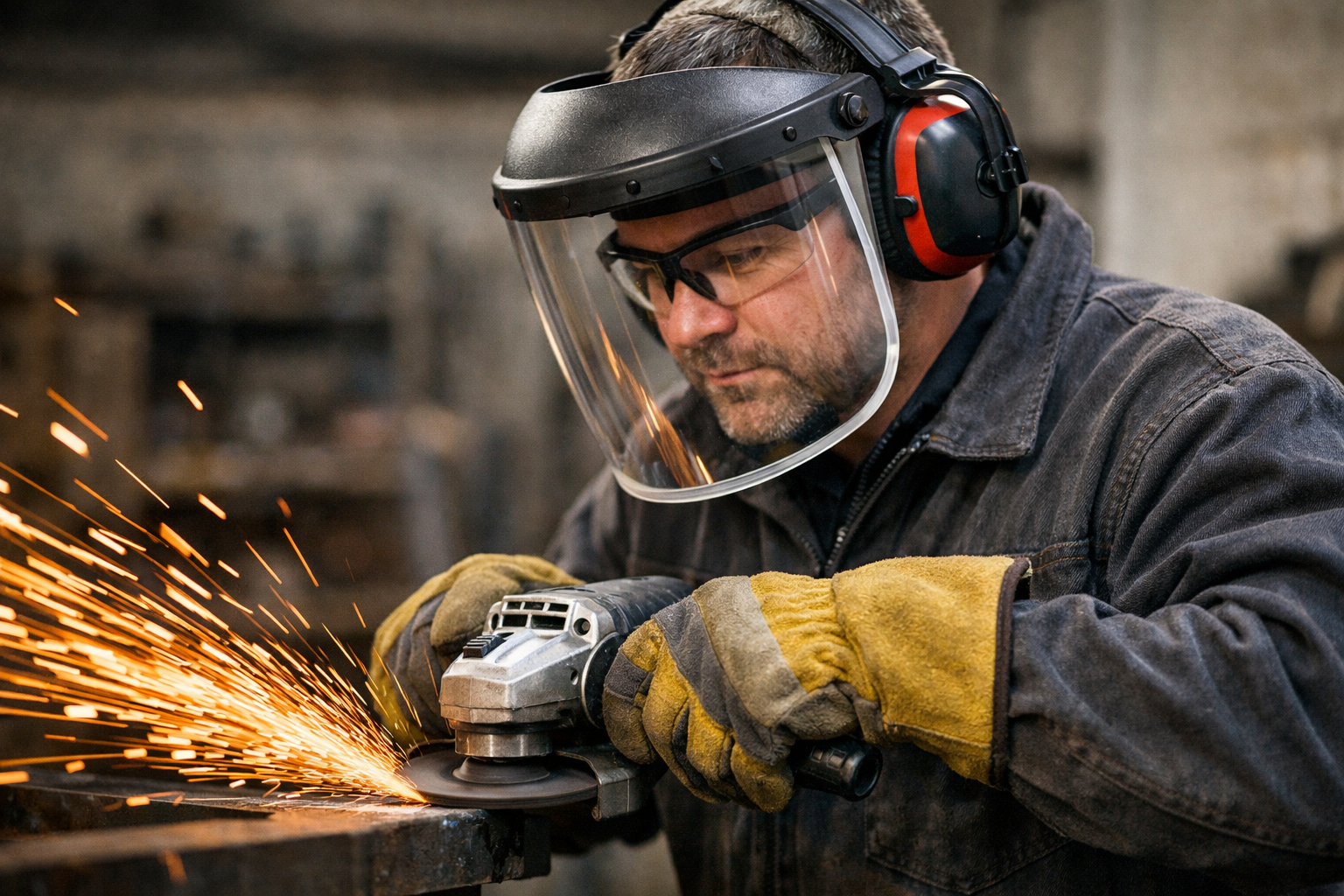
- Wear full PPE including safety glasses, face shield, heavy-duty gloves, and hearing protection.
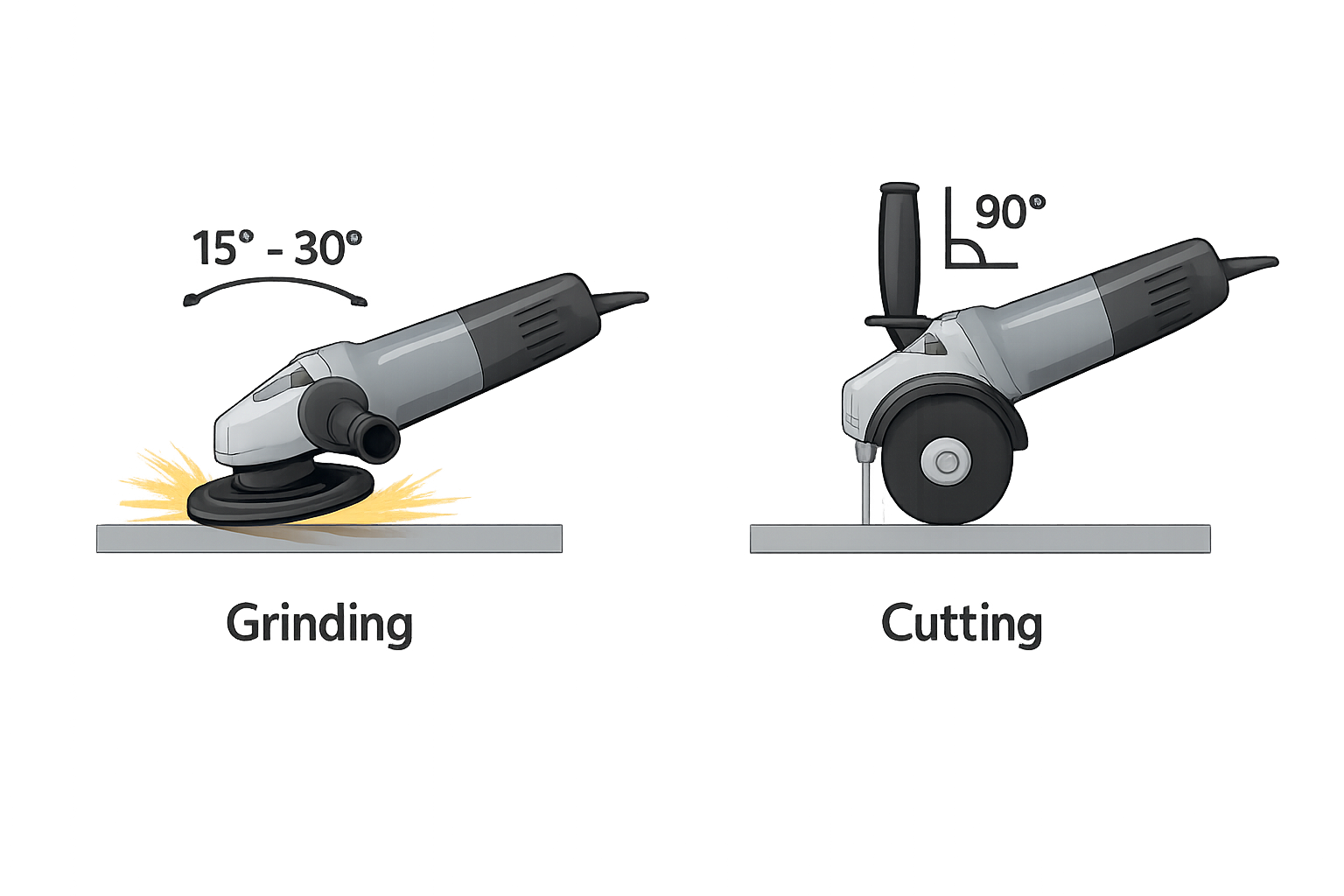
- Maintain a 15-30° angle for grinding and 90° for cutting to ensure safe, effective operation.
- Take 15-minute breaks every 30 minutes to prevent operator fatigue and tool overheating.
Who This Guide Is For
This guide is written for construction and metalworking apprentices, as well as DIY enthusiasts learning to use angle grinders safely. It covers pre-operation inspections, proper PPE requirements, disc selection, and 10 essential safety rules to prevent the 5,000+ angle grinder injuries reported annually. Whether you’re cutting metal, grinding concrete, or polishing stone, these guidelines will help you work safely and confidently.
Angle Grinder Safety Imperatives
Angle grinders rank among the top three most dangerous power tools, causing over 5,000 injuries annually in the UK alone. Understanding why these tools are hazardous is the first step toward using them safely.
According to the Royal Society for the Prevention of Accidents (RoSPA), angle grinders rank as the third most dangerous power tool, causing approximately 5,000–5,400 injuries annually across construction, engineering, and agricultural sectors. The high-speed disc operation can result in severe—even fatal—injuries, with head, face, and eye injuries being most common.
Most common are head, face, and eye injuries. Upper body injuries are less common, but can be very debilitating.
Angle grinder injuries are not limited to professionals; injuries are also increasing among DIY enthusiasts.
Electric-powered, an angle grinder works with a high-speed spinning wheel to which an abrasive disc is attached, all factors that require caution to prevent serious injury.
Before You Start: 5 Essential Preparations
1 Inspect the Tool before Use
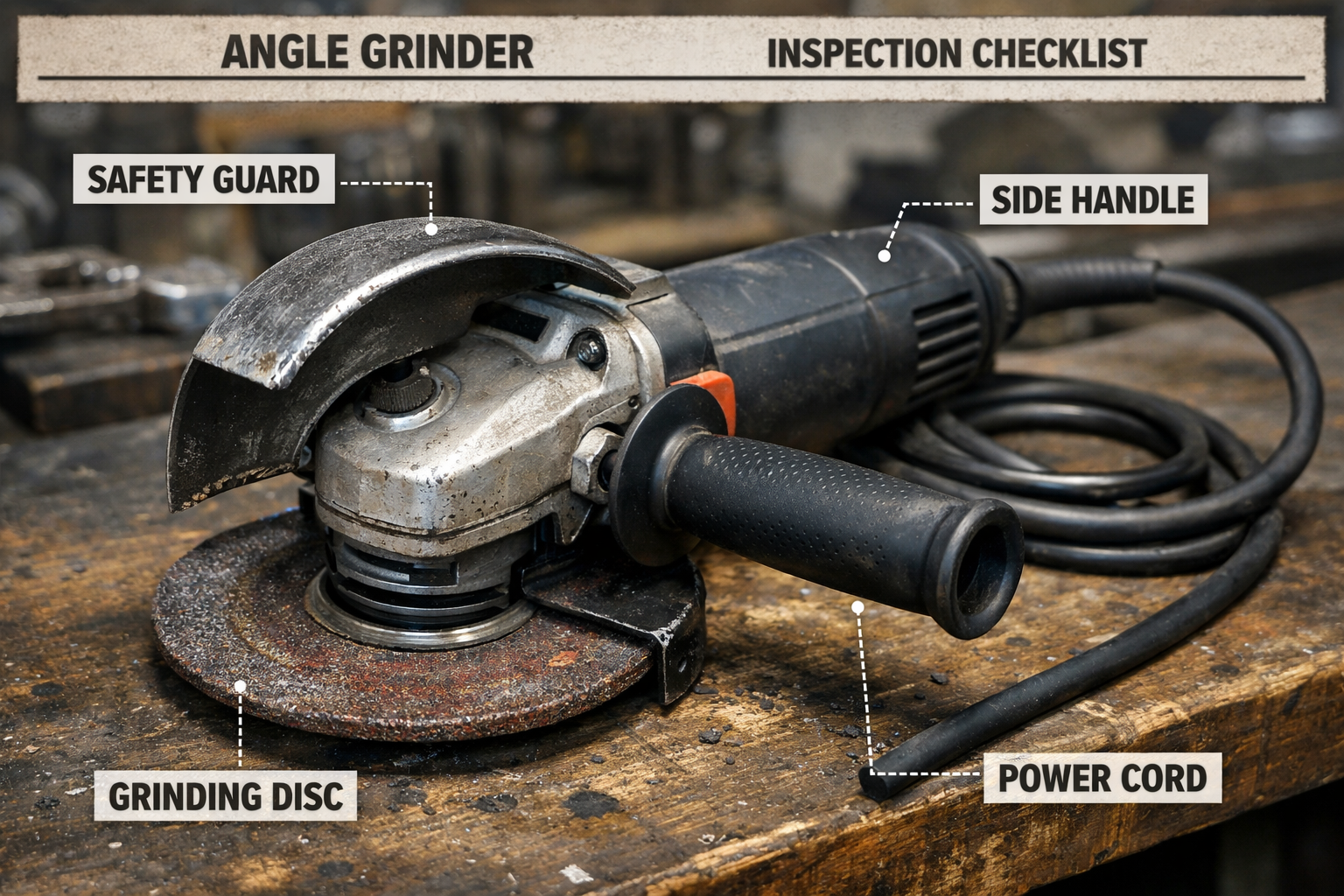
When planning any work that requires the use of an angle grinder, first inspect the tool thoroughly. To ensure grinder safety, establish that:
- The wheel nut and all other nuts and clamps are fastened thoroughly with the tools meant for this task.
- The disk is not damaged in any way.
- The power cable is not frayed or otherwise damaged.
- The guard is correctly mounted and faces in the right direction, so sparks and debris fly away from you and other people. The guard should be between you and the blade.
- The handles are firmly attached and are in perfect condition.
2 Create a Safe Work Space
Angle grinders generate a lot of sparks, which are a fire hazard. It stands to reason that these tools should not be used near containers for gas or other combustible materials. Before you start working, remove all flammable or combustible materials and objects, including wood shavings, oil rags, and packing materials like cardboard. As a further hand grinder safety precaution, always have a fire extinguisher and a First Aid Kit on hand.
3 Wear Personal Protective Equipment (PPE)
Wearing the appropriate clothing and safety gear is the first step to keeping you safe while operating a grinder. OSHA requirements for PPE for portable grinder safety are:
- Overalls or other fitted clothing. Loose-fitting clothes, unfastened long hair, and jewelry can be caught in the spinning wheel or other moving parts, increasing the risk of serious injury.
- A full-face shield or dust mask to protect against toxic fumes generated by some metals when they become hot as a result of the heat generated by grinding.
- Wide-vision, impact-resistant safety glasses to protect against flying debris
- Heavy-duty angle grinder gloves that fit properly
- Earplugs or muffs to protect against hearing damage or loss
4 Choose the Right Disk
Using the correct disk at the right RPM (revolutions per minute) is crucial. The motor of most angle grinders spin at a fixed speed ranging from 8,000 to 11,000 revolutions per minute (RPM). Choose the correct disc type and maximum RPM rating for the specific material and task to avoid the risk of kickback and blade failure. For optimal grinder safety, never exceed the blade’s RPM rating.
Comparing Discs and Their Uses
| Disc Type | Materials | Uses |
| Diamond discs | Hard, brittle materials, marble, granite, ceramic, stone | Cutting and slicing |
| Abrasive (grinding) discs | Stone, concrete, and metal | Grinding, sanding, aggressive material removal |
| Flap discs (sandpaper) | Metal, marble, stone | Light stock removal, finishing, deburring, and rust removal |
| Wire brushes | Rust, paint, corrosion | Heavy duty surface preparation, rust, paint and corrosion removal |
When installing the disc, use the correct flange and locking nut to secure it, and follow the recommended safety tips when you need to change an angle grinder blade.
5 Never Remove the Safety Guard
The safety guard on an angle grinder is a critical protective feature; its purpose is to shield the operator from flying debris, the spinning disc itself, and debris resulting from a shattered disc. The safety guard on an angle grinder is non-negotiable; removing it or not installing it securely, makes the tool hazardous to operate and increases the risk of serious injury. Make sure the disc and the guard are matched in size and the guard should cover at least half of the disc.
During Operation: 5 Critical Safety Rules
6 Use two hands
Handling an angle grinder safely requires holding it with both hands. OSHA (Occupational and Safety and Health Administration) also stresses this requirement, which features prominently in the organization’s guidelines and safety bulletins. It’s important to know how to hold an angle grinder. Holding the tool with both hands makes it easier to control, counteracts kickback force, and prevents angle grinder accidents.
To enable double-handed operation, most angle grinders come with an auxiliary (side) handle. Operating an angle grinder with an auxiliary handle smart choice because it:
- Reduces kickback impact, preventing angle grinder injury.
- Provides a better hold on the tool, which enables you to keep it steady and produce accurate work.
- Makes the grinder easier and less tiring to operate
7 Use the Correct Grinding and Cutting Angles
When you are using the angle grinder for grinding, the disc must be at a 15 to 30-degree angle to the surface. A grinding angle of 15 – 30 degrees is ideal – not so shallow that the disc slips across the surface, or starts overheating, and not so steep that it struggles to operate smoothly or starts damaging the surface.
For cutting materials, an angle grinder should be held at 90 degrees to the surface. Adhering to the correct cutting angles, can prevent an angle grinder cutting wheel accident.
8 Operate the Angle Grinder with Great Care
An angle grinder works at high speeds, making it potentially dangerous to operate and essential to handle mindfully. To ensure angle grinder safety, experts advise:
- Let the tool do the work; never apply excessive pressure.
- Under no circumstances work with a damaged disk; it can easily shatter. An angle grinder disc breaking can cause grave bodily harm.
- Let the disk reach maximum speed before starting work on the material and take care to run the disc at the recommended speed.
- Check you are using the right disc for the task: a cutting disc for cutting and a grinding disc for grinding.
- Stand next to the grinder while operating it, not behind it.
- Always cut in a straight line, and don’t deviate from it.
- Don’t put the grinder down while it’s still running – wait for it to stop completely before putting it down.
- Portable grinder safety requires that you don’t walk around with a grinder that’s running.
- Never grind something on the floor between your legs. In that position, it’s difficult to control the tool and maintain angle grinder safety. In case of kickback, the resulting injuries could be life-changing.
9 Control Sparks and Debris
Sparks can easily ignite a fire if they come into contact with flammable materials in the vicinity. Take care to hold the grinder in such a way that sparks and debris fly away from you, other people, and loose materials in the immediate environment that could catch fire.
10 Take Regular Breaks
When using an angle grinder, both the operator and the tool need a regular break. It is tiring to work with an angle grinder, so it’s vital to take regular breaks. General industry recommendation is not to work for longer than 30 minutes before taking a rest of about 15 minutes. This allows the angle grinder to also cool off, protecting the motor and bearings from overheating, and boosting portable grinder safety.
FAQs
How can I customize my angle grinder?
No. Angle grinders should not be customized. Adding or modifying attachments can cause disc failure and increase the risk of serious injury. Always use manufacturer-approved accessories only.
Why should an angle grinder have a ‘dead man’ switch and why should it always be switched on?
The ‘dead man’ switch is an angle grinder safety precaution. It must be kept on to automatically turn off the grinder in case you accidentally let go of it.
Should the RPM rating of a grinding disc be higher than the grinder’s speed?
Yes, the max RPM on the disc must always be higher than the max RPM on the grinder. It keeps the disc safe and prevents angle grinder injury.
Can an angle grinder be used in wet conditions?
No. Using a standard angle grinder in wet conditions increases the risk of electric shock and can damage certain grinding discs. For wet applications, use a grinder specifically designed for wet cutting with appropriate GFCI protection.
How do I safely change an angle grinder disc?
To change an angle grinder disk safely, first, turn the power source off, then use the spindle lock and the appropriate wrench to loosen the nut holding the disc in place. Remove the nut, and install the new disc securely, ensuring it is compatible with the grinder and properly aligned and secured prior to grinding or cutting.
Conclusion
While an angle grinder is useful for many purposes, such as cutting, grinding, sanding, and finishing of various materials, its versatility comes at a price: it is a potentially dangerous tool that must be handled with respect to ensure grinder safety. It operates at high speeds, and if not controlled or used properly, it can cause severe angle grinder injury.
Do follow the safety tips we outline in this guide so you can safely use your angle grinder for various tasks. And do search our selection of reliable, high-performance grinders for your next project.
MaxXT manufactures and wholesales a comprehensive range of power tools, including high-quality angle grinders. For dealers and brand owners, we have special partnership deals that you may find compelling. Contact us today for more details.

 English
  Arabic
  French
  German
  Portuguese
  Russian
  Spanish
  Turkish