
Key Takeaways
- The global car detailing service market reached $46.7B in 2025 and is projected to grow to $81.2B by 2035 at a CAGR of 5.6% (Global Market Insights, 2025).
- Paint correction equipment alone is growing at an estimated 8-10% CAGR, making polishers the highest-value category for dealers to stock.
- Professional detailers follow a strict multi-stage workflow, and each stage creates distinct tool purchasing requirements, from entry-level essentials to professional-grade upgrades.
- 79% of U.S. drivers now use professional car washes, up from 50% in 1996 (International Carwash Association, via IBISWorld, 2024), signaling sustained demand for detailing equipment.
The global car detailing service market was valued at $46.7 billion in 2025 and is projected to reach $81.2 billion by 2035, growing at a compound annual rate of 5.6% (Global Market Insights, 2025). For distributors and dealers in the automotive tool space, this trajectory represents more than just an attractive market statistic. It signals a sustained, multi-year demand cycle for professional-grade detailing equipment, from entry-level polishers to industrial vacuum systems.
This guide is not a tutorial on how to wash cars. It is a market intelligence resource designed for dealers who need to understand the professional detailing workflow, map it to equipment categories, and make informed inventory decisions. Whether you are new to the detailing supply category or looking to optimize an existing lineup, the goal here is to give you a structured framework for evaluating which tools matter, why they matter, and how they fit together in a professional detailer’s operation.
What sets this guide apart from the dozens of consumer-facing “how to detail” articles already ranking is its perspective. Every section is written from the dealer’s vantage point, examining not just what tools professional detailers use, but what those purchasing patterns mean for inventory strategy, margin planning, and customer retention.
Why Car Detailing Is a High-Value Category for Distributors
The U.S. car wash and auto detailing industry alone reached $18.7 billion in 2026 (IBISWorld, 2026), with approximately 130,000 professionals employed across the sector. The percentage of American drivers who use professional car cleaning services rose from 50% in 1996 to 79% in 2023 (International Carwash Association, via IBISWorld), and that trend line continues upward. This structural shift from DIY to professional care has created a growing base of businesses that depend on specialized equipment to deliver results.
For dealers, the detailing equipment category offers several structural advantages. First, the consumable-to-equipment ratio is favorable: a single polisher sale can lead to recurring pad, compound, and accessory purchases for years. Second, the category supports a clear upgrade path, entry-level tools for new shops, professional-grade equipment for established operators. Third, the equipment is non-commoditized: professional detailers make purchase decisions based on performance and reliability, not just price, which means brands with demonstrated quality can command premium positioning.
According to Global Market Insights (2025), the Asia-Pacific region is the fastest-growing market for car detailing services, with a projected CAGR of 7.2% through 2035, followed by North America at 6.3%. For dealers serving these markets, the takeaway is clear: the equipment demand that follows service growth represents a multi-year opportunity in tool distribution.
What Does the Professional Detailing Workflow Actually Look Like?
Professional car detailing follows a strict, sequential workflow. Each stage builds on the one before it, and skipping steps or reversing the order can damage the vehicle’s finish. For dealers, understanding this workflow is essential because each stage creates distinct tool purchasing requirements. A professional detailer does not buy a single “detailing kit”, they assemble a multi-tool inventory over time, starting with the essentials for paint correction and expanding outward.
The sections below walk through each stage of the professional detailing workflow, with specific attention to the equipment required at each step. Where MaxXT’s product catalog directly serves a stage, we cover selection strategy in depth. Where the category falls outside our product range, we provide the knowledge needed to serve your customers who work in those stages.
Stage 1: What Tools Does the Wash Stage Require?
The pre-wash stage removes loose debris and softens bonded contamination before any surface contact. Professional detailers typically begin with a pressure washer and foam cannon to apply a pre-soak, followed by a two-bucket contact wash using microfiber mitts and pH-neutral shampoo. According to Auto Finesse’s detailing methodology guide (2024), the two-bucket method with grit guards can prevent over 95% of induced wash-related scratches when executed correctly.
This stage is where many new detailing businesses make their first equipment investments. A pressure washer, foam cannon, bucket system with grit guards, and a set of microfiber wash mitts typically represent the first $500-$1,000 of equipment expenditure for a starting detailer. Microfiber towels are the highest-frequency consumable in this category, a medium-volume shop processing four to six cars per week can go through 50 to 100 towels per month, making towel bundles and bulk packs a reliable recurring revenue line for distributors.
Based on distribution data across multiple markets (industry supply chain analysis, 2025), microfiber towels generate the shortest repurchase cycle of any detailing consumable, with professional shops reordering every 4 to 6 weeks. For dealers, this means towels function as a “sticky” product category, once a shop standardizes on a particular towel specification (GSM weight, edge type, weave pattern), switching suppliers carries real friction, making first-supplier advantage particularly valuable.
For dealers: Pre-wash and contact wash supplies are predominantly consumable items with predictable repurchase cycles. While MaxXT does not manufacture pressure washers, foam cannons, or microfiber products, understanding this stage helps you advise customers on workflow continuity and identify where your catalog does and does not intersect with their needs.
Stage 2: Why Is Paint Correction the Core Equipment Category?
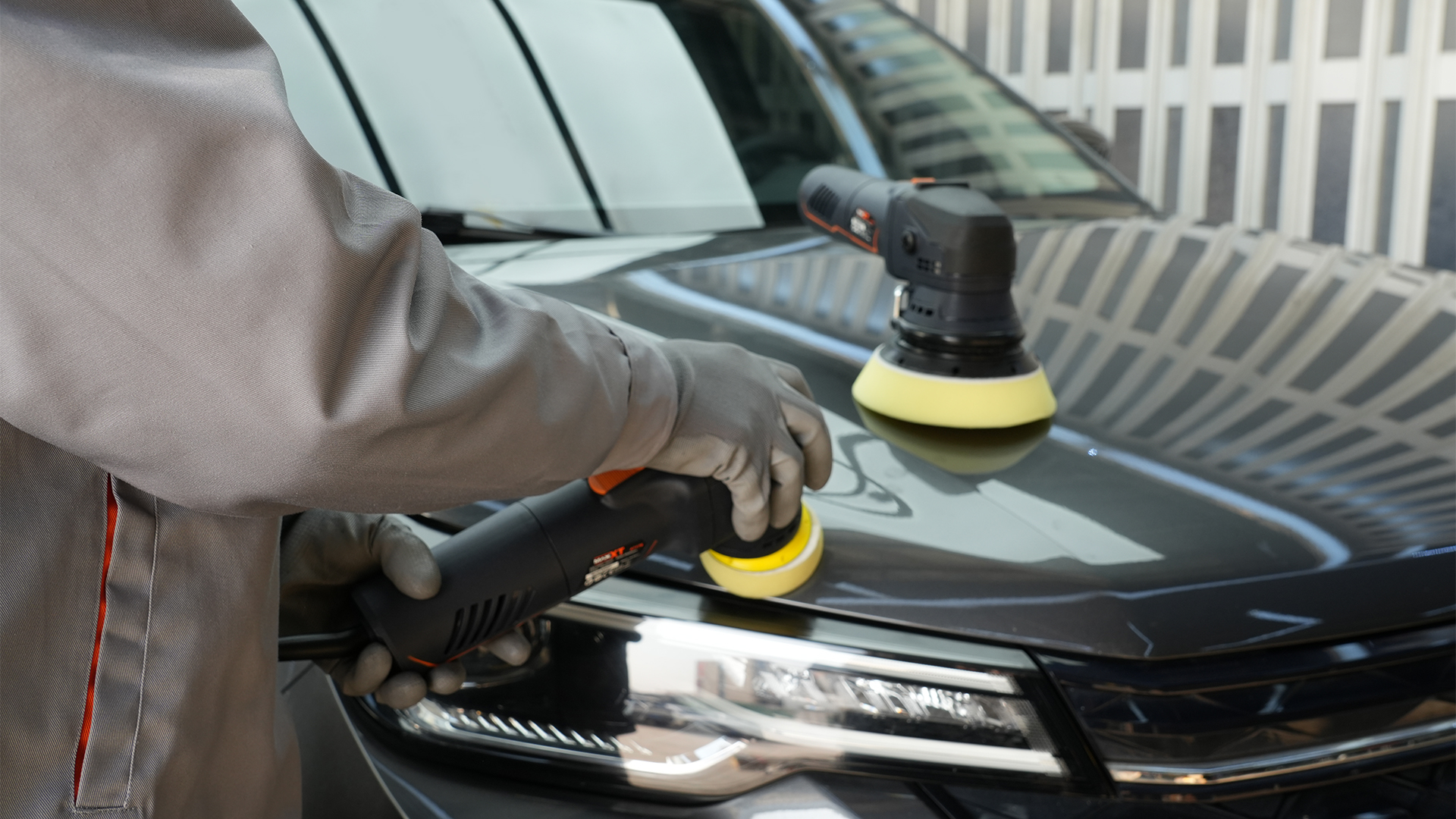
Paint correction is the most technically demanding and highest-margin service a professional detailing business can offer. The process uses machine polishers with specialized pads and compounds to remove 2-4 microns of clear coat surface, eliminating swirl marks, oxidation, and light scratches. The paint correction equipment segment is projected to grow at an estimated 8-10% CAGR through 2030 (Kitchener Research, 2025), driven by increasing consumer awareness of vehicle appearance and the growing value of used cars in the post-pandemic market.
This is the single most important equipment category for dealers serving the professional detailing market. Professional detailers typically own multiple polishers, not one, they maintain dedicated tools for cutting (aggressive correction), polishing (finish refinement), and spot correction (tight areas). This creates multiple equipment purchasing points per customer, which is a structural advantage for dealers who stock a complete range.
The polisher market has a clear upgrade path that dealers can use for recurring sales. A detailer typically starts with an entry-level dual-action (DA) polisher, then upgrades to a professional-grade unit within 6 to 12 months as their business volume grows. Based on distribution data across markets, the polisher-to-pad sales ratio is approximately 1:4, for every polisher sold, dealers can expect to sell four sets of pads in the first year of ownership. Dealers who stock both entry-level and professional tiers can capture both the initial sale and the upgrade sale from the same customer.
Understanding the Three Polisher Categories
Professional detailers choose between three main machine types, each serving a distinct role. Dual-action (DA) polishers oscillate while rotating, making them the safest choice for beginners and general correction work. Rotary polishers spin in a single direction at higher speeds, offering faster cut but requiring more skill to avoid paint damage. Mini polishers and 3-inch tools serve tight areas, spot correction, and detail work where full-size machines cannot reach.
For dealers, the key insight is that these three categories are complementary, not substitutes. A professional detailer typically owns one of each, not one or the other. The upgrade path also follows a predictable pattern: entry-level DA first, professional DA second, rotary third, and mini polisher as the final addition. Each purchase represents a separate sales opportunity with distinct margin characteristics.
The Cordless Opportunity
The cordless segment of the power tool market has penetrated the detailing category later than construction trades, but the shift is accelerating. Professional detailers value cordless polishers for mobile detailing operations, tight workshop spaces, and the elimination of cord management during multi-stage correction work. The 20V platform approach, where multiple tools share the same battery ecosystem, is particularly relevant for detailers, who increasingly expect cross-compatibility among their polishers, blowers, and other workshop tools.
For dealers, stocking cordless options alongside corded machines captures two distinct customer segments: established shops that want cordless flexibility as a secondary tool and mobile detailers for whom cordless operation is a primary requirement. The battery ecosystem lock-in effect (once a customer invests in a battery platform, switching costs are high) makes early entry into this category strategically valuable for distributor-customer relationships.
Polisher Pricing Tiers and Dealer Strategy
A well-structured polisher inventory covers three distinct tiers. Entry-level DA polishers ($80-150 wholesale range) serve as customer acquisition tools, they bring new shops into the category and build brand familiarity. Professional-grade DA polishers ($150-300 range) are the core profit tier, where build quality, reliability, and performance justify premium pricing. Rotary buffers and specialty tools ($100-250 range) serve experienced detailers and repair specialists who need maximum cutting power for heavy correction work.
The most common mistake dealers make in this category is under-stocking the middle tier. Entry-level tools drive volume but lower margins, while professional tools drive margins but lower volume. The mid-tier professional DA polisher, the tool that a growing shop buys as their first upgrade, offers the best volume-to-margin ratio in the category.
Stage 3: How Do Drying and Finishing Tools Create Differentiation?
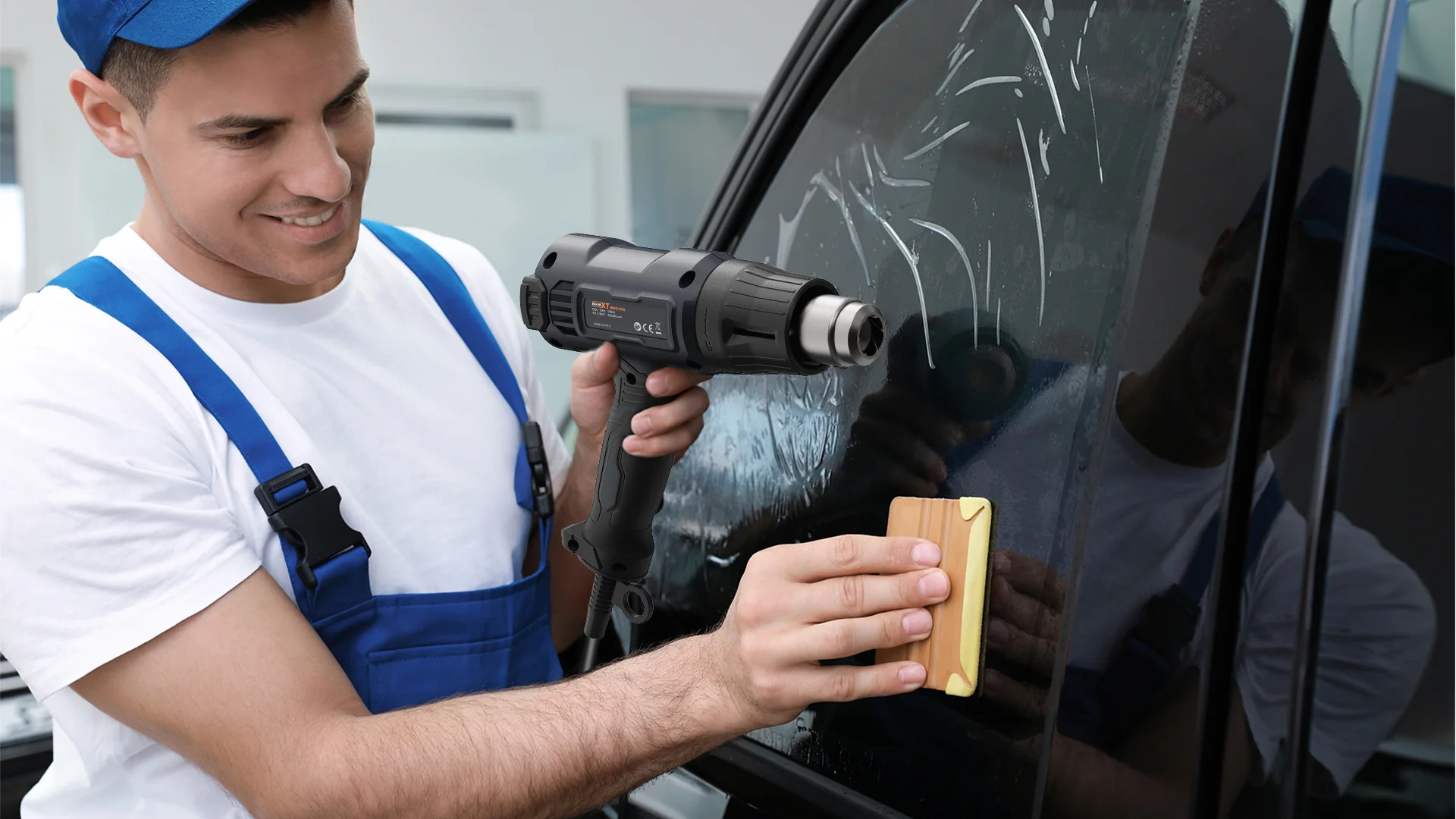
After paint correction and protection, the drying and finishing stage is where professional detailers distinguish their work from standard service. High-speed blowers are used to expel water from mirror housings, grille gaps, emblems, and door jambs, areas where towel drying alone leaves moisture that can cause long-term issues. Heat guns serve multiple finishing roles: accelerating wax and sealant cure times, removing adhesive residue from decals and badges, softening trim for restoration work, and assisting with paintless dent repair and vinyl wrap application.
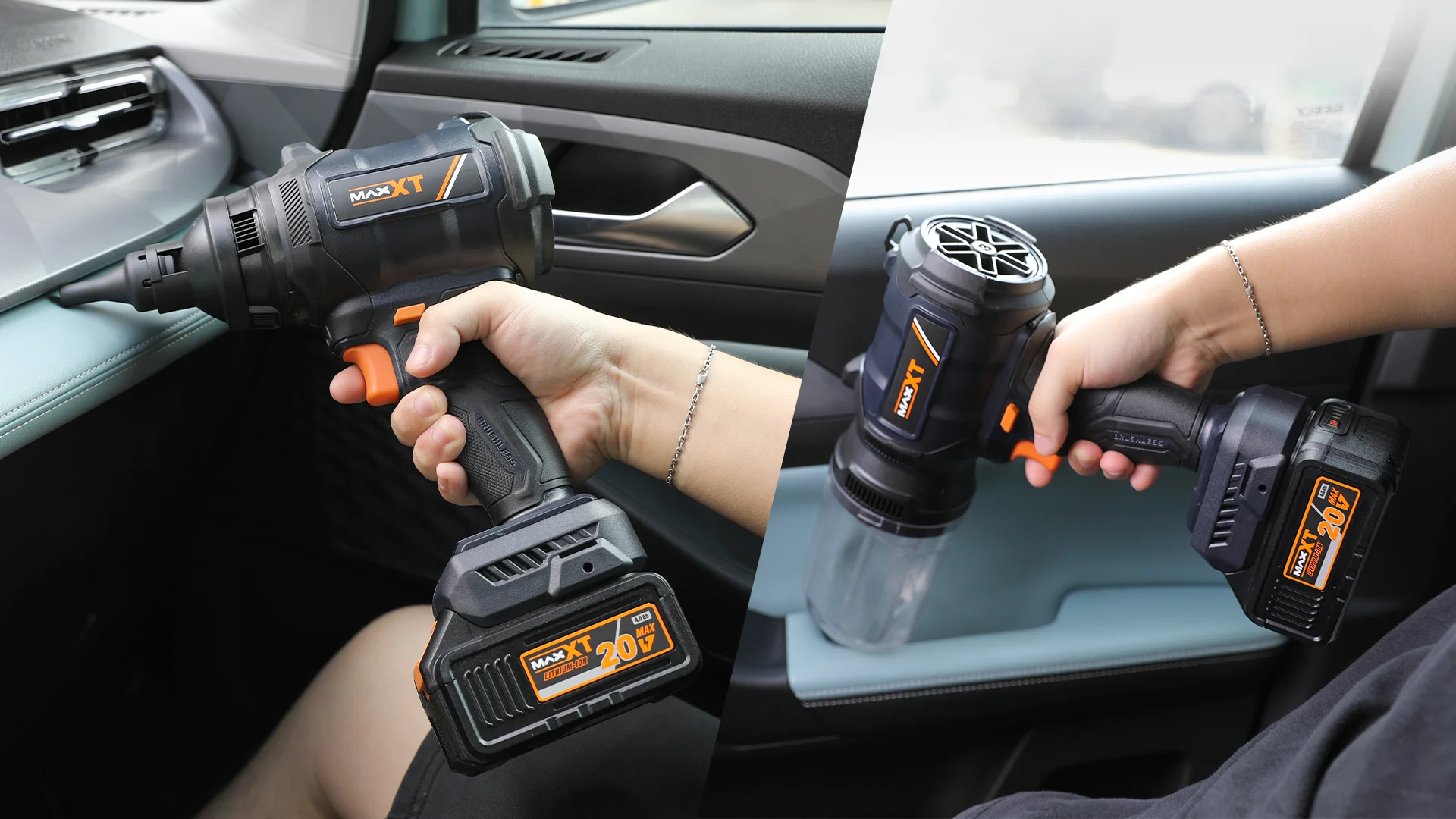
The blower category is particularly interesting for dealers because it sits at the intersection of interior and exterior detailing. A blower-vacuum combination unit can serve both the drying stage (exterior finishing) and the interior cleaning stage (vacuum functionality), effectively addressing two purchasing needs with a single SKU. The MDPB20V High Speed Blower/Vacuum, for instance, transitions between these roles, making it a versatile SKU that suits multiple detailing stages.
Heat guns are a differentiated category in the detailing tool lineup. While most dealers stock polishers and vacuums, fewer carry professional-grade heat guns specifically spec’d for automotive finishing work. This creates a white-space opportunity: a three-model range covering corded high-power (1800-2000W), cordless (20V), and compact configurations allows dealers to offer options for shop-based and mobile detailers alike. The cordless heat gun, in particular, serves mobile detailers who need heat for wrap application and badge removal without access to shop power.
Stage 4: Is Interior Cleaning a Separate Equipment Decision?
Professional interior detailing follows a strict top-down methodology, headliner first, then vents and trim, seats, and finally carpets, to prevent dust and debris from resettling on finished surfaces. Hot water extraction is the gold standard for fabric deep cleaning, but the equipment investment is significant, with professional-grade extractors typically costing $1,000-$3,000.
Interior detailing equipment represents a separate purchasing decision from exterior tools. Many detailers build their exterior kit first, then add interior tools three to six months later as they expand their service offerings. This timing delay creates a second sales window for dealers: a customer who purchased a polisher setup in month one is a prime prospect for vacuum and extraction equipment in month three or four.
MaxXT’s commercial dust extractors (MVC3800 and MVC3600) and the blower-vacuum combination unit serve the interior cleaning stage directly. For dealers, the blower-vacuum’s dual functionality is a distinct selling point, it reduces the number of separate tools a detailer needs to purchase while covering both the interior vacuuming and exterior drying stages.
Stage 5: What Should Dealers Know About Paint Protection?
After correction, the paint needs protection. Professional detailers choose between three main options: natural wax (2-3 months durability), synthetic sealant (3-5 months), and ceramic coating (1-5 years depending on formulation). Ceramic coatings command the highest service fees, typically $500-$2,000 per vehicle for professional application, and require precise environmental control, with ideal humidity below 60% and temperatures between 18-24°C.
MaxXT does not manufacture chemical products, waxes, sealants, or ceramic coatings. However, understanding the protection category is valuable for dealers because it enables informed conversations with customers who operate in this space. The ceramic coating kit market, for example, is one of the highest-margin categories in the detailing supply chain: a kit wholesaling for $50-80 can retail for $150-200, with application service charges multiplying that figure by 5-10x. While this is not a product category you stock, it is a business reality your customers navigate daily.
How to Build a Winning Detailing Equipment Inventory
For dealers, a successful detailing equipment inventory strategy balances four categories. High-volume essentials like entry-level DA polishers and basic accessories drive customer acquisition. Professional-grade upgrades generate strong margins and customer loyalty. Consumables, pads, backing plates, and tool accessories, provide recurring revenue with predictable repurchase cycles. Differentiated specialty tools like heat guns and blowers create competitive separation from general-line distributors.
The three-tier framework below maps MaxXT’s catalog to the professional detailing workflow, making it clear where to invest inventory depth and where a lighter approach is appropriate.
| Tier | Category | MaxXT Coverage | Dealer Strategy |
|---|---|---|---|
| A — Core | Polishers (12 models) | ★★★★★ Full range: DA, rotary, cordless, mini | Stock depth across all 3 tiers. Bundling strategy: polisher + pad kit. |
| A — Core | Heat Guns (3 models) | ★★★★ Corded + cordless + compact | Differentiation play. Few competitors carry this range. |
| B — Adjacent | Blowers / Vacuums | ★★★ 2 blowers + 2 dust extractors | Cross-sell with polishers. Blower-vac combo is versatile SKU. |
| B — Adjacent | Orbital Sanders / Multi Tools | ★★ Multiple models | Workshop support tools. Secondary sale opportunity. |
| C — Knowledge | Chemicals / Towels / Extractors | ☆ Not in product range | Know the market to advise customers. No inventory commitment. |
A practical starting inventory in the detailing category would focus on the Tier A core: one or two entry-level DA polishers for customer acquisition, two to three professional-grade DA polishers as the profit center, one rotary buffer for experienced users, a mini polisher for detail work, and two heat gun models (corded and cordless) as differentiators. The Tier B blowers and vacuums complement the core lineup, while Tier C knowledge enables informed customer conversations without inventory risk.
Frequently Asked Questions
What equipment does a professional detailer need to start a business?
A starter kit typically includes a dual-action polisher, pressure washer, two-bucket wash system, microfiber mitts and towels, a clay bar kit, and a wet/dry vacuum. Entry-level investment ranges from $1,000 to $3,000 for basic equipment, with professional-grade upgrades available as the business grows (industry estimate, 2025).
How often should a detailing shop replace its polisher?
Professional polishers typically last 2 to 4 years with proper maintenance. Consumable items, polishing pads, microfiber towels, and brushes, are replaced every 1 to 6 months depending on usage volume. Backing plates should be inspected monthly. This replacement cycle creates predictable recurring revenue opportunities for dealers who stock consumables alongside tools (industry maintenance data, 2025).
What is the difference between a DA polisher and a rotary buffer?
A dual-action (DA) polisher oscillates while rotating, which reduces the risk of paint damage and makes it the preferred tool for beginners and general correction work. A rotary buffer spins in a single direction at higher speeds, cutting faster but requiring more skill to avoid burning through the clear coat. Most professional detailers own both for different stages of correction work.
How fast is the professional detailing market growing?
The global car detailing service market was valued at $46.7 billion in 2025 and is projected to reach $81.2 billion by 2035, at a CAGR of 5.6% (Global Market Insights, 2025). The U.S. market alone reached $18.7 billion in 2026 (IBISWorld, 2026), with 79% of drivers now using professional services compared to 50% in 1996.
What margin can dealers expect on detailing equipment?
Entry-level polishers typically carry lower margins but drive volume and customer acquisition. Professional-grade polishers offer the best margin-to-volume ratio. Consumables like pads and accessories have shorter repurchase cycles and build stable recurring revenue. Differentiated specialty tools like heat guns and blowers can command premium pricing with less competitive pressure (industry distribution data, 2025).
The Bottom Line for Dealers
Professional detailing is not a luxury niche, it is a growing $81 billion global industry with sustained demand for specialized equipment. The 79% of U.S. drivers who now use professional car care services (up from 50% in 1996) are not going back to washing cars at home. Each stage of the detailing workflow creates distinct purchasing needs, from entry-level polishers to professional-grade finishing tools, and the consumable cycle means a customer acquired today generates recurring orders for years.
For dealers and distributors, the most important strategic decision is which category to lead with. The data is clear: paint correction equipment is the highest-value, highest-growth segment, with the clearest upgrade path and the strongest consumable attachment rate. Leading with polishers, and building outward to blowers, vacuums, and heat guns, is a proven approach to building a detailing equipment book of business.
Ready to build your detailing equipment inventory? Contact MaxXT to learn about wholesale programs serving distributors in 60+ countries.
References
- Global Market Insights. “Car Detailing Service Market Size, Forecasts Report 2026-2035.” GMInsights.com, 2025. Source
- IBISWorld. “Car Wash & Auto Detailing in the US Industry Data and Analysis.” IBISWorld.com, February 2026. Source
- Fortune Business Insights. “Car Detailing Service Market Size, Share.” FortuneBusinessInsights.com, 2025. Source
- Precedence Research. “Car Detailing Service Market Size to Hit USD 80.15 Billion by 2035.” PrecedenceResearch.com, 2025. Source
- Persistence Market Research. “Car Detailing Service Market Size & Growth Insights, 2033.” PersistenceMarketResearch.com, January 2026. Source
- Kitchener Research. Paint Correction Equipment Market Data (cited via industry overview), 2025.
- International Carwash Association / IBISWorld. “Percentage of U.S. Drivers Using Professional Car Washes.” 1996-2023 data, cited in IBISWorld industry report, 2024.
- Auto Finesse. “12 Steps of Detailing Guide.” AutoFinesse.com, 2024. Source
- Research and Markets / The Business Research Company. “Car Detailing Market Report 2026.” ResearchAndMarkets.com, 2026. Source

 English
  Arabic
  French
  German
  Portuguese
  Russian
  Spanish
  Turkish