
Wichtigste Erkenntnisse
The global car scratch remover market is valued at $2.52 billion in 2026, growing at 8.1% CAGR – driven by aging vehicle fleets and rising consumer demand for affordable paint repair (Coherent Market Insights, 2026).
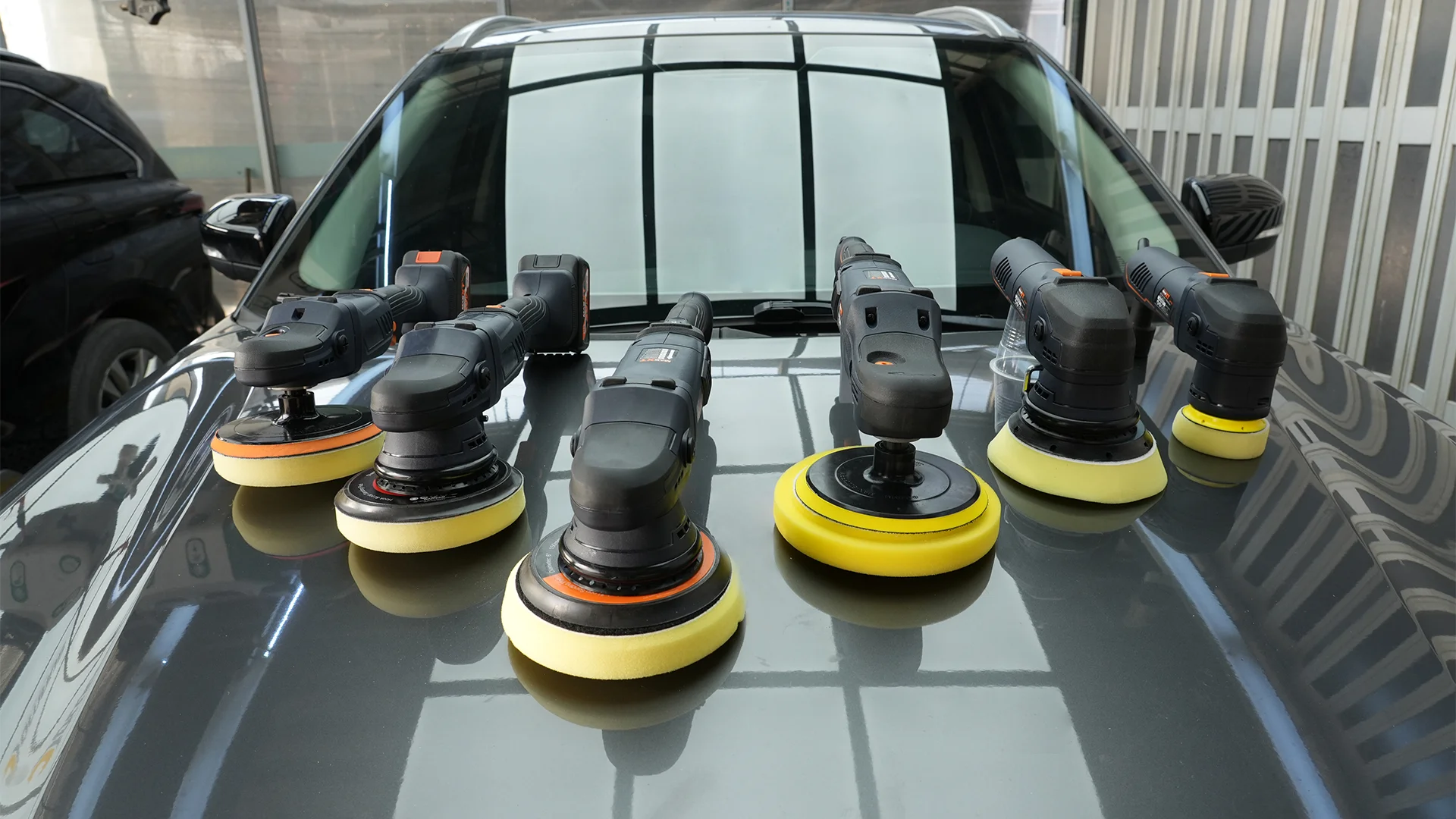
Professional deep scratch repair requires a specific five-tool workflow: random orbital sander, dual-action polisher, rotary polisher, mini polisher, and dust extraction – each with distinct technical specifications that body shops prioritize.
US auto body shops generated $76.9 billion in revenue (IBISWorld, 2026), with paint and cosmetic repair representing one of the fastest-growing service segments.
MaxXT delivers OEM-quality polishers and sanders at approximately 50% lower wholesale cost than top-tier brands, backed by 20 years of manufacturing for global names like Bosch and Dewalt.
Every article you will find when searching “how to remove deep scratches from car paint” is written for consumers. Toothpaste. Nail polish. WD-40. The implicit message is: this is a simple problem that anyone can fix with household items.
That advice is not just wrong – it is a distraction from a much larger business reality.
The global automotive paint repair ecosystem is a $124.98 billion market (Market Research Future, 2025). Within it, the scratch repair tools segment alone is worth $2.52 billion and compounding at 8.1% annually. Auto body shops in the United States generated $76.9 billion in revenue last year (IBISWorld, 2026). And yet, virtually zero B2B content exists to help distributors understand what products these shops actually need, what specifications matter, and how to capture this growing demand.
This guide changes that. It covers the market opportunity, the specific tools body shops use at each stage of deep scratch repair, the technical specifications that separate professional-grade from consumer-grade equipment, and how distributors can source competitively. If you sell power tools to the automotive aftermarket, this is your category roadmap for 2026 and beyond.
Why Do Most Scratch Repair Guides Miss the Real Market Opportunity?
The internet is saturated with consumer scratch repair guides. A SERP analysis of the top six ranking articles for “how to remove deep scratches from car paint” reveals a striking pattern: every single one targets end consumers. Chemical Guys promotes its polishing compounds. Synchrony pitches its car care credit card. Maaco pushes professional body shop services. Car and Driver tests light-duty scratch removers.
None of them speak to the distributor, the wholesaler, or the hardware store owner who actually supplies the tools that professional body shops use every day.
This creates an unusual competitive situation: the SERP is crowded with B2C content, but the B2B opportunity is wide open. A well-researched distributor-focused article faces no direct competition for search visibility among decision-makers who control tool purchasing channels.
The conventional wisdom in the power tools industry says that scratch repair tools are a niche add-on – a secondary category that does not justify dedicated inventory. The data tells a different story.
How Big Is the Scratch Repair Tools Market in 2026?
The market for car scratch repair spans multiple layers of the automotive aftermarket. Understanding its full size requires looking at three intersecting data points:
1. The Collision Repair Foundation
The global automotive collision repair market reached $210.54 billion in 2025 and is projected to grow to $246.93 billion by 2030 (Mordor Intelligence, 2025). This category includes everything from frame straightening to paint refinishing. Cosmetic and paint repairs – including scratch removal – represent a significant and growing share of this spending as vehicles age and owners prioritize appearance.
2. The Paint Repair Segment
Automotive paint repair services alone were valued at $124.98 billion in 2025 (Market Research Future, 2025). This includes scratch repair, paint restoration, dent repair, and full respray services. With the global vehicle fleet aging and new car prices at historic highs, more owners are choosing to repair rather than replace – driving sustained demand for paint correction tools.
3. The Scratch Remover Product Market
The most targeted segment – car scratch remover products, including compounds, polishes, kits, and the tools used to apply them – was valued at $2.52 billion in 2026. It is projected to reach $4.34 billion by 2033, growing at an 8.1% CAGR (Coherent Market Insights, 2026). The growth is driven by increasing consumer awareness of vehicle maintenance and the rising popularity of DIY and aftermarket care solutions.
For the distributor, the implication is clear: demand for scratch repair tools is not hypothetical. It is a measurable, growing category backed by hundreds of billions in downstream service revenue.
What Tools Do Body Shops Actually Use for Deep Scratch Repair?
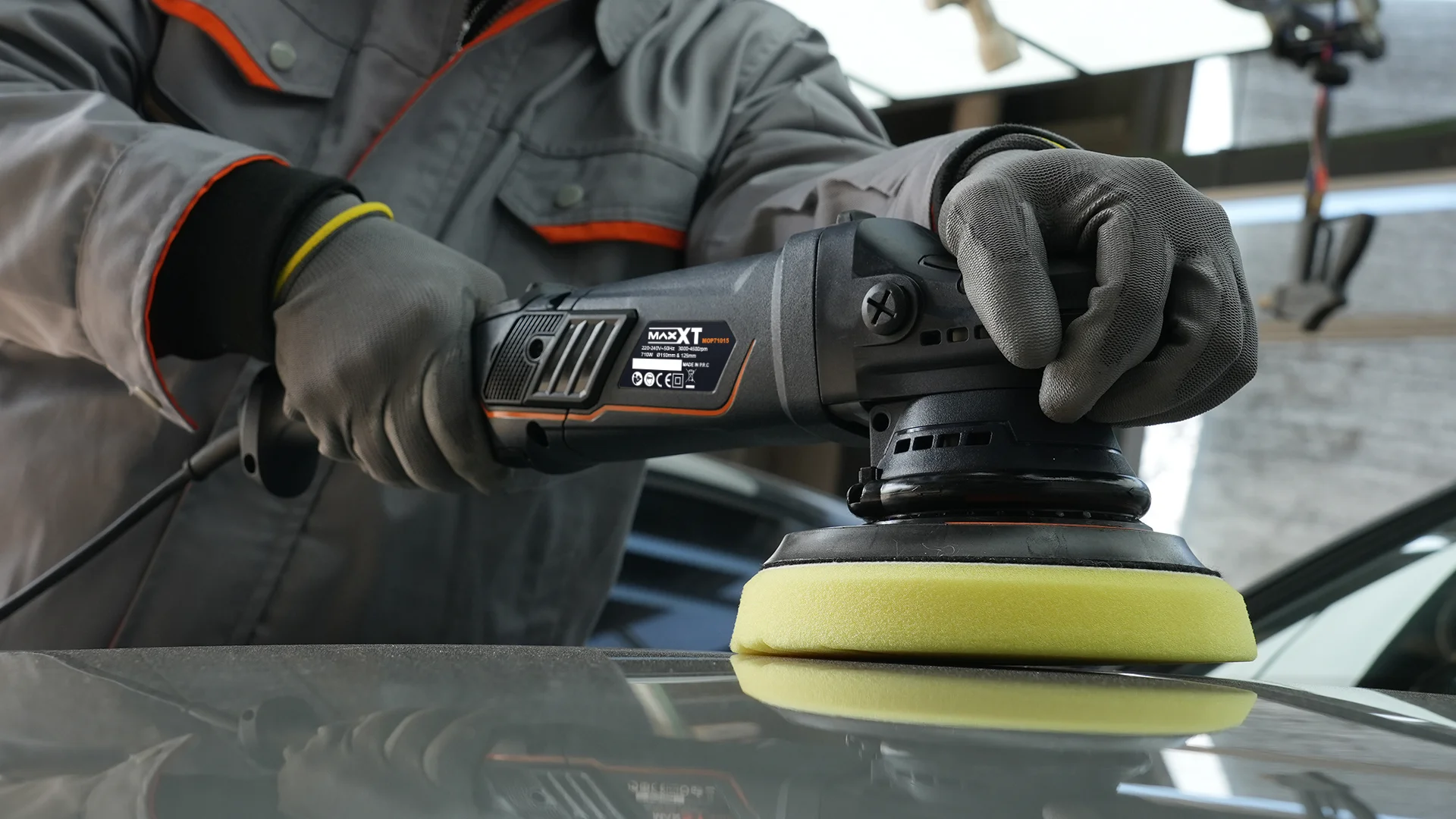
A deep scratch – one that penetrates beyond the clear coat into the paint layer, primer, or bare metal – cannot be fixed with a bottle of rubbing compound and a microfiber cloth. Professional repair follows a structured multi-step process, and each step requires a specific tool with specific technical specifications.
Here is the complete toolchain that auto body shops use for deep scratch repair, and the specifications that distinguish professional-grade tools from consumer-grade alternatives:
| Repair Stage | Tool Category | Key Specs for Professionals | MaxXT Product Match |
|---|---|---|---|
| Surface prep & feathering | Random orbital sander | 6″ pad, 5mm orbit, 4,000-12,000 OPM, dust collection port | MaxXT random orbital sanders (6″ series) |
| Wet sanding & detail work | Detail / palm sander | 3″ pad, 10,000-20,000 OPM, low-profile head | MaxXT cordless mini polisher/sander MDMP20V |
| Clear coat correction | Dual-action (DA) polisher | 6″ pad, 1,000-4,000 RPM, 15mm long-throw orbit | MaxXT DA polisher MOP71015 / MOP71021 |
| High-gloss finishing | Rotary polisher | 6″ pad, 600-2,500 RPM, constant torque under load | MaxXT rotary polisher MEP1200 / MEP1300 |
| Spot repair & detailing | Mini polisher | 3″ pad, 1,500-5,000 RPM, cordless | MaxXT cordless mini polisher MDMP20V |
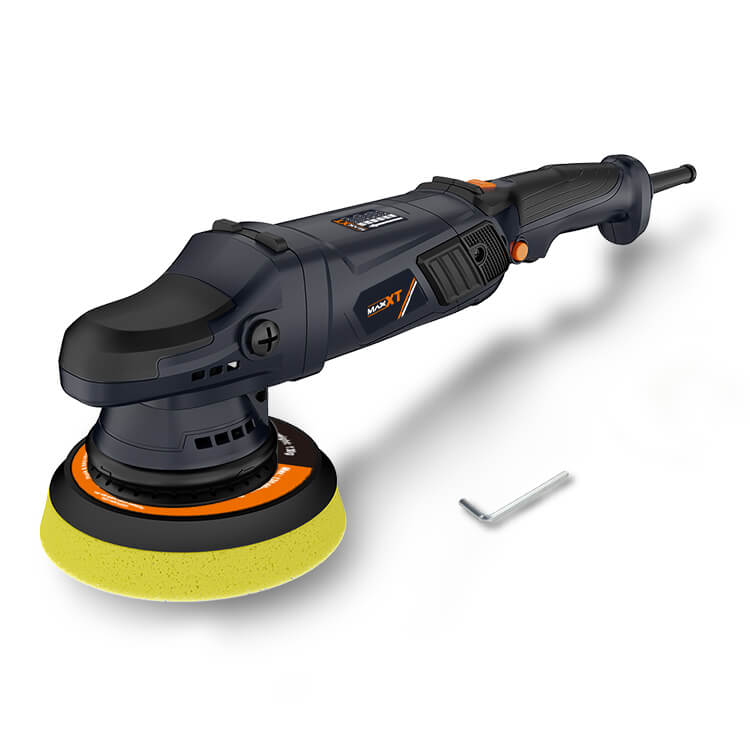
MaxXT Electric Orbital Polisher MOP71021
Professional dual-action polisher with variable speed control and consistent torque under load – the core tool for clear coat scratch correction.
View product pageThe most important technical specification that separates professional-grade from consumer-grade is torque retention under load. A consumer polisher may list an impressive peak RPM, but when pressed into a paint surface – as body shop technicians routinely do – the speed drops. Professional-grade tools from manufacturers like MaxXT maintain consistent RPM under load, delivering predictable, repeatable results. This is not a marketing distinction; it is a measurable performance difference that directly affects repair quality and job completion time.
How Do You Match the Right Tool to the Right Scratch Depth?
Not all deep scratches are the same, and stocking the wrong tools for the wrong damage tier leaves money on the table. Deep scratches fall into three categories, each requiring a different tool approach:
Layer 1 – Clear Coat Scratches (Approximately 80% of repairs)
These affect only the transparent top layer. They are the most common and the easiest to address. A dual-action polisher with a cutting compound is typically sufficient. This is the highest-volume repair tier and drives the most consistent demand for DA polishers and polishing compounds.
Layer 2 – Paint-Layer Scratches (Approximately 15% of repairs)
These penetrate the color coat but not the primer. Repair requires sanding (random orbital sander), touch-up paint application, clear coat, and polishing (DA polisher). This tier requires multiple tools and represents the highest per-customer sale potential for a distributor.
Layer 3 – Primer or Metal Scratches (Approximately 5% of repairs)
These expose the primer layer or bare metal. Full repair demands the complete toolchain: orbital sander for preparation, filler primer, color-matched paint, clear coat, dual-action polisher for correction, and rotary polisher for final finishing. While lower in volume, this tier drives the highest-value tool sales per repair.
For distributors, the practical implication is straightforward: a customer who buys a DA polisher for clear coat scratches will return for an orbital sander when they encounter paint-layer damage, and a rotary polisher when they pursue high-end finishing work. The tool purchase journey mirrors the repair depth journey. Stocking the full toolchain converts one-time buyers into repeat customers.
Passenger vehicles represent 74.6% of the touch-up paint and repair market (Market Intelo, 2025), meaning body shops serving this segment need the complete toolchain. A distributor who can supply the full range – from entry-level DA polishers to professional rotary polishers – captures more wallet share per customer.
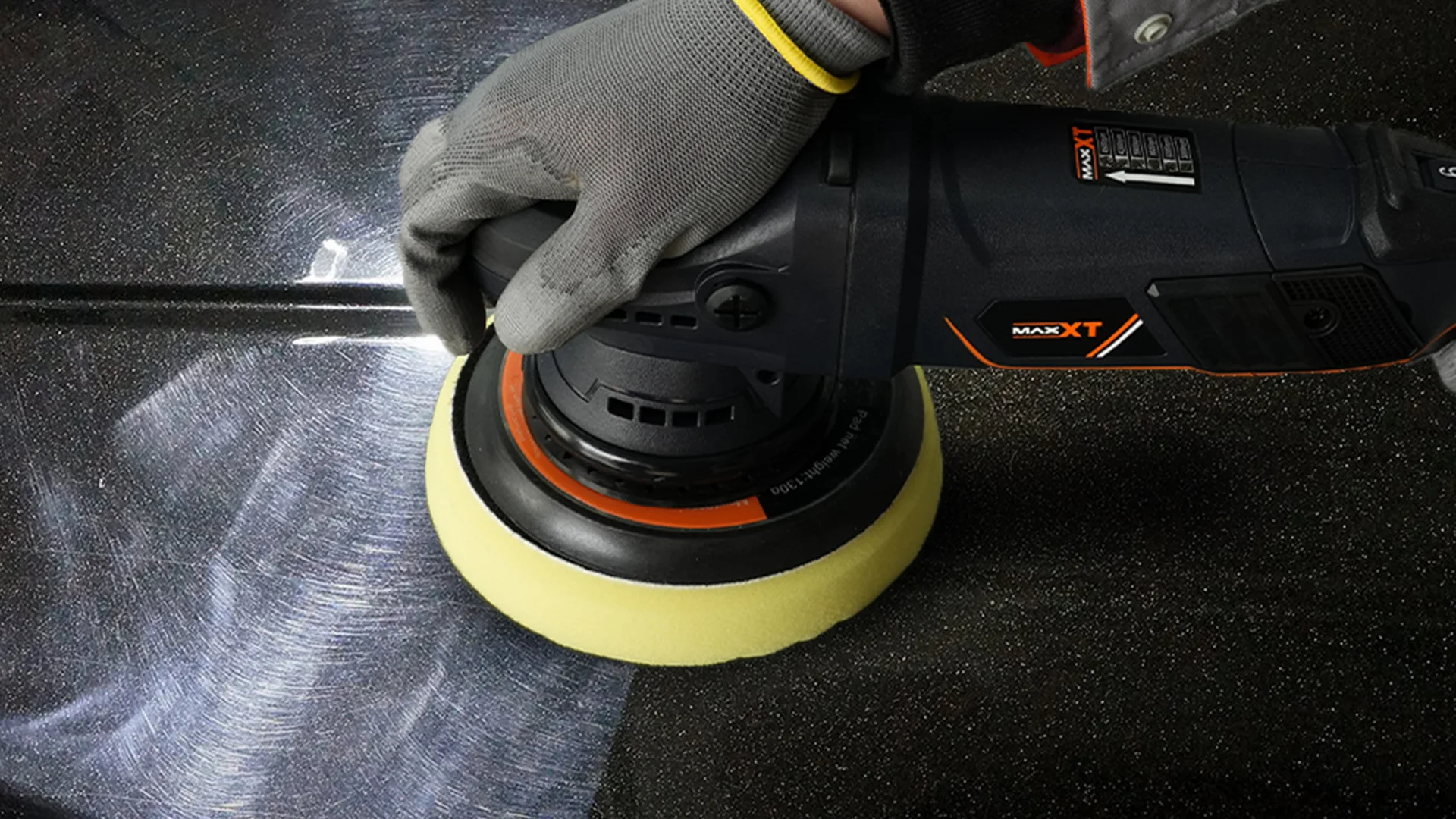
What Should Distributors Stock? A Three-Tier Inventory Strategy
Not all scratch repair tools generate the same margin or move at the same velocity. A well-balanced inventory covers three tiers:
Tier A – Entry-Level (High Volume, Faster Turnover)
Single-speed polishers and basic orbital sanders. These tools serve mobile detailers, small garages, and DIY workshops. They turn over quickly but carry slimmer margins in the 15-20% range. They are the entry point for new customers and a reliable source of repeat orders as tools wear out.
Tier B – Professional Mid-Range (The Sweet Spot)
Variable-speed dual-action polishers and 6-inch random orbital sanders with dust extraction. These are the tools that professional auto body shops buy and rebuy. Margin profiles sit at 25-35%, supported by the significant price gap between top-tier brands and quality alternatives. This is the tier where a manufacturer like MaxXT creates the most value for distributors – delivering comparable performance to Bosch or Dewalt at approximately 50% lower wholesale cost.
Tier C – Premium Specialty (Higher Margin, Lower Volume)
Rotary polishers, cordless mini polishers, and specialty tools for high-end restoration and collision centers. Margins reach 30-40%, and customer loyalty at this tier is strong. These are tools that professionals buy when they demand the best, and they rarely switch suppliers once satisfied.
The middle tier – professional mid-range tools – represents the strongest opportunity for most distributors. It combines strong volume, healthy margins, and a compelling value proposition that customers can verify on their first use.
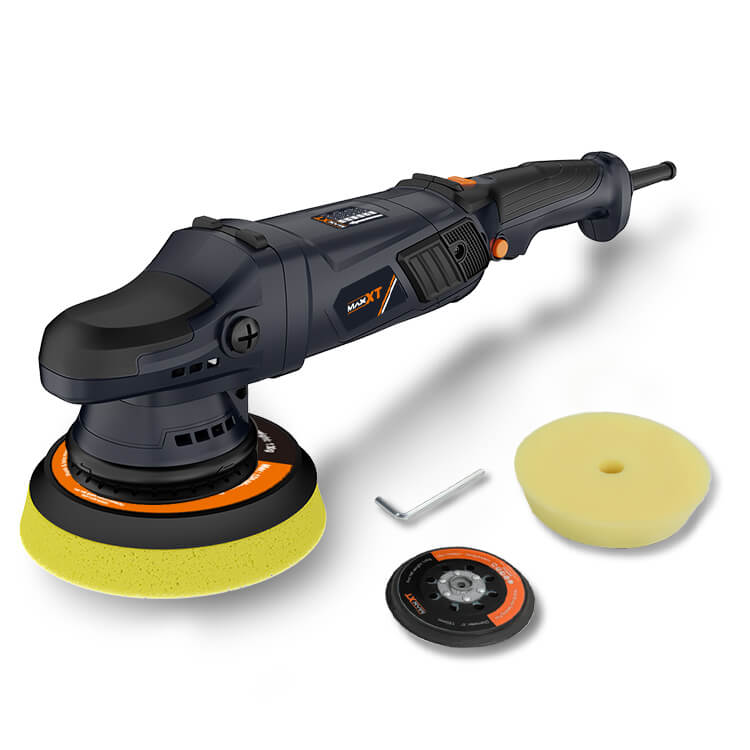
MaxXT Dual-Action Polisher MOP71015
Mid-range professional DA polisher with 15mm long-throw orbit and variable speed control – the sweet spot for body shop scratch correction at wholesale pricing.
View product pageDoes Tool Quality Actually Affect Scratch Repair Results?
For the body shop professional, a tool is not just a tool. It is a revenue instrument. A $50 polisher that leaves swirl marks forces the technician to spend an extra 20 minutes correcting the finish. At shop labor rates of $80-150 per hour, that single tool flaw costs more than the tool itself in wasted time within the first few jobs.
Professional deep scratch repair requires tools that deliver:
Speed stability under load. When a technician applies pressure to a polishing pad, the tool must maintain its rated RPM. Speed drop creates inconsistent cut and visible holograms in the paint. Variable-speed electronics with feedback control – standard in MaxXT polishers – prevent this.
Orbit consistency. In dual-action polishers, the orbiting mechanism must maintain a consistent pattern. Irregular orbits produce uneven correction and force the technician to make additional passes, reducing productivity and increasing the risk of burning through the clear coat.
Integrated dust management. For sanding stages, dust extraction is not optional. Body shop environments are regulated for airborne particulates, and tools without effective dust collection create health hazards and cleanup costs. MaxXT orbital sanders and dust extractors are designed as compatible systems for this reason.
Ergonomics for extended use. Scratch repair technicians frequently spend 8+ hours daily with a polisher in hand. Tools that are unbalanced, overly heavy, or transmit excessive vibration cause fatigue that reduces quality and increases injury risk.
Professional scratch repair costs range from $150-$400 for paint-layer damage to $400-$800+ per panel for scratches exposing bare metal (Apex Auto Pros, 2025). When a body shop invests that much in materials and labor for a single repair, the quality of the tool determines whether the job is profitable or a loss leader. Distributors who understand this value chain can sell on total cost of ownership rather than upfront price – a message that resonates with shop owners who have experienced the hidden costs of cheap equipment.
How Do Successful Distributors Capture This Market?
The distributors who grow fastest in this category share a common approach: they position themselves as scratch repair specialists, not just tool suppliers. This differentiation commands higher margins and builds customer loyalty.
Here is what the most effective distributors do differently:
1. Stock the full toolchain, not just the bestseller.
A shop that buys a DA polisher will soon need an orbital sander, then a rotary polisher, then a dust extractor. Distributors who can supply the complete workflow capture 3-5x more revenue per customer than those who stock only one category.
2. Offer product knowledge as a service.
Body shop owners value suppliers who can answer questions about pad compatibility, orbit size, and RPM ranges. Distributors who train their sales teams on the scratch repair process earn more trust – and more repeat orders – than those who compete on price alone.
3. Leverage manufacturer support programs.
MaxXT provides free samples, zero MOQ, technical training, and marketing materials in 8 languages to its distributor partners. Distributors who take advantage of these resources can offer customers hands-on product testing, detailed spec sheets, and local-language support – advantages that pure online resellers cannot match.
4. Target the 71% of independent shops.
71% of auto repair shops in the US are independently owned and operated (Lookupaplate, 2025). These shops rely on distributor relationships because they lack the purchasing power to buy factory-direct. They value selection, advice, and fast local supply – exactly what a well-stocked distributor provides.
5. Maintain a balanced inventory across the three tiers.
The ideal inventory mix varies by market, but a common starting point is 40% Tier B (professional mid-range), 35% Tier A (entry-level volume), and 25% Tier C (premium specialty). This balance maximizes both turnover and margin.
What Does MaxXT Offer Distributors in This Category?
MaxXT is not a brand that competes on price alone. With 20 years of OEM and ODM manufacturing experience – producing tools for globally recognized brands including Bosch and Dewalt – MaxXT combines manufacturing expertise with direct-to-distributor pricing.
For distributors building their scratch repair tools inventory, the partnership model includes:
Zero minimum order quantity. Stock the right mix for your market without being forced into large commitments. Order what you need, when you need it.
Free product samples. Test quality and performance before placing bulk orders. Compare MaxXT polishers against your current suppliers – the performance difference at the price point is the most compelling sales argument.
OEM-quality manufacturing. Tools produced on the same production lines that serve premium global brands, at approximately 50% lower wholesale pricing. The margin advantage goes directly to the distributor.
D2D shipping within approximately 7 days. Warehouses positioned across multiple continents reduce transit times and inventory carrying costs.
Technical training and marketing support. Product knowledge transfer, spec sheets, demo videos, and promotional materials in 8 languages – designed to help distributors sell effectively to their local markets.
$1.5 million+ annual R&D investment. Continuous product iteration ensures the tool line keeps pace with evolving professional requirements, from brushless motor technology to improved dust management systems.
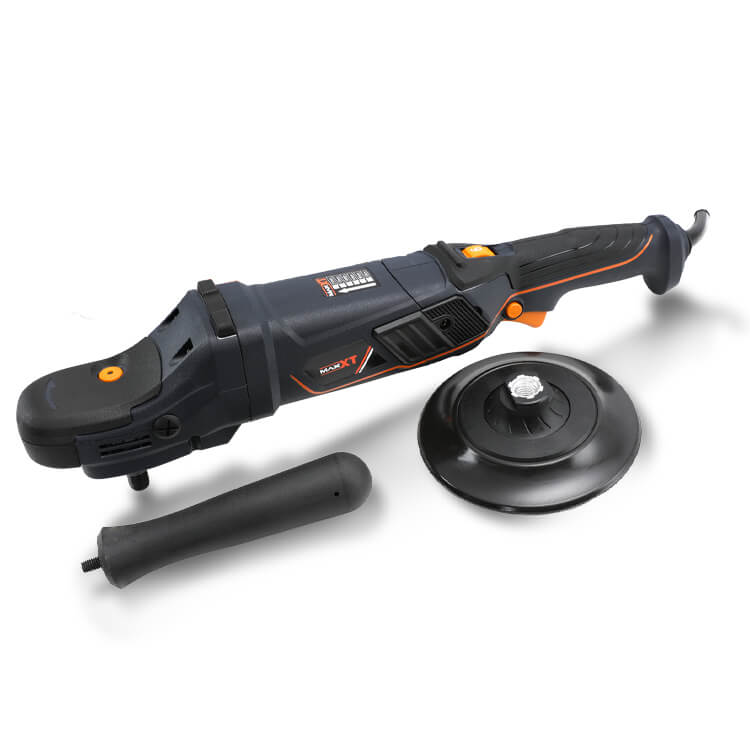
MaxXT Electric Polisher MEP1200
Professional rotary polisher for high-gloss finishing – constant torque under load at wholesale pricing, ideal for body shop final finishing stages.
View product pageCaveats and Market Realities
No analysis of the scratch repair tools market would be honest without acknowledging its limitations.
The 8.1% CAGR projection assumes continued growth in vehicle ownership and consumer spending on vehicle aesthetics. A sustained economic downturn would compress discretionary repair spending, particularly at the consumer DIY level. Professional body shop demand tends to be more resilient because insurance-covered repairs are less discretionary.
The market share of electric vehicles introduces some uncertainty. EV body shops require specialized tooling for high-voltage safety, and some traditional paint repair tools need adaptation. However, the fundamental scratch repair process – sand, prime, paint, clear coat, polish – remains the same regardless of powertrain. The tool requirements at the finishing stage have not changed meaningfully.
Distributors entering the scratch repair category should expect a learning curve. The technical specifications that matter to body shop professionals (orbit size, torque curves, pad compatibility) differ from the features that sell to consumers. Investing in product training – both for sales staff and for customers – is essential to capturing the margin premium that technical knowledge commands.
Häufig gestellte Fragen
What tools do I need to stock for professional deep scratch repair?
The core inventory should include dual-action polishers (6-inch, variable speed), random orbital sanders (6-inch with dust extraction), rotary polishers for high-gloss finishing, and mini polishers for spot repair work. Professional body shops also require compatible dust extraction systems. Distributors who stock the full toolchain capture 3-5x more revenue per customer than those who stock a single category.
Is the car scratch repair tools market growing?
Yes. The automotive paint repair services market was valued at $124.98 billion in 2025 (Market Research Future), while the scratch remover product segment specifically is growing at 8.1% CAGR. Aging vehicle fleets – the average US car is now over 12 years old – and rising consumer expectations for vehicle appearance are the primary growth drivers. US auto body shop revenue has grown at a 3.2% CAGR over the past five years to $76.9 billion (IBISWorld, 2026).
How does MaxXT’s pricing compare to top-tier brands?
MaxXT delivers comparable performance at approximately 40-50% lower wholesale pricing than leading premium brands. This cost advantage comes from direct manufacturing ownership – the same production lines that have produced tools for Bosch and Dewalt for 20 years. The margin difference goes directly to the distributor.
What kind of dealer support does MaxXT provide?
MaxXT provides free product samples for quality verification, zero minimum order quantity, technical training programs, marketing materials in 8 languages, and D2D shipping from overseas warehouses within approximately 7 days. These are standard offerings in the industry, but the combination of zero MOQ with OEM-quality manufacturing at 40-50% below premium brand pricing is less common among suppliers at this quality tier.
Do body shops prefer corded or cordless polishers for scratch repair?
Professional body shops typically maintain both. Corded rotary polishers are preferred for heavy correction work where consistent power and unlimited runtime are essential. Cordless dual-action polishers are increasingly popular for spot repairs and detailing where mobility matters. A well-stocked distributor should carry both types to serve the full range of customer preferences.
Ready to Stock Professional Scratch Repair Tools?
Evaluate MaxXT’s quality firsthand. Request a free sample of our professional polishers and compare against your current supplier. The margin difference speaks for itself.
Request Free SampleConclusion: The Opportunity Is Clear
The scratch repair tools market is large, growing, and structurally underserved by B2B content. Distributors who invest in understanding the repair process, the tool specifications that professionals demand, and the inventory strategy that balances margin with turnover will capture disproportionate share as the market expands from $2.52 billion toward $4.34 billion over the next seven years.
The choice is not whether to stock scratch repair tools. The question is which supplier partnership gives you the quality, pricing, and support to win. MaxXT’s combination of OEM manufacturing heritage, competitive wholesale pricing, and comprehensive distributor support makes it a strong answer to that question.
References
- Coherent Market Insights. “Car Scratch Remover Market Size, Share & Forecast, 2026-2033.” Coherent Market Insights, 2026. https://www.coherentmarketinsights.com/market-insight/car-scratch-remover-market-5712
- Market Research Future. “Automotive Paint Repair Services Market Size, Growth Report 2035.” MRFR, 2026. https://www.marketresearchfuture.com/reports/automotive-paint-repair-services-market-68217
- Mordor Intelligence. “Automotive Collision Repair Market Size, Share & 2030 Growth Trends Report.” Mordor Intelligence, 2025. https://www.mordorintelligence.com/industry-reports/automotive-collision-repair-market
- IBISWorld. “Auto Body Shops in the US Industry Analysis, 2026.” IBISWorld, 2026. https://www.ibisworld.com/united-states/industry/auto-body-shops/1694
- Market Intelo. “Touch-Up Automotive Paints Market Research Report 2034.” Market Intelo, 2025. https://marketintelo.com/report/touch-up-automotive-paints-market
- Apex Auto Pros. “Car Scratch Repair Cost: A Complete 2025 Price Guide.” Apex Auto Pros, 2025. https://apexautopros.com/car-scratch-repair-cost-a-complete-2025-price-guide
- Lookupaplate. “US Auto Repair & Maintenance Industry Statistics: Key Insights & Trends [2025].” Lookupaplate, 2025. https://www.lookupaplate.com/blog/auto-repair-industry-statistics
 German
  English
  Arabic
  French
  Portuguese
  Russian
  Spanish
  Turkish