
TL;DR
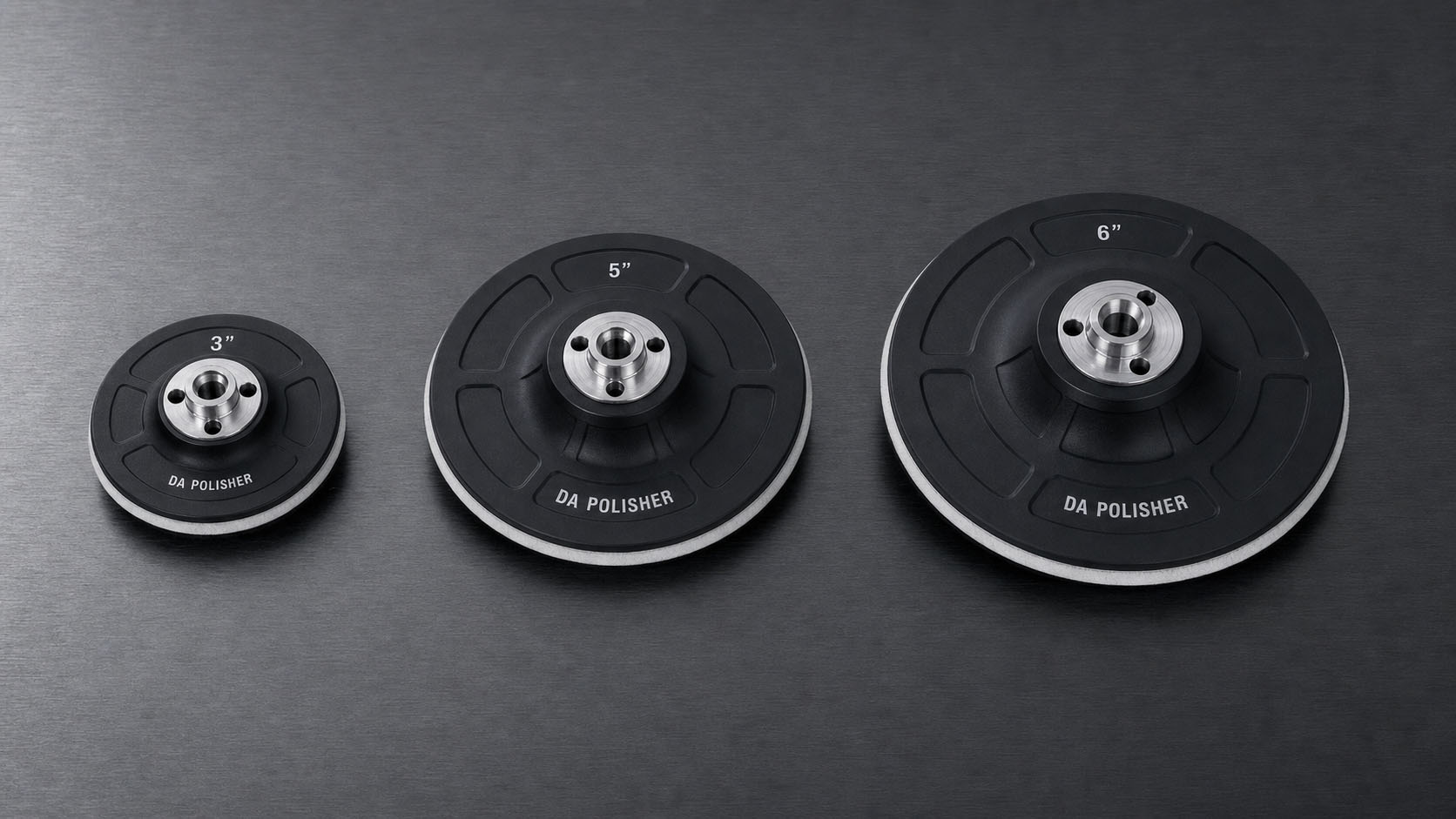
- A 5-inch backing plate is the standard size for most dual-action polishers — it balances heat distribution and correction power on large panels like hoods, roofs, and doors without stalling the motor under normal pressure.
- Switch to a 3-inch backing plate for tight areas such as pillars, mirror bases, and door handles, where a 5-inch plate risks striking adjacent trim and concentrating heat on a single contact point.
- Always confirm your polisher’s spindle thread — 5/16″-24 (Imperial) or M8/M6 (Metric) — before buying a backing plate, because a thread mismatch means the plate will not mount at all.
- Choose a polishing pad approximately 0.5 inches larger in diameter than the backing plate so the soft pad edge contacts the surface before the rigid plate rim, preventing clear coat burn-through on body lines.
- Before polishing any curved panel, press the edge of the backing plate firmly with your finger: if the foam compresses slightly, it will conform to contours safely; if it stays rigid, treat it as a hard plate and apply minimal pressure on curves to avoid localized paint damage.
This guide helps professional detailers, body shop technicians, and DIY enthusiasts select the correct backing plate size for dual-action polishers. It covers thread compatibility, size-to-panel matching, heat management, and hard-vs-flexible plate selection — providing a complete decision framework to prevent paint burn-through and achieve swirl-free correction results.
What Is a Backing Plate on a Polisher and Why Does Size Matter?
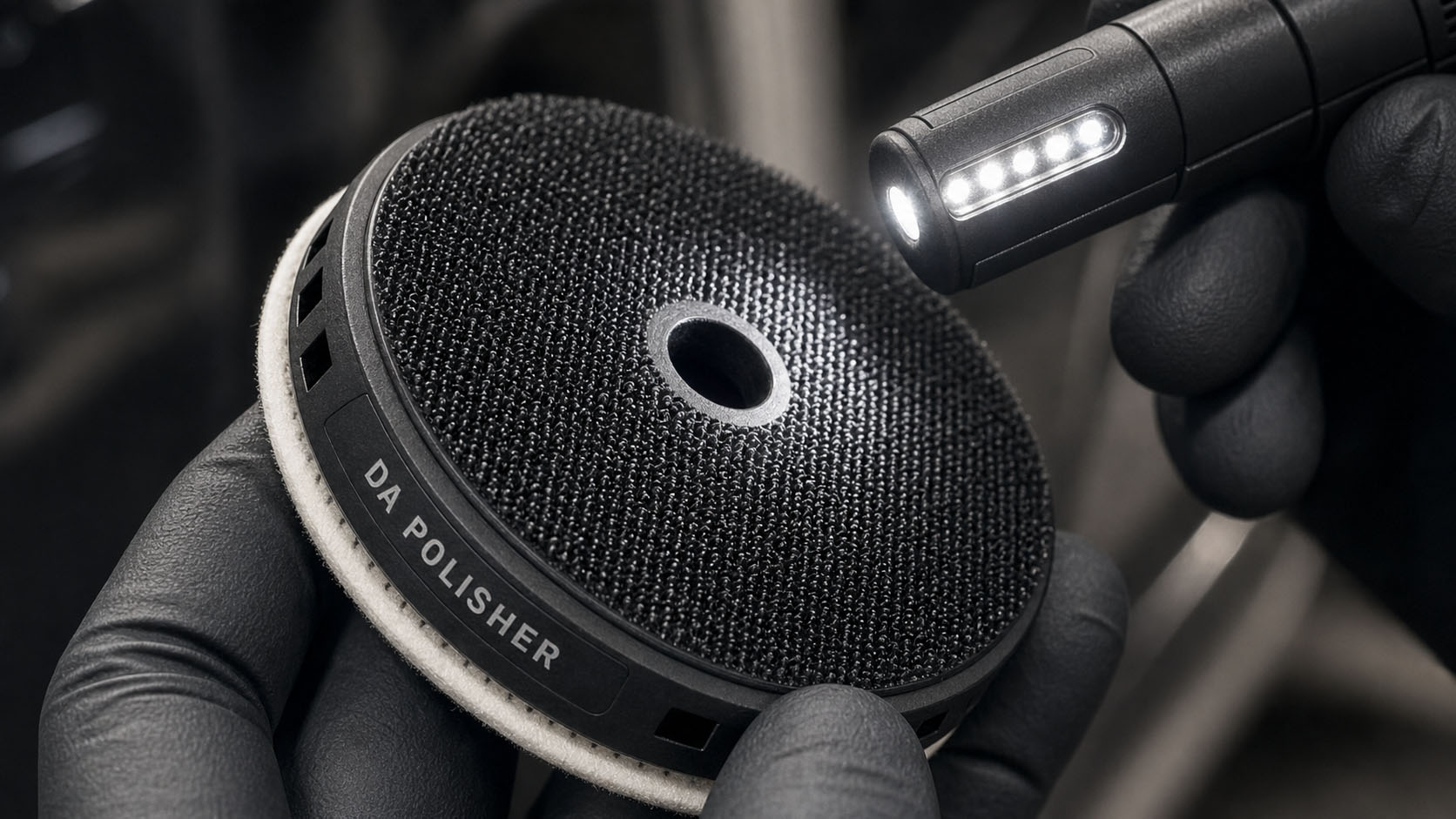
A backing plate is the critical mounting point between your polisher’s spindle and your polishing foam or microfiber pad. Good hardware transfers the motor’s power directly into the paint surface rather than wasting energy through unstable vibrations.
DA polishers require a specific balance between weight and movement to produce a professional finish. When a plate is too heavy for the machine’s counterweight, it creates harsh shaking that wears out internal bearings and causes hand fatigue. If the plate and pad combo is too large for your motor, friction will stall the pad’s rotation — leaving the machine wiggling in place, unable to remove deep scratches or heavy swirls.
How to Choose the Right Backing Plate Size for Your DA Polisher
Choosing the right plate involves three steps: Check the Thread → Choose the Size → Match the Pad.
Are Backing Plates Universal? Checking Thread Compatibility First
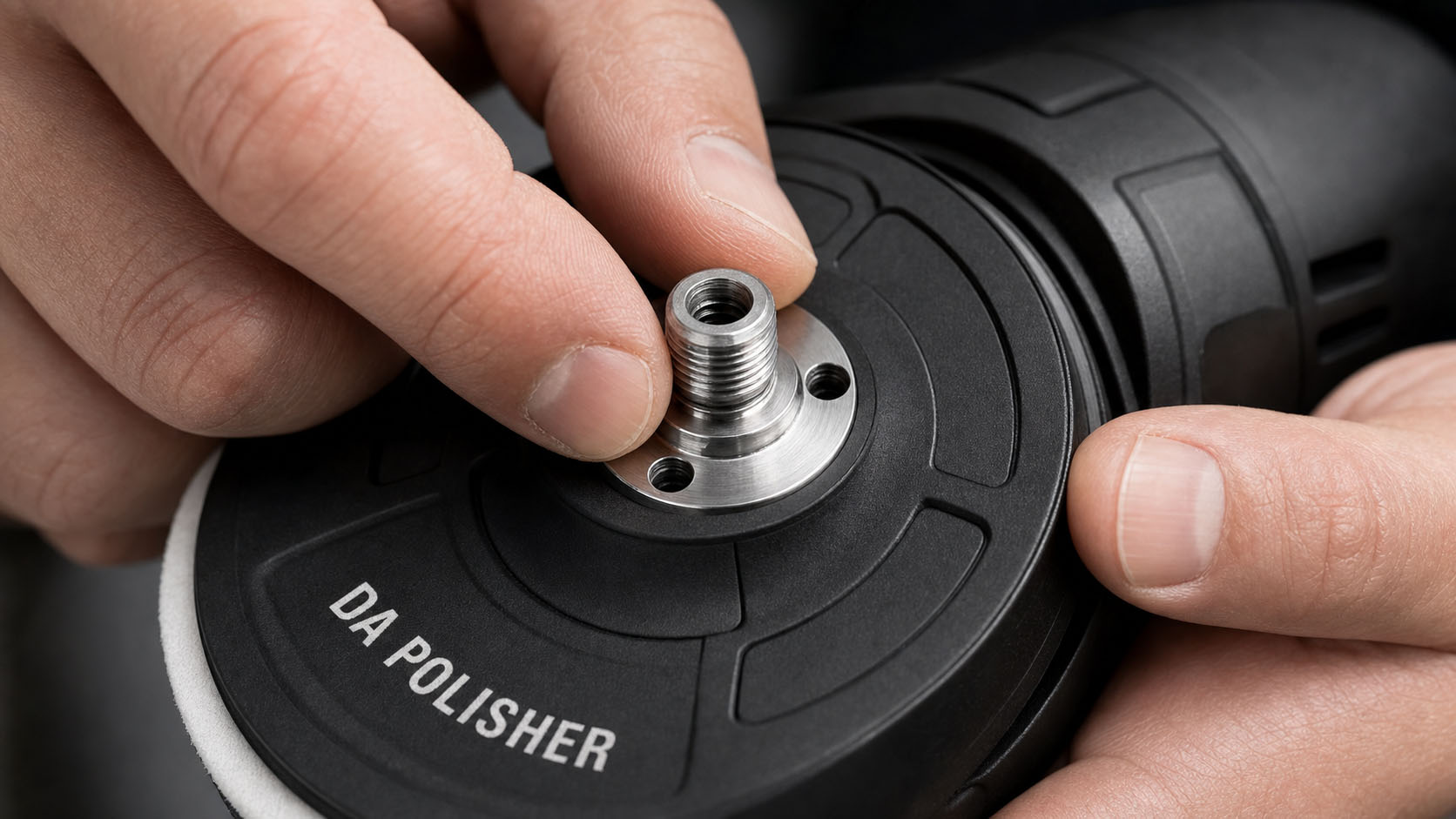
Backing plates are not universal. Always verify the spindle thread before considering plate width, as buying the wrong thread means the plate simply won’t mount. The two main standards are:
- 5/16″-24 (Standard/Imperial): The industry standard for traditional short-throw DA polishers like the Porter Cable 7424XP, and the most common fit for entry-level and home-use tools.
- M6 or M8 (Metric): Used by many modern Long-Throw DA Polishers and high-end machines that require metric sizing to seat the plate correctly.
How Backing Plate Size Controls Heat Buildup
Backing plate diameter directly controls how much friction-based heat builds up during a correction pass — larger plates generate more total heat, while smaller plates concentrate heat into a tighter area. A larger plate covers more area, finishing flat panels like hoods faster — but also generates more friction-based heat. When a pad overheats, the hook-and-loop adhesive can fail or the clear coat can be permanently damaged.
Three-inch plates concentrate heat into a small spot. This makes them effective for targeted correction, but at the expense of quick overheating. Five-inch plates spread heat more evenly across the surface, making them safer for sensitive paint and for those new to machine polishing.Detailers working on thin factory clear coats should consult SAE paint thickness guidelines to understand how little margin exists before correction becomes damage.
Many professionals reference 3M Technical Data to stay within safe temperature limits for different foam types and compounds.
3-Inch Backing Plate vs. 5-Inch DA Polisher: Which Is Better for Tight Areas?
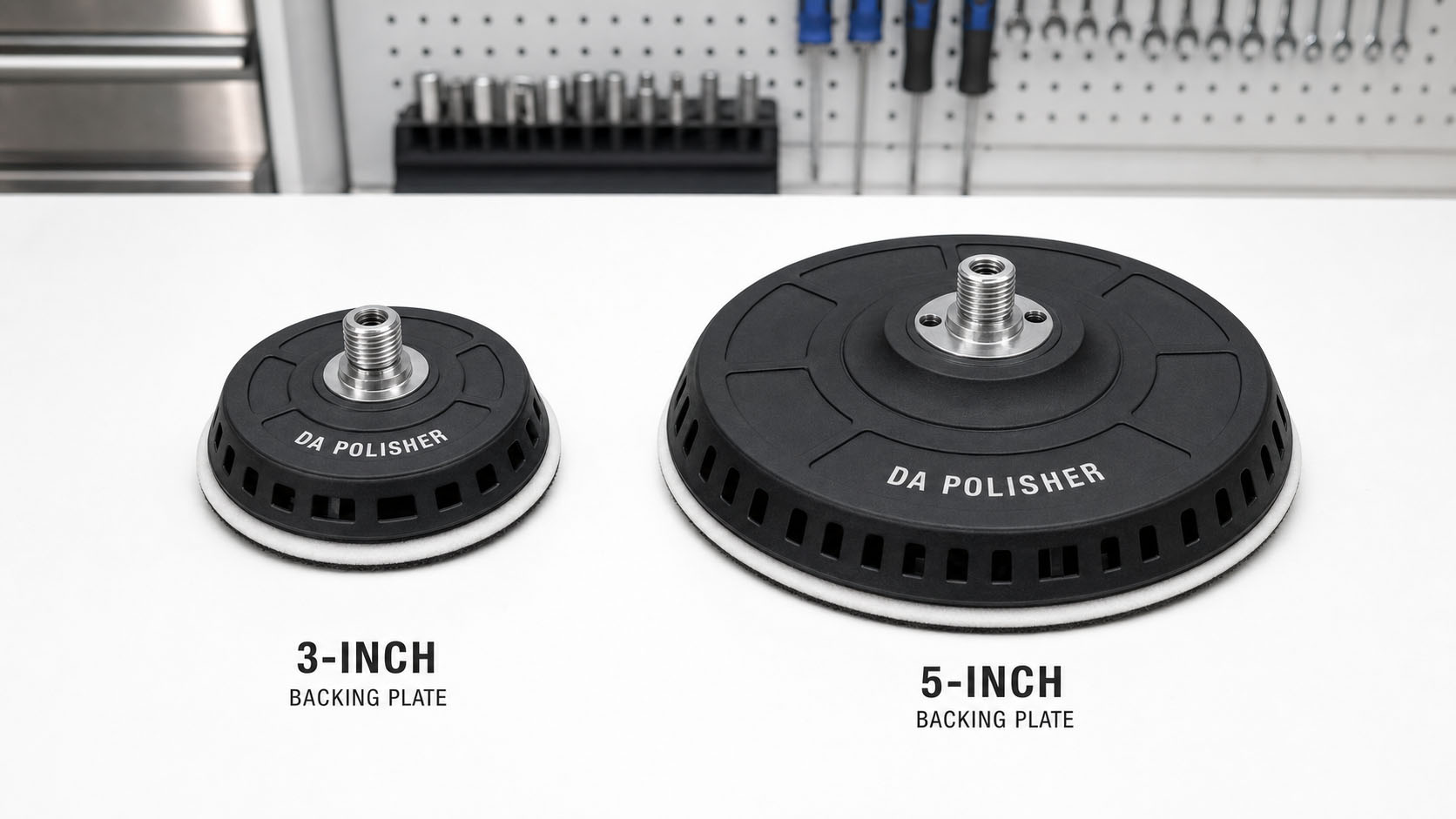
A 5-inch plate handles hoods and doors efficiently, but modern car designs with sharp body lines and recessed handles require a 3-inch plate for accurate, controlled polishing. Using a 5-inch plate on thin pillars or recessed areas often causes the pad edge to strike adjacent trim — see the Constraints section below for the full safety risk.
Per IDA standards, keep both sizes available and switch plates to match each panel’s geometry.
Why Is a 5-Inch Backing Plate the Standard for Dual-Action Polishers?
Most standard DA polishers are engineered specifically for a 5-inch plate, which keeps the motor spinning steadily even under light downward pressure. On the other hand, a 6-inch plate causes severe rotational resistance. As a result, the pad may stall mid-correction, making the swirl removal harder and slower.
Can You Put a 3-Inch Backing Plate on a 6-Inch Polisher?
Even though a 3-inch plate can physically fit a 6-inch polisher if the threads match, the machine may shake violently with the lighter setup. This causes hand fatigue, reduces control, and produces an uneven finish across the paint surface.
Backing Plate Comparison: Size vs. Performance
| Destek Plakası Boyutu | Surface Area | Isı Üretimi | En İyi Kullanım Senaryosu |
| 3-Inch | Düşük | High (Focused) | Pillars, Bumpers, Mirrors |
| 5-Inch | Orta | Moderate (Balanced) | Hoods, Doors, Side Panels |
| 6-Inch | Yüksek | High (Friction) | Roofs, RVs, Large Boats |
Hard vs. Flexible Backing Plates: Which Is Safer for Your Paint?
Flexible backing plates are the safer choice for most automotive paint correction, especially on modern cars with complex curves — but hard plates remain necessary for heavy-cut work on flat surfaces.
- Hard Backing Plates: Deliver maximum cut for deep scratch correction by transferring all machine power directly into the paint. On curved surfaces, however, the rigid edge concentrates pressure into a narrow band, which can burn through a thin clear coat quickly.
- Flexible Backing Plates: Safer for modern cars with complex curves, as the edges bend to follow the body shape and prevent edge-digging. On flat surfaces, a highly flexible plate may slightly reduce correction power since some energy is absorbed by the material’s flex rather than transferred into the paint.
The Finger Press Test
Press your finger firmly into the edge of the backing plate’s foam before starting any contoured panel. If it doesn’t move, treat it as a hard plate and apply extra caution on curves to avoid burning the paint. If it compresses slightly, the plate will conform well to body lines and contoured surfaces. This simple test takes seconds and can prevent costly paint damage before the machine ever touches the car.
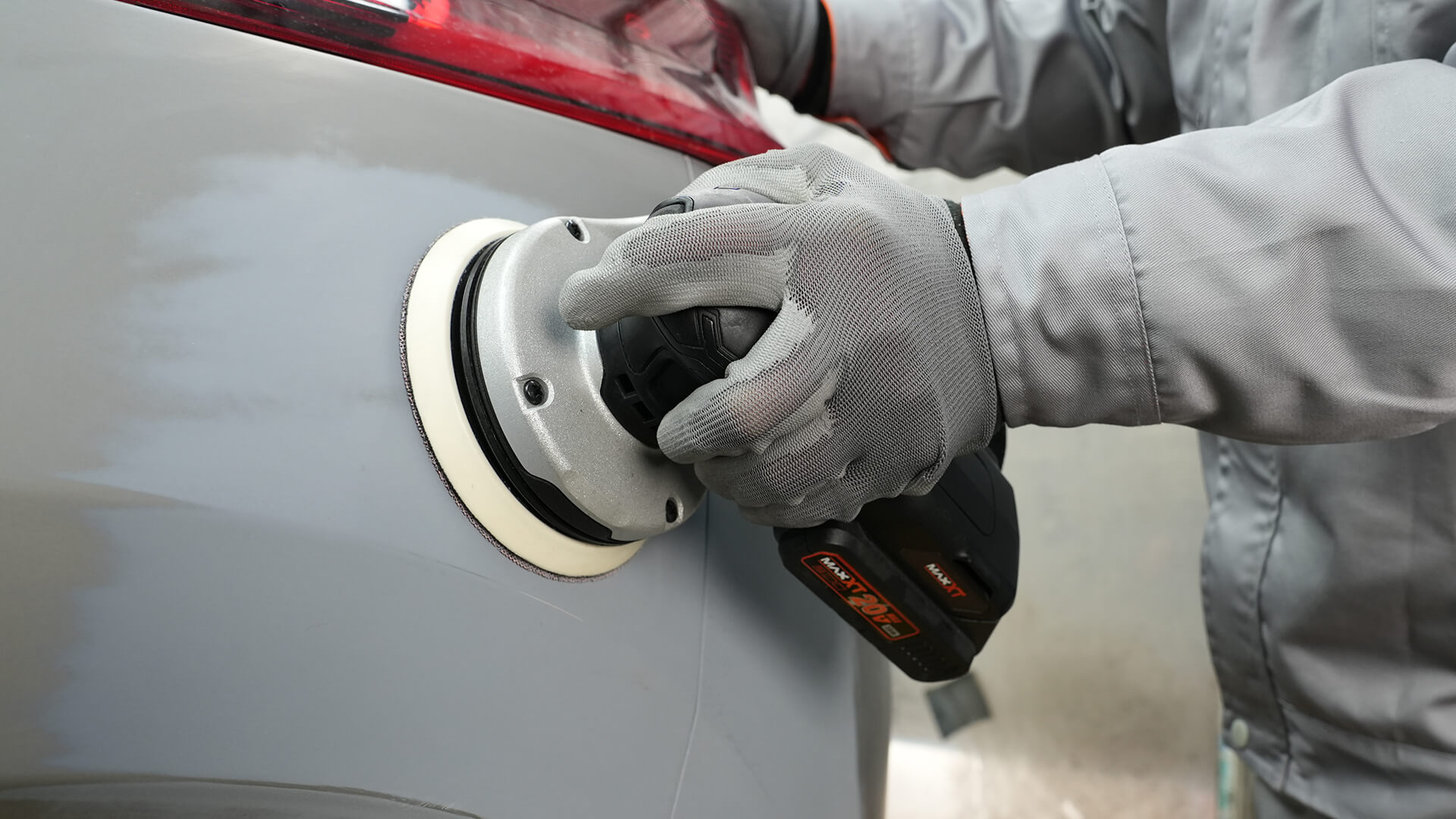
Step-by-Step: How to Install and Maintain Backing Plates for Paint Safety
Step 0 — Pre-Job Inspection
Check these three things before every use — a damaged backing plate can ruin a paint job in seconds:
- Warp Test: Place the plate face down on flat glass. Any wobble indicates heat distortion, and the plate should be replaced before use.
- Grip Test: Check the hook-and-loop surface for flat or melted spots. Worn hooks risk pads detaching while the machine is running at speed.
- Crack Check:Inspect the plastic center carefully for hairline cracks. A plate that fractures under load can send fragments into the paint surface and cause the pad to detach unexpectedly — stop work immediately if any crack is found.
Step 1 — Thread Identification
Confirm Metric or Imperial compatibility and use a spacer washer if needed to prevent the plate from contacting the tool body during operation.
Step 2 — Proper Centering
Center the pad carefully with the plate before you begin. Even minor off-centering creates significant vibration at higher speeds, affecting both finish quality and machine longevity.
Step 3 — Heat Inspection
Every 10 to 15 minutes of polishing, touch the plate center. If it feels too hot to hold comfortably, swap immediately to a fresh, cool pad.
Step 4 — Compression Cleaning
Clear dried polish from the Velcro hooks after every session. Use compressed air or a stiff brush to maintain a secure pad grip.
Constraints: When Should You Avoid Changing Backing Plate Sizes?
- On Long-Throw machines (15mm or 21mm), never switch to a 3-inch plate. The wide orbital movement will destroy small pads rapidly and destabilize the machine’s internal balance system.
- Plastic bumpers cannot dissipate heat the way metal panels can. Running a 6-inch plate on plastic risks melting or warping the surface within seconds of contact.
- When using a DA polisher on recessed panels such as door handles or mirror bases, never force an oversized plate into a tight gap. The edge catches on the surrounding trim, causing the machine to kick back and concentrate heat on a single point — burning through the paint rapidly.
FAQ: Common Questions About DA Polisher Backing Plates
Does backing plate size affect which polishing pad I should use?
Yes. A larger, flexible backing plate reduces per-square-inch pressure, which pairs well with softer finishing pads on broad panels. A smaller, firmer plate concentrates force, making it better suited for dense cutting pads used in targeted scratch removal on tight areas. Always match the pad diameter to be approximately 0.5 inches larger than the plate for a safe overhang buffer.
Can I Use a Woodworking Sander Pad on a Car?
Avoid it. Woodworking sanders run at much higher speeds with tight oscillations that can burn and stain paint surfaces. Detailing-specific pads are engineered for the precise heat levels and lateral stress of automotive paint correction, preventing the swirl marks and permanent damage that woodworking pads leave behind.
Why Is My Backing Plate Getting Hot?
Excessive heat usually means too much downward pressure, a pad that has loaded up with dried compound, or restricted airflow through the plate. Reduce pressure, swap to a clean pad, and choose a vented backing plate design that allows air to circulate through the center during operation. MaxXT plates are engineered with this cooling architecture as standard.
Conclusion and Professional Manufacturing Solutions
The most efficient detailing approach is a two-machine setup: a 5-inch plate for large flat panels and a 3-inch plate for tight detail work and contoured surfaces. This keeps the right tool always ready and minimizes the risk of heat damage or mechanical strain.
MaxXT manufactures durable, vented, and precision-balanced backing plates for detailers worldwide. Explore our DA Polisher Range to find the right fit for your machine and experience the difference that professional-grade tooling makes on every job.
 Turkish
  English
  Arabic
  French
  German
  Portuguese
  Russian
  Spanish